
Imagine this. You spend hours perfecting a video project. You hit save. Then your laptop freezes, reboots, and when the screen comes back. The file is gone. Your stomach sinks. It’s not just you. Lost files happen all the time. A dropped hard drive, a bad update, an accidental delete, or a corrupted partition can […]
How to Disk Cleanup Windows 10: Detailed Solution Guide
Keeping your Windows 10 system clean isn’t just about aesthetics—it’s about performance, stability, and longevity. Over time, your PC collects clutter: temporary files, cache, old updates, and more. These slow things down and eat up valuable space.
This guide walks you through a detailed solution to disk cleanup. Whether you’re a casual user or a power user, these tips will help you reclaim space, boost speed, and keep your system running smoothly.
Why You Need Disk Cleanup on Windows 10?
Disk cleanup is more than just freeing up space. It’s a vital maintenance task that keeps your system healthy and responsive.
- Improves Performance: Removing junk files helps your PC run faster and smoothly.
- Frees Up Storage: Clears unnecessary files to make room for apps, documents, and media.
- Fixes Update Issues: Old update files can cause problems. Cleaning them helps future updates install properly.
- Boosts Security: Temporary files may contain sensitive data. Deleting them reduces risk.
- Extends System Life: Regular cleanup reduces wear on your hard drive and prevents system errors.
Precautions Before Performing Disk Cleanup
Before diving into cleanup, take a few safety steps. These ensure you don’t lose important data or disrupt system functions.
- Backup Important Files: Always save your documents, photos, and work to an external drive or cloud.
- Create a Restore Point: This lets you roll back changes if something goes wrong.
- Close All Running Programs: Prevents file conflicts and ensures smooth cleanup.
- Check for System Updates: Install pending updates before cleanup to avoid compatibility issues.
- Review What You’re Deleting: Don’t blindly remove files—some may be needed by apps or Windows.
- Avoid Cleaning System Files Unless Needed: Only delete system files if you’re sure they’re safe to remove.
- Don’t Use Third-Party Tools Without Research: Some apps can be aggressive and delete critical files.
- Ensure Battery Is Charged (for laptops): Avoid interruptions during cleanup by plugging in your device.
Ways to Disk Cleanup Windows 10
Method 1: Use Disk Cleanup Utility
One of the easiest & most effective ways to clean disk space in Windows 10 is to use built-in Disk Cleanup utility. This powerful utility is designed to help you find and free up disk space in Windows 10. You can use Disk Cleanup utility to delete temp files, log files, cache, DirectX Shader Cache, temporary Internet files, obsolete downloads, and other junk. To recover disk space using Disk Cleanup, follow these steps:
- Search & select Disk Cleanup from the search bar on the taskbar.
- Select the drive that you want to clean when prompted.
- Now it will scan the selected drive and display scan results on the Disk Cleanup window.
- To remove any of these files (you can select multiple files), simply select it and press OK.
- You’re done!
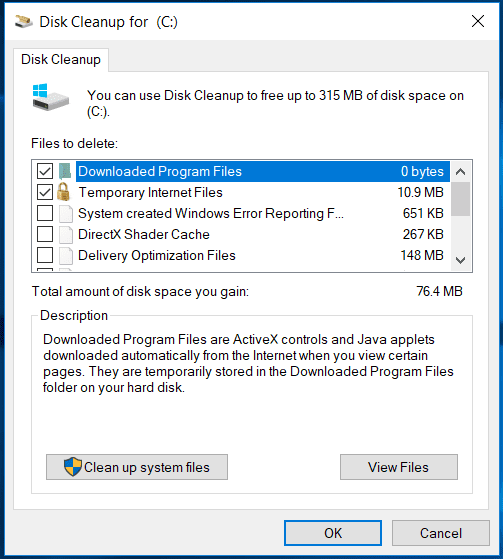
Cleanup System Files: In addition to junk cleanup in Windows 10, you can also clean unnecessary system files using this utility. To do this, click Clean up System Files > select the drive that you want to clean when prompted and simply select the files to clean and press OK.
It will help you clean Windows upgrade log files, downloaded program files, delivery optimization files, device driver packages, and other system junk files. You can also click on More Options to delete system restore and shadow copies.
Method 2: Use Free up Space Now Option
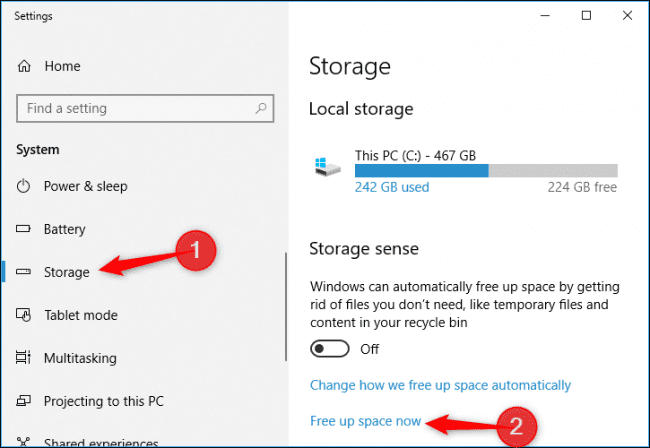
Another built-in feature that helps you clean up disk space in Windows 10 is “Free Up Space” Now option. It helps you clear temporary files of different types including Windows upgrade log files, system created Windows error reporting files, Windows update cleanup, thumbnails, recycle bin items, temporary Internet files, and other temporary files. To use this feature, follow these steps:
- Press Windows + I keys to open System Settings.
- In the Settings window, select System.
- On the next window, select Storage from the left pane.
- Now, in the right pane, click Free up space now option below Storage
Sense.
Note: This feature is part of April 2018 Windows Update, so if you can’t see that option, the April 2018 update hasn’t been installed on your system yet.
Once you click this option, it will scan your system storage to help you find & remove temp files in Windows 10. Here, it will display a detailed report of all temporary files on your system and helps you remove them instantly.
Method 3: Use Storage Sense
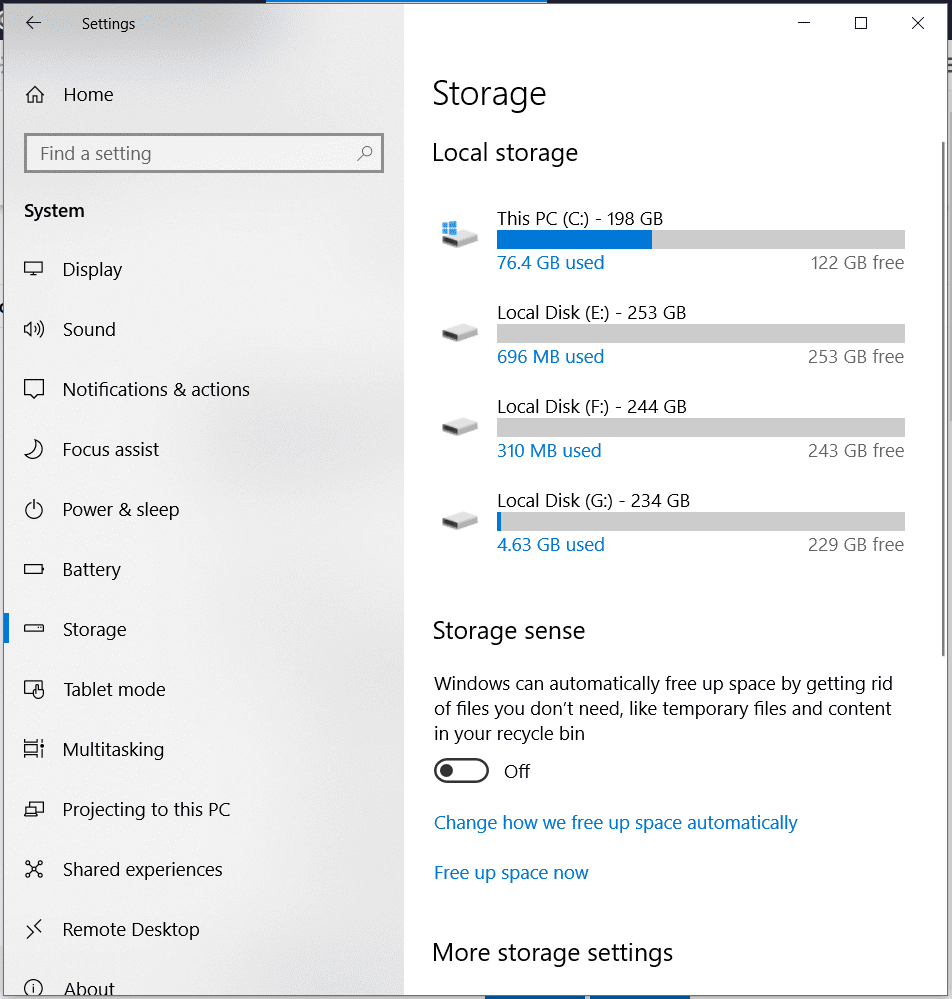
Storage Sense is a powerful built-in utility that enables Windows to find and clean junk files automatically. It helps you free up disk space by deleting temp files, recycle bin contents, and more. You can enable Storage Sense by following steps mentioned:
- Press Windows + I keys to open System Settings.
- In the Settings window, select System.
- On the next window, select Storage from the left pane.
- Now, in the right pane, toggle on the Storage Sense button.
- You’re done!
Method 4: Empty Recycle Bin
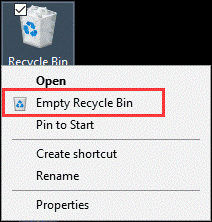
This is the easiest method for disk cleanup in Windows 10. You keep on deleting files & folders over time which finally lands in the system Recycle Bin before it gets deleted permanently. You may find GB’s of disk space is occupied with these junk files in the recycle bin. Thus, it is no brainer to get rid of this junk immediately. To do this, right-click on the Recycle Bin icon and select the Empty Recycle Bin option. It will ask for confirmation, press Yes.
Method 5: Uninstall Unnecessary Apps & Programs
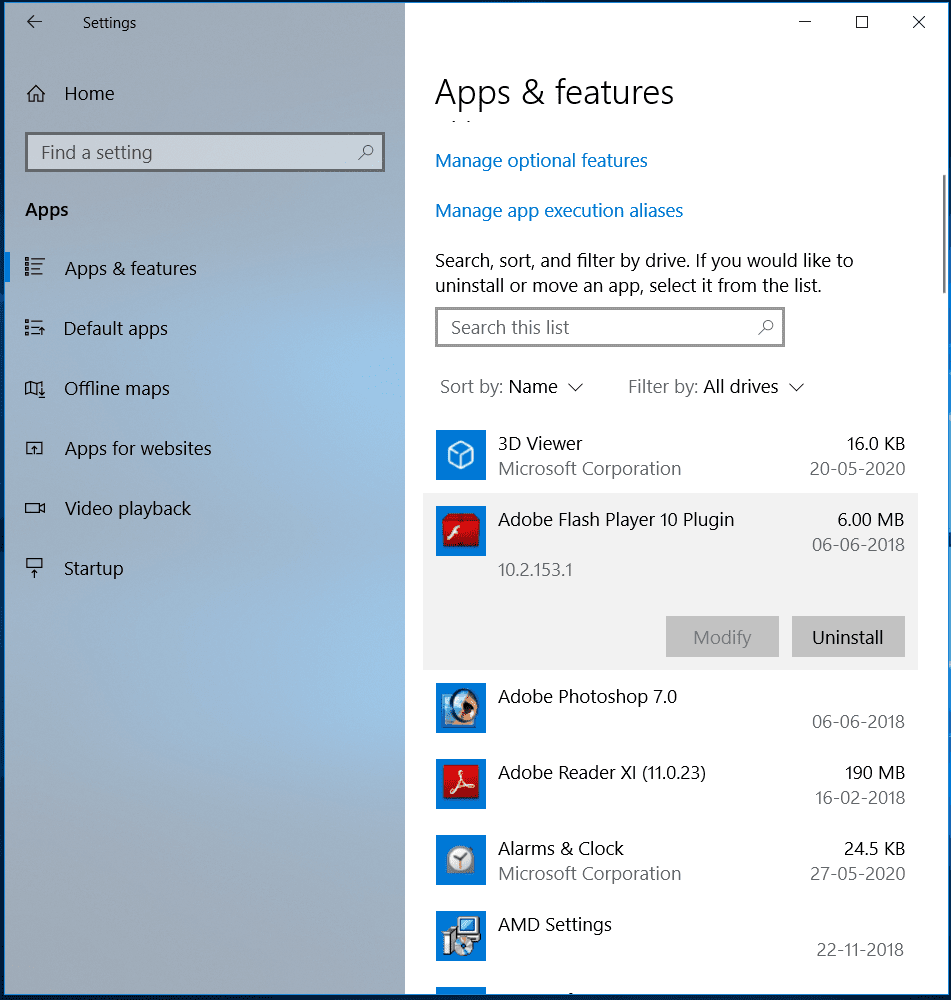
You keep installing apps & programs and stop using many of them over time, right? To get rid of these obsolete apps & programs and to disk cleanup in Windows 10, follow the mentioned steps:
- Right-click on the Start menu and select Settings.
- In the Settings window, select Apps.
- On the next window, select Apps & Features from left pane.
- Now in the right pane, select the program that you want to remove and press Uninstall button below it.
- Confirm uninstallation.
- You’re done!
Method 6: Disable Hibernation in Windows 10
Windows Hibernate keeps your system in a quasi-shut-down state. Here, it saves a snapshot of your system drivers and files before shutting down. It is done to save the system turn-on time. While it is a useful feature, if you want to free up disk space in Windows 10 and are not worried about that extra time during system startup, then you should clean hibernate files. To do this, follow these steps:
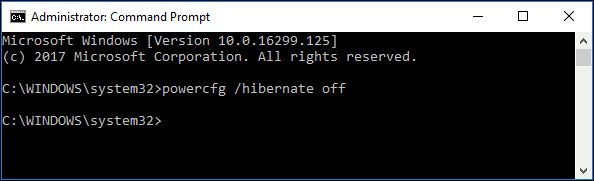
- Search for Command Prompt in the search bar on the taskbar.
- Right-click the result and select Run as administrator.
- In the Command Prompt window, type powercfg/hibernate off and hit Enter.
- You’re done!
Note: If you want to enable hibernation again, simply type powercfg/hibernate and hit Enter.
Method 7: Move Data to Another Location
To free up disk space in Windows 10, you can move some of your data to another location. You can move this data to an external drive, another partition, or on the best cloud backup servers. Once you connect an external storage drive such as a USB flash drive, you can specify where you want to store each file type. To do this, follow these steps:
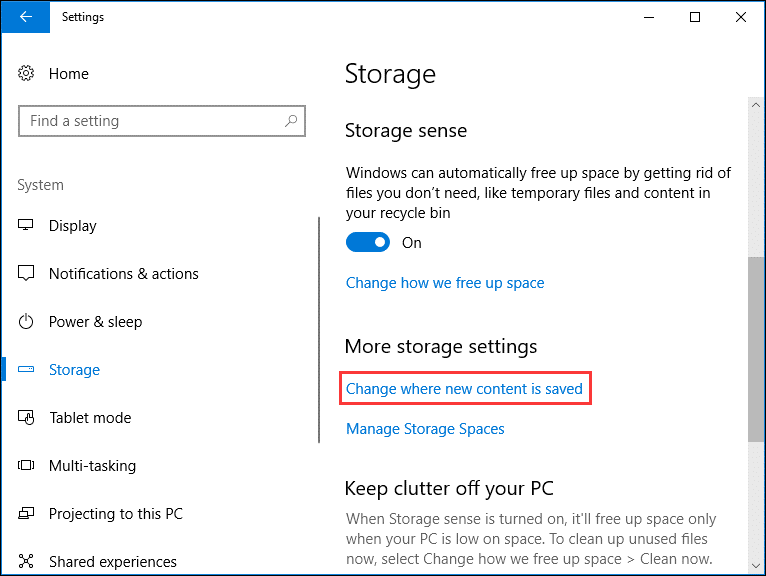
Go to Settings > System > Storage.
In the right pane click Change where new content is saved option under More Storage Settings.
Now click the drop-down and select the new location for each file type.
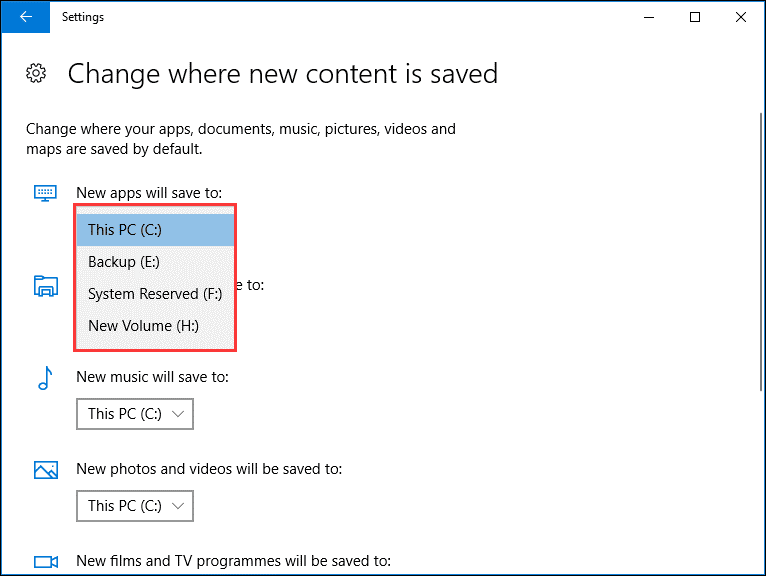
It is a useful feature to free up disk space on your system drive.
Method 8: Use Compact OS
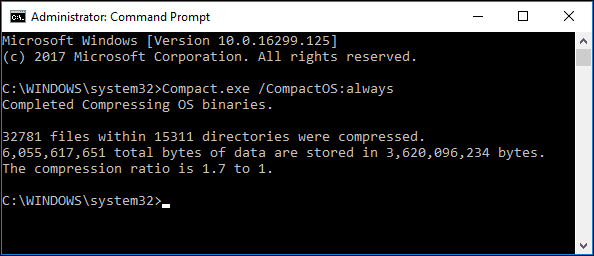
Compact OS is a useful addition by Microsoft. It is designed to help you decrease the OS size and run the OS from compressed files. You can use this feature to save a few GB of disk space. It also helps you reduce the footprint of Windows apps. To use this option, follow these steps:
Note: It is suggested to take a Windows backup before you try this option.
- Run Command Prompt as administrator.
- In the Command Prompt window, type Compact.exe /Compact OS: always and hit Enter.
- It will take 10 to 20 minutes to take effect.
Note: To revert changes, type Comact.exe/CompactOS:never and hit Enter.
Method 9: Use Best PC Cleaner Software
If you have tried manual steps to disk cleanup Windows 10 and still think you could free up disk space, then we suggest using the best PC cleaner software for instant & effective results. These powerful tools work on advanced algorithms to help you deep scan your system storage to find & clean all junk. These tools help you clean & optimize Windows for better performance. In addition to that, you can also use best duplicate files remover tools to remove junk accumulated in the form of duplicate files in Windows 10.
Method 10: Upgrade Hard Drive
Even after trying all other steps, if you think you often run out of space on Windows 10, then you should consider upgrading your hard drive. You should upgrade the hard drive to a larger one to avoid the low disk space issue. Here, you can use the best disk partition software for Windows 10 to effectively allocate disk space for different files and programs.
Author’s Tip
Disk cleanup isn’t a one-time fix—it’s a habit. I recommend doing it monthly, especially if you install and uninstall apps frequently. It keeps your system agile and responsive.
Use built-in tools like Storage Sense or Disk Cleanup first. They’re safe and reliable. Third-party apps can help, but use them cautiously. Always read reviews and understand what they’re deleting.
Also, don’t forget your Downloads folder. It’s often overlooked, but it can hold gigabytes of forgotten files. Clean it out regularly, but double-check before deleting anything important.
Conclusion
Disk cleanup is a simple yet powerful way to maintain your Windows 10 system. It improves speed, frees up space, and prevents future issues.
By following the steps in this guide, you’ll keep your PC healthy and efficient. Just remember to take precautions and clean smart—not just fast.
Make it a routine. Your computer will thank you with better performance, fewer errors, and a smoother experience every day.
FAQ
How to do disk cleanup in Windows 10?
You can use Disk Cleanup utility to clean disk space on Windows 10. To do this, search & select Disk Cleanup in the search bar on the taskbar. Next, select the drive that you want to clean when prompted. Now it will scan your system storage and display scan results on the Disk Cleanup window. To remove any of these files, simply select it and press OK. You’re done.
Is it safe to use Disk Cleanup utility?
Yes, the Disk Cleanup utility on Windows comes as a built-in solution to help you clean & optimize your disk space. You can use Disk Cleanup to clean disk space in Windows 10 and also clean unnecessary system files automatically.
Does Disk Cleanup improve performance?
The built-in Disk Cleanup utility helps find and clean a lot of junk files efficiently. It helps you free up space in Windows 10 and also boosts your overall system performance.
Should I disk cleanup or Defrag first?
You should perform disk cleanup first as it will help you get rid of a lot of unnecessary files & data. Later, you can disk defrag that helps you remove the fragmentation of your selected drive. Here, unnecessary files & data will not interfere with the disk defrag process.
Which is the best PC cleaner software?
CleanMyPC and CCleaner are the best PC cleaner tools available for Windows 10. It helps you deep scan your system storage and also helps you optimize your system for better performance. The malware protection features of these tools help you protect your system against malicious content effectively.
Dinesh Lakhwani
Author Bio:
Dinesh Lakhwani 

Dinesh Lakhwani, the entrepreneurial brain behind “TechCommuters,” achieved big things in the tech world. He started the company to make smart and user-friendly tech solutions. Thanks to his sharp thinking, focus on quality and the motto of never giving up, TechCommuters became a top player in the industry. His commitment to excellence has propelled the company to a leading position in the industry.
Popular Post
Recent Post

5 Best Data Recovery Software For Windows 11 and Windows 10
A crashed drive can ruin a whole day. One minute your photos, work files, and tax records sit safe on your PC. The next minute they are gone. A power cut, a bad update, or one wrong click can wipe out years of memories and months of work in seconds. That sinking feeling is why […]
How To Update NVIDIA Drivers On Windows 11/10 PC
Learn how to update NVIDIA drivers on Windows 11/10 with simple methods, safety tips, and easy steps for smoother gaming and better PC performance.

Top AI Features Hidden Inside Windows 11
Explore the top AI features in Windows 11, from Copilot to Recall, plus safety tips and simple steps to use each tool the right way.

Customize Your Screen Saver Settings in Windows [Easy Steps]
Learn how to customize screen saver settings in Windows 11 with easy steps, safety tips, and simple tricks to personalize your PC screen.
Driver Easy Windows Driver Updater Tool Review: Tried & Tested
In-depth information about Driver Easy’s functions and features can be found in our review. Learn how to update drivers more easily with this tool for a more seamless computer experience.

Is Avast Driver Updater Worth It? A Hands-On Analysis
A full review of Avast Driver Updater covering features, setup steps, pricing, pros and cons, and real PC results, to help you decide if it is worth buying.
IObit Driver Booster 13 (PRO) Review: [Tried & Tested]
IObit Driver Booster 13 is built for one purpose: keeping your PC drivers up to date. Well, yes! Outdated drivers can cause crashes, slowdowns, and hardware issues. This tool scans fast and updates with one click. The interface is simple. Even beginners can use it without confusion. Updates are pulled from a huge database, covering […]

Auslogics Driver Updater: A Detailed Walkthrough [2026]
This comprehensive review covers the key features, pros, and cons, pricing, and a final verdict on Auslogics’ driver update utility. Learn how it stacks up against manual driver maintenance.
5 Best Driver Updater Tools for Windows to Use (Free and Paid)
Introduction: Most people blame their PC for problems that a driver caused. A driver works like a bridge between your hardware and your operating system. When this bridge cracks, strange things start to happen. Screens flicker without reason. Printers go silent mid-task. Games freeze or crash out of nowhere. Manually finding the right driver is […]