



Read my honest Wise Duplicate Finder review. See features, pricing, pros and cons, and real PC test results. Find out if this free duplicate cleaner can free up your Windows storage.
Troubleshooting Headphone Detection on Windows 11, 10 [Step-By-Step]
Introduction:
A lot of users run into sound problems at some point. A common one is when the computer does not pick up the headphones. You plug them in, but the speakers keep playing. This can break your focus during work, movies, music, or calls. It also causes confusion because the reason is not always clear right away.
This problem can come from hardware faults, wrong settings, or damaged system files. It may also show up after system updates or driver changes. The good thing is that this issue can be fixed.
With a few checks and steady steps, you can get your headphones working again.
Quick Fixes to Save Your Time
Before trying detailed methods, it helps to run through a few quick checks. Many headphone detection issues in Windows 11 and 10 come from simple settings or temporary glitches. These one-line fixes can often solve the problem in just a few minutes.
- Plug the headphones into a different port and try again
- Restart your computer to refresh audio services
- Increase volume and check mute settings
- Set headphones as the default playback device
- Update Windows to the latest version
- Reconnect the Bluetooth headphones and pair them again
- Disable and re-enable the audio device in Device Manager
- Try the headphones on another device to confirm they work
Summary: What This Guide Covers
This guide explains why your headphones are not being detected on Windows 11 or Windows 10 and how to fix the issue step by step. It focuses on both software and hardware causes, so you can narrow down the problem quickly.
You will also find practical fixes, from simple setting changes to advanced troubleshooting steps. By the end, you should be able to restore proper headphone detection or understand when it is time to seek professional help.
Common Causes Behind Headphone Detection Issues
Headphone detection problems usually come from a mix of system settings, outdated drivers, or hardware faults. Understanding the root cause makes it much easier to apply the right fix instead of trying random solutions.
- Outdated or corrupted audio drivers
Drivers that are old or damaged may fail to recognize connected devices properly - Incorrect playback device settings
Windows may be sending audio to another device instead of your headphones - Disabled audio device in settings
Sometimes the headphone output is turned off in system settings - Faulty or loose headphone jack
Dust or wear inside the port can interrupt proper connection - Windows audio service issues
If core audio services stop working, detection can fail completely - Bluetooth connection problems
Wireless headphones may disconnect or fail to pair correctly - Conflicts with third-party audio software
Sound enhancement tools can override the default audio behavior - Hardware damage to the headphones or cable
Physical damage can prevent the system from detecting the device
Important Precautions Before You Start Troubleshooting Headphone Detection
Prepare Before Fixing the Issue
- Check the headphone jack and plug
Look for dust on the jack. Make sure the plug sits tightly. Loose or dusty ports can block signals. - Test the headphones on another device
Try them on a phone or another PC. This helps you see if the problem is with the headphones or the computer. - Turn down the volume before plugging in
This protects your ears and helps avoid loud sound spikes. - Unplug audio adapters
Remove any audio splitters or external converters. They can break the signal connection. - Restart your system once
A simple restart clears many small audio issues. - Disconnect Bluetooth devices
Wireless devices may take over the sound output. Turn off Bluetooth to avoid confusion. - Close sound apps
Apps like music players or video editors can hold audio control. Close them before making changes. - Keep your drivers ready
You may need updated drivers. Download them from the device maker if possible. This guide on updating drivers will help you a lot.
Before you start, Know The Anaswers To These Questions
1. Why do headphones sometimes not work even if they are new?
New headphones can fail to work when the system does not detect them correctly. This often happens due to outdated sound drivers, wrong output settings, or blocked audio ports. Sometimes the issue comes from the sound control panel, where the wrong device is set as the default output. You may also see this if the audio service stops running in the background. In rare cases, a system update may reset audio rules, causing the headphones to be ignored until you adjust the settings.
2. Why do headphones show up but produce no sound?
This usually happens when the volume mixer is set to a low level or muted. It can also appear when an app controls the audio device and prevents the system from switching outputs. Damaged codecs, disabled enhancements, or faulty internal routing may also stop sound from flowing. The device itself may also be set as a disabled output in the sound panel. In some cases, a sound driver conflict prevents the audio stream from reaching the headphones.
3. Can automatic sound switches cause headphone problems?
Yes. Some systems try to switch between speakers, Bluetooth devices, and wired headphones. When the rules fail, the system may choose the wrong device. This creates confusion because the system thinks audio should go to a different output. You may also face trouble if two audio controllers are installed. This includes high-definition audio, Realtek audio, and GPU audio outputs. In such cases, the system may not know which device to use first.
4. Why do laptops have more headphone detection issues than desktops?
Laptops often combine the mic and headphone jack into one port. This design improves portability but increases detection problems. If the port becomes loose or dusty, the signals get mixed. Laptops also switch outputs based on sensors inside the jack. If the sensor fails or becomes blocked, the system fails to identify the headphones. Heat, hardware strain, and older drivers increase this problem even more.
Troubleshooting Headphone Detection: Fix the “Headphones Not Detected/Working” Issue?
Many users face the error message or situation where the system refuses to pick up the headphones. This part guides you through reliable ways to fix it. These methods cover software, hardware, system settings, and sound services. You do not need advanced knowledge to try them. Follow each fix step by step.
Fix 1. Check Playback Devices and Set Headphones as Default
Many sound issues come from the wrong audio selection. The system may choose speakers instead of headphones. This may happen after updates or during app use. Checking the playback list is the fastest way to correct this.
This method is simple and works well for beginners. It gives you control over which device should send sound. When the right device is selected, the system routes audio correctly. This can fix many issues linked to silent headphones.
How this helps
- Corrects wrong audio routing
- Forces the system to focus on the right output
- Fixes muted or disabled headphone entries
- Refreshes the audio device list
- Stops apps from picking the wrong output
Steps
Step 1: Open Sound settings and view playback devices.
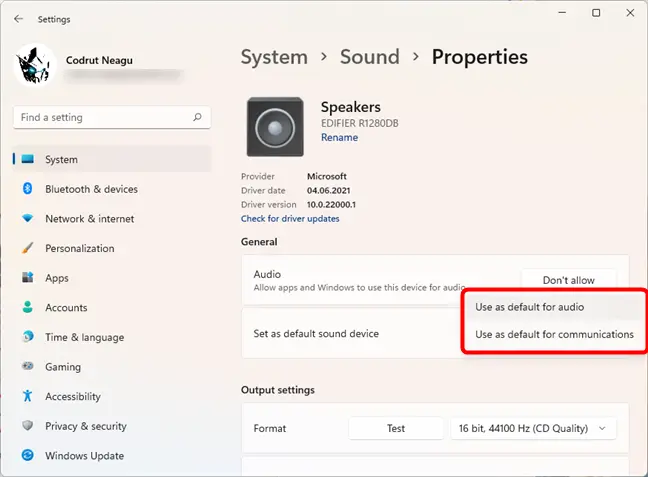
Step 2: Select the headphones and set them as the default device.
Fix 2. Update or Reinstall Audio Drivers
Drivers control how sound flows between the system and headphones. When the driver becomes old or damaged, the system stops detecting the device. Updating or reinstalling the driver often restores full function.
This method is helpful after big system updates. Windows updates can overwrite or reset audio drivers. When this happens, the system becomes confused and may label the headphones incorrectly. A clean install solves this mismatch.
How this helps
- Replaces damaged driver files
- Brings new compatibility updates
- Fixes detection gaps
- Removes driver conflicts
- Improves sound stability
Steps
Step 1: Open Device Manager and select audio drivers.
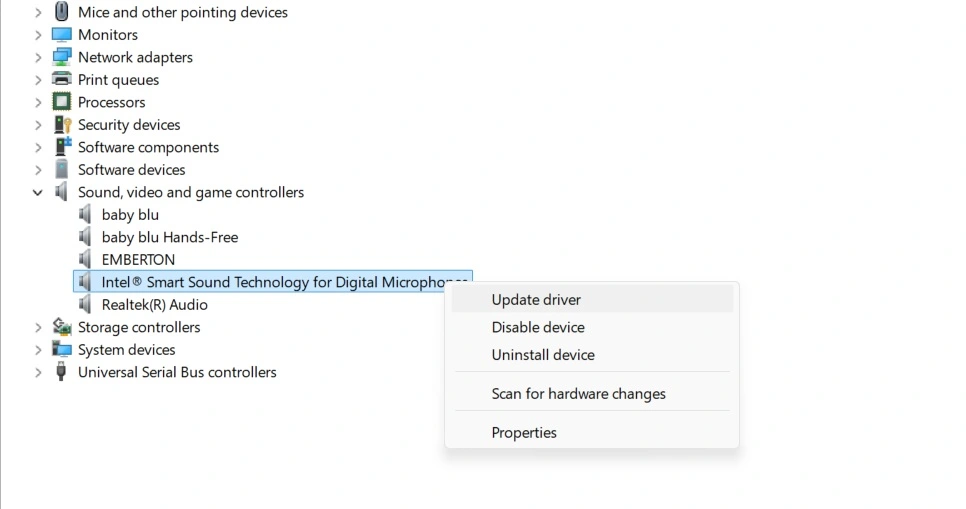
Step 2: Update or reinstall them and restart your system.
Fix 3. Restart Windows Audio Services
Windows uses several background services to control sound. If any of them stop working, the headphones may not be detected. Restarting these services refreshes all sound processes.
This method works well when headphones fail after long use. Some users also see this problem after waking the system from sleep mode. Restarting the services restores smooth function and resets the audio engine.
How this helps
- Restores broken background tasks
- Fixes sudden silence issues
- Repairs service-based detection problems
- Refreshes the audio engine
- Helps the system detect new devices
Steps
Step 1: Open Services and find Windows Audio.

Step 2: Restart the services and test your headphones.
Fix 4. Run the Built-in Troubleshooter
The built-in troubleshooter scans the system. It checks for wrong settings, disabled devices, and blocked drivers. It is helpful when you are not sure what is causing the problem.
This tool also resets some audio components. It is useful if the system misreads the jack or the digital routing. Many users find that the troubleshooter auto-corrects the issue in a few minutes.
How this helps
- Detects hidden audio conflicts
- Repairs broken settings
- Fixes routing problems
- Restores disabled devices
- Auto-corrects common sound errors
Steps
Step 1: Open Troubleshoot settings.
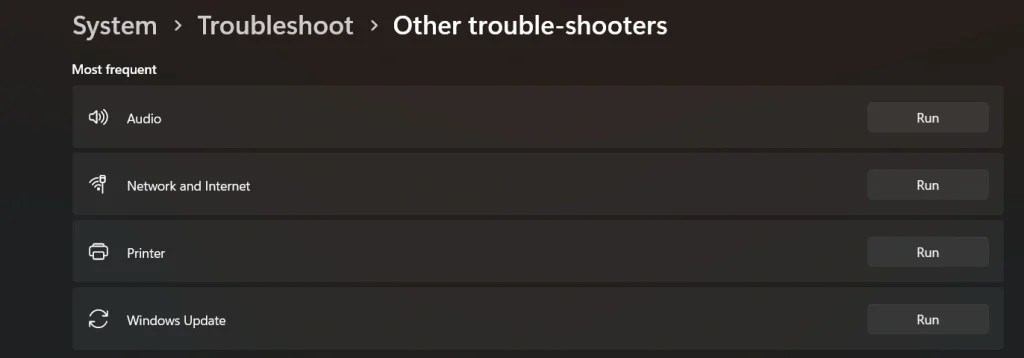
Step 2: Run the audio troubleshooter and apply the fix it offers.
Fix 5. Check the Headphone Hardware and Replace Damaged Parts
Sometimes the problem is not in the system. It may be linked to the cable, the jack, or the port. Hardware-based issues are easy to miss because they appear slowly. A loose plug or broken wire can cause random detection drops.
Checking hardware early saves time. It also helps you avoid reinstalling drivers for no reason. You can try different cables and ports to confirm if the problem is mechanical.
How this helps
- Confirms physical issues
- Helps avoid software confusion
- Detects broken plugs
- Reveals loose internal wiring
- Provides a clear answer when the device is damaged
Steps
Step 1. Try another headphone or cable.
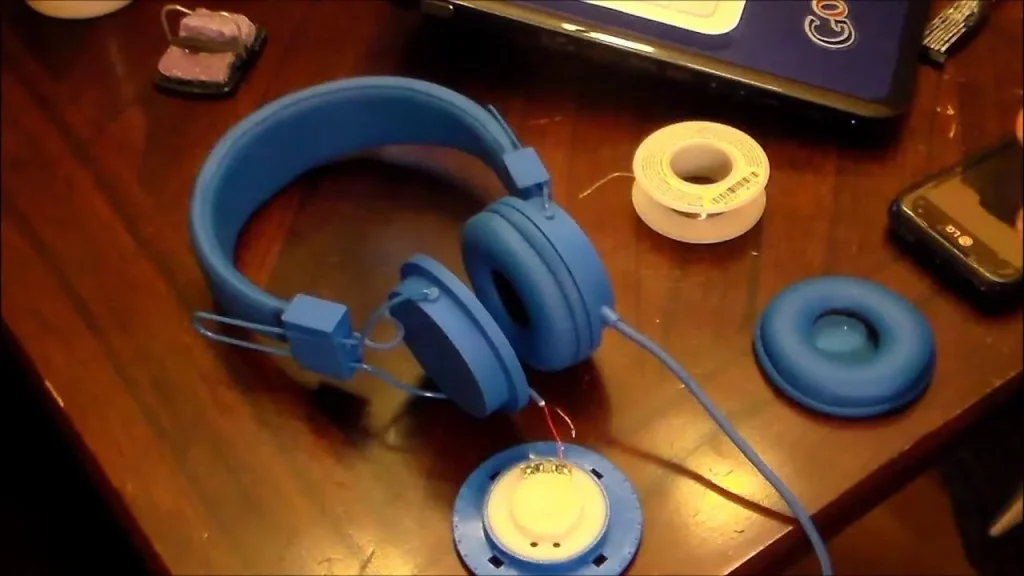
Step 2: Test another port and check for loose parts.
Fix 6. Disable Audio Enhancements in Settings
Audio enhancements in Windows can sometimes interfere with how devices are detected and how sound is processed. These features are meant to improve audio quality, but they may cause compatibility issues with certain headphones or drivers.
Turning off enhancements removes these extra processing layers. This allows Windows to interact with your headphones in a more direct way, which often fixes detection and playback problems.
How this helps:
- Removes conflicts caused by sound effects and enhancements
- Improves compatibility with different headphone models
- Fixes issues where the audio device is detected but not working
- Reduces distortion or unusual sound behavior
- Helps stabilize overall audio performance
Steps:
Step 1: Open Settings, go to System, then click Sound and select your headphone device.
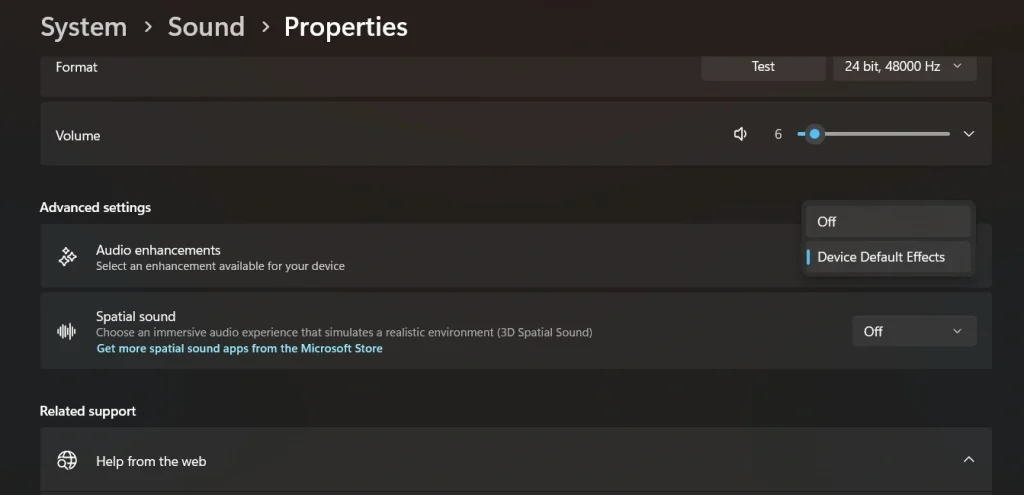
Step 2: Under Output, find your headphones. Click on your device to open its properties. Scroll down to Audio Enhancements. Toggle the switch to Off.
Fix 7. Change Default Sound Format
Sometimes the selected audio format is not supported by your headphones. This can prevent proper detection or cause audio to fail even when the device appears connected. It usually happens after updates or when using different audio hardware.
Changing the sound format to a more compatible option helps Windows communicate properly with your headphones. It is a simple adjustment that often restores normal audio output.
How this helps:
- Ensures compatibility between the system and the headphones
- Fixes silent output even when headphones are detected
- Reduces audio glitches or distortion
- Helps after Windows updates reset audio settings
- Improves overall sound stability
Steps:
Step 1: Go to Sound Settings and open Device Properties for your headphones.
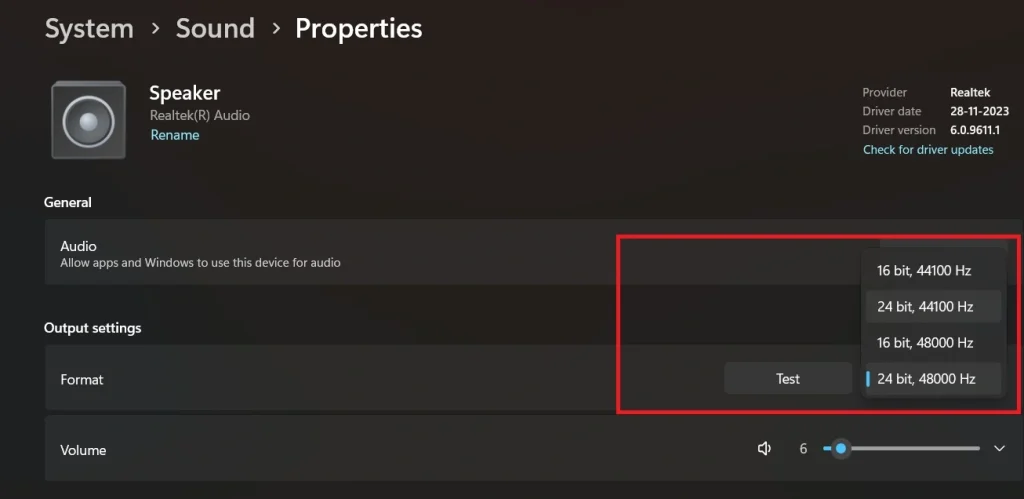
Step 2: Under Advanced, change the default format and test the audio on your headphones.
Fix 8. Perform a System Restore
If the headphone issue started suddenly, it may be linked to a recent update or system change. In such cases, troubleshooting individual settings may not work because the root cause lies deeper in the system.
System Restore allows you to roll back your computer to a previous state where everything was working correctly. It does not affect personal files, but it can remove problematic updates or driver changes.
How this helps:
- Reverts recent system changes, causing the issue
- Fixes problems after Windows or driver updates
- Restores previous working audio settings
- Saves time compared to manual troubleshooting
- Helps when the exact cause is unknown
Steps:
Step 1: Search for “System Restore” and open “Create a restore point”.
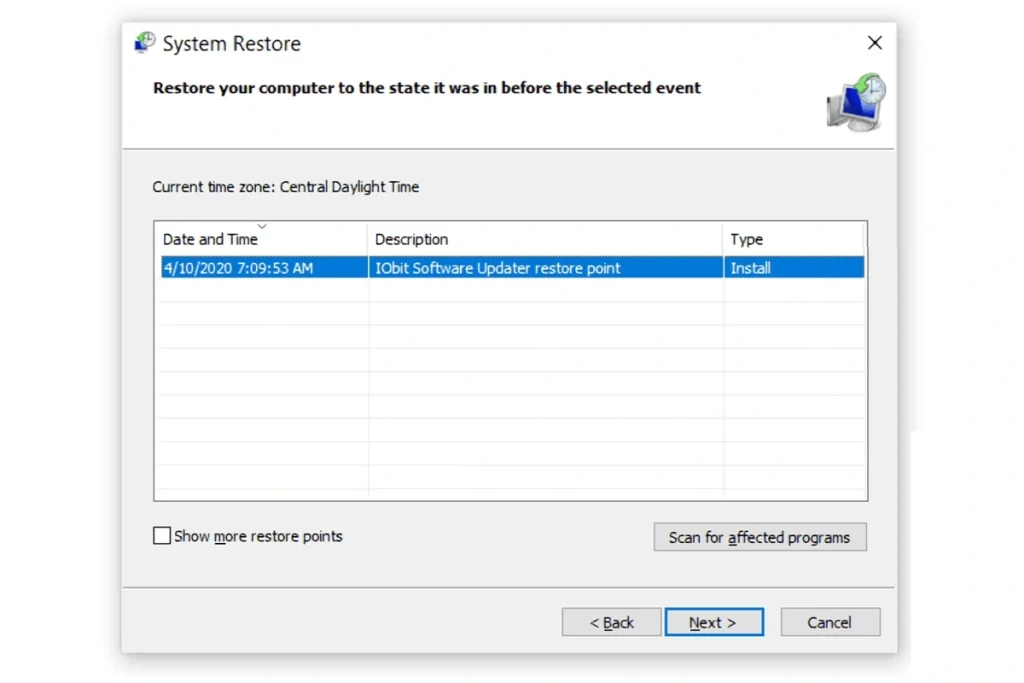
Step 2: Click “System Restore,” choose a restore point, and follow the instructions
Author’s Tip
Try to keep your audio configuration clean. Remove unused devices from the playback list. Reduce the number of virtual sound tools. Extra tools often confuse the system and cause routing problems. Keep the main audio controller updated. Try to use a single standard driver for long-term stability.
You can also clean the headphone jack once in a while. Use a soft brush or compressed air. Avoid sharp objects. Many detection failures come from dust inside the port. A quick clean gives the sensor a clear path. This helps the computer detect the headphones faster and with better accuracy.
Advanced Tips for Troubleshooting Headphone Detection
Improve Detection and Stability
- Check BIOS settings
Some laptops have an audio setting inside the BIOS. Make sure internal sound devices are enabled. - Disable front panel detection in the audio tool
This helps when the system misreads split ports. - Use a USB sound card
A small USB adapter can solve jack-related issues. - Reset sound controllers in safe mode
This clears driver conflicts and gives a fresh start. - Uninstall third-party audio boosters
Many boosters override system settings and cause issues. - Check for GPU audio conflicts
GPU sound drivers can take over audio routing. Disable them if not needed. - Turn off exclusive mode
Some apps take full control of the audio device. Disable exclusive mode in sound settings. - Update the system BIOS
In rare cases, BIOS updates provide better audio handling.
When Should You Consider Professional Help?
If none of the fixes work, the issue may go beyond simple troubleshooting. In such cases, it is better to get expert assistance to avoid further damage or wasted time.
- Headphone jack is physically damaged
Loose or broken ports often need hardware repair - No audio devices are detected at all
This may indicate a deeper motherboard or sound chip issue - Driver installation keeps failing
Persistent errors may require advanced system repair - Audio cuts in and out randomly
This can point to internal hardware faults - Laptop suffered physical damage or liquid exposure
Internal components may be affected - Bluetooth module is not working
Wireless issues may need replacement parts - Multiple audio devices fail simultaneously
Indicates system-level or hardware failure - You are unsure about performing advanced fixes
Professional help prevents accidental system damage
Common Headphone Problems and Their Solutions
Headphone issues can appear in different ways, but most follow common patterns. Knowing these problems and their solutions can save time and effort.
- Headphones not showing in playback devices
Enable disabled devices in sound settings - No sound even when detected
Check volume levels and default device selection - Sound coming from speakers instead
Set headphones as the default output device - Crackling or distorted audio
Update drivers or check cable condition - Bluetooth headphones not connecting
Remove and re-pair the device - Only one side of headphones works
Inspect cable or try a different device - Headphones work on other devices but not PC
Focus on driver or system settings issues - Audio delay in wireless headphones
Adjust Bluetooth settings or use a different codec
Conclusion
Troubleshooting headphone detection problems does not have to be difficult. With patience and simple steps, you can identify the cause. Most issues come from drivers, wrong playback settings, or blocked audio ports. When you follow each method carefully, you give the system a clear path to detect your headphones again. The combined effect of software checks and hardware checks creates stable audio performance.
In many cases, the error appears due to regular system use. Updates, background apps, and small hardware issues can create confusion in sound routing. Once you understand the cause, the repair becomes simple.
Keep your device clean, keep your drivers updated, and test your headphones on other devices. This helps you respond quickly when problems appear again.
FAQs:
1. Why does my system say the headphones are plugged in, but no sound comes out?
This usually happens when the wrong device is selected in the playback list. It can also occur when the volume mixer is muted or when an app holds control of the audio device. Updating the driver or resetting audio services often fixes this problem.
2. What should I do if my PC never detects any headphones?
Start with simple checks. Look at the headphone jack and cable. Test another headphone. If the hardware is fine, update the drivers and check the playback settings. Also, try restarting audio services.
3. Can dust cause headphone detection issues?
Yes. Dust blocks the internal sensor inside the jack. When the sensor cannot read the plug properly, the system fails to detect the headphones. Cleaning the jack usually helps.
Author Bio:
Dinesh Lakhwani 

Dinesh Lakhwani, the entrepreneurial brain behind “TechCommuters,” achieved big things in the tech world. He started the company to make smart and user-friendly tech solutions. Thanks to his sharp thinking, focus on quality and the motto of never giving up, TechCommuters became a top player in the industry. His commitment to excellence has propelled the company to a leading position in the industry.
Popular Post
Recent Post
How to Recover Deleted Files from Pen drive, USB Drive, SD Card
Introduction: On tech forums, you’ll often see posts like this: “I connected my pen drive to my laptop this morning, but the folder was empty. All my college project files had vanished. I don’t have a backup. Can someone help me?” Stories like this are very common. Pen drives, USB drives and SD cards are […]
How To Recover Files Deleted from the Recycle Bin [Windows 11]
Losing a file can happen in seconds. You clear your desktop, hit Delete, and empty the Recycle Bin. Then, just when you need that file again, it seems to have vanished. This guide will walk you through ways to restore files removed from the Recycle Bin. We will begin with simple fixes, then look at […]
Disk Drill Data Recovery Tool Explained: Full Review and Guide
It happens in a split second. You delete a folder by mistake. Your drive stops showing up. A photo album from your last trip just vanishes. And your stomach drops. Lost files feel personal. They are not just data. They are memories, work hours, and sometimes years of effort packed into a few gigabytes. When […]
Recover Deleted Files In Windows 11 With Software & Without
Introduction What is the first thing that goes through your mind the second an important file vanishes from a Windows 11 PC? For most people, it is a mix of panic and disbelief, followed by a frantic click through every folder that file could possibly be hiding in. It happens in a split second: one […]
EaseUS Data Recovery Wizard: Everything To Know
Data loss does not always come from a big disaster either. Most cases start small and boring. A drive gets formatted by mistake. A laptop freezes mid-save and restarts on its own. A memory card stops showing up after being pulled out too fast. None of these feel like emergencies at first, until you realize […]
Recuva Data Recovery Tool: Is it Actually Worth it?
When I first tried Recuva Data Recovery, I wanted to see if it could really bring back lost files. The tool is free, small in size, and promises quick recovery, which made me curious enough to test it on my own PC. The setup was fast, and the wizard guided me step by step. I […]

GetData Recover My Files Data Recovery Tool: Honest Review
A hard drive error brings a special kind of silence. Well, yes! The screen freezes, then a message appears saying the drive can’t be found or must be formatted. In that moment, years of photos and work files feel at risk. It never happens at a good time. Coffee spills near a laptop, a memory […]
Windows File Recovery: A Complete Review [Tried & Tested]
Imagine this. You spend hours perfecting a video project. You hit save. Then your laptop freezes, reboots, and when the screen comes back. The file is gone. Your stomach sinks. It’s not just you. Lost files happen all the time. A dropped hard drive, a bad update, an accidental delete, or a corrupted partition can […]

5 Best Data Recovery Software For Windows 11 and Windows 10
Introduction: A crashed drive can ruin a whole day. One minute your photos, work files, and tax records sit safe on your PC. The next minute they are gone. A power cut, a bad update, or one wrong click can wipe out years of memories and months of work in seconds. That sinking feeling is […]