


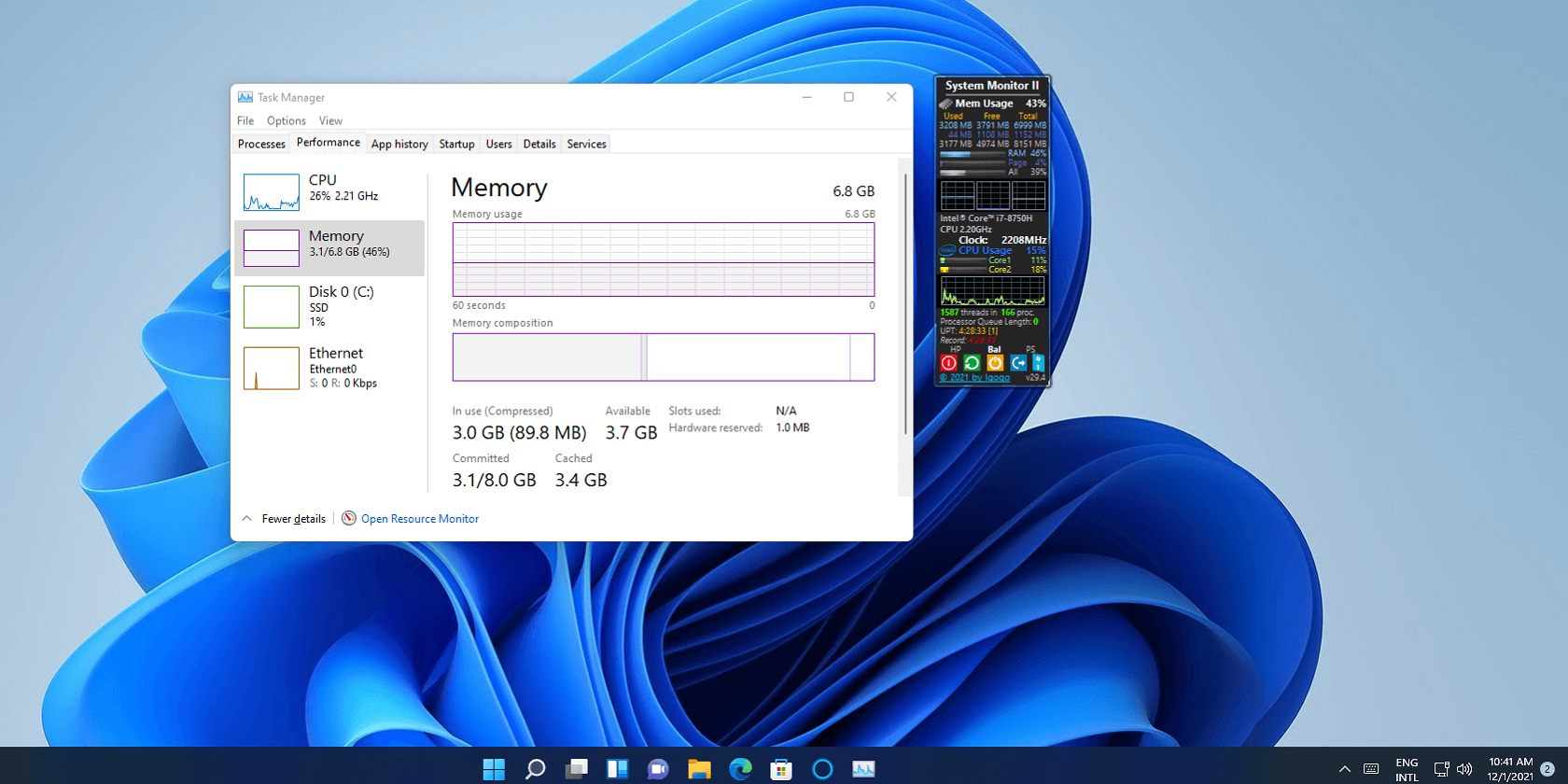

A slow PC rarely gives a warning. One day, it simply takes longer to start. Apps open late. The fan runs loud, even when the screen is almost empty. Most people blame old hardware. Often, that is not the real reason. The real reason is hiding in plain sight. Windows keeps many apps active in […]
How to Set Up a Secure VPN Connection on Windows
A VPN helps protect your privacy each time you go online. It hides your real location. It protects your data from unsafe networks. It also keeps your browsing away from unwanted eyes. Many people use it to keep their work safe. Others use it to guard their regular internet use.
Windows offers good support for VPN tools. You can use built-in settings. You can also use apps from trusted providers. You only need a short setup process to start. Once active, your VPN will protect your data each time you connect.
Stay Safe Before You Begin: Set Up a Secure VPN Connection
Read This First
It is wise to prepare before you install any VPN. A few checks can prevent trouble. These simple points keep your device safe and clean. They also help you avoid setup errors. Take a moment and read through them.
- Check your Windows version
Make sure your system has the latest updates. Old systems may fail during setup. Updates also help with security. - Scan your system
Run a full virus scan. Clean your system if needed. This helps avoid conflicts with the VPN. - Use trusted sources only
Download VPN tools only from official pages. This reduces the chance of fake software. - Know the laws in your region
Some places have rules for VPN use. Read them to avoid problems. - Avoid public Wi-Fi during setup
Use a private network when you install the VPN. Public networks may expose your data. - Check your firewall rules
Ensure your firewall does not block VPN traffic. If it does, the connection may fail. - Back up important files
Errors are rare but possible. A backup gives peace of mind. - Restart your device
A fresh start helps avoid background issues. It also improves setup speed.
What You Need First: Set Up a Secure VPN Connection
Before You Start
A VPN setup is simple. Still, you need a few things ready. These items help you complete the process without trouble. Keep them nearby as you move through each step.
- A stable internet connection
You need steady internet for the setup. Slow networks may cause errors. - A VPN account
Get an account from a trusted VPN provider. Free accounts may have risks. Paid accounts give better speed and privacy. - Login details
Keep your username and password ready. You will need them during setup. - Server information
Your provider will share server names. You need this information for manual setup. - VPN protocol choice
You may choose PPTP, L2TP, IKEv2, or OpenVPN. Your provider will guide you. - Administrator rights
Your Windows account should allow system changes. You need this to install or configure a VPN on Windows. - Enough storage space
Make sure you have space for the VPN app. Most apps need only a small amount. - A trusted provider
Choose a service that values privacy. Read reviews to avoid unsafe apps.
Why Setting Up a VPN Helps You?
Key Advantages
A VPN can protect you in many ways. It also gives you better control over your digital life. Once active, your connection becomes private and harder to track. Many people use it for work. Many use it for daily browsing.
- Better privacy
Your IP address stays hidden. Websites cannot track your real location. - Safer online banking
A VPN protects your financial data during online payments. - Stronger security on public Wi-Fi
Hotels, malls, and airports have unsafe networks. A VPN protects you on them. - Access to restricted content
Some sites block content by region. A VPN helps you reach them within legal limits. - Safer file transfers
VPN encryption can protect sensitive files. - Lower risk of spying
Your data stays encrypted. Third parties cannot see what you do online. - Better protection for remote work
Many remote workers use a VPN. It helps guard company data. - Extra layer of identity protection
Hackers have a harder time tracing you.
FLUQs
How does a VPN protect my privacy
A VPN hides your traffic inside an encrypted tunnel. This keeps your activity out of sight on any network. Your service provider cannot follow what you do online. Websites cannot read your true location. Hackers on public Wi-Fi cannot view your data.
Can I run more than one VPN on Windows
You can install several VPN apps on your device. You should not use them at the same time. Two active VPNs will fight for control of your network. Pick one as your main option. Keep the others only if you need a backup.
Why should I avoid free VPN apps
Many free VPN apps record your data to support their services. Some show ads. Some slow down your traffic. A few may even share your information with unknown groups. Paid VPNs give stronger privacy, better speed, and steadier connections.
How to Set Up a Secure VPN Connection on Windows?
It is easy to set up a secure VPN connection on Windows once you know the steps. Windows provides a built-in feature that works for many providers. You can also use a dedicated app. Both methods work well. These 3 simple steps help you use the built-in method. They guide you in clear order.
Step 1: Open Windows Settings
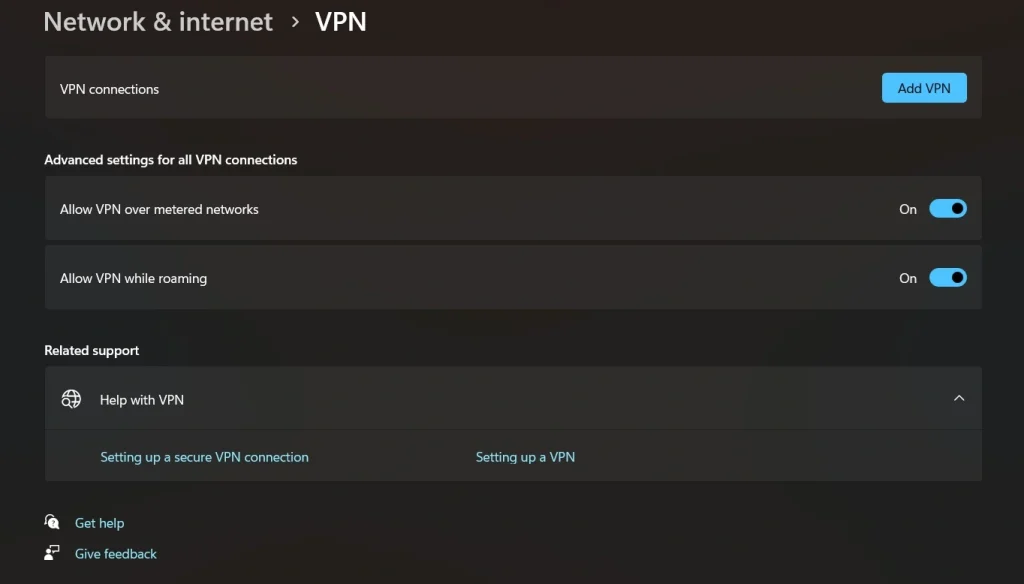
Click the Start button. Open Settings. Go to the Network and Internet tab. You will see the VPN option there. Click it. This takes you to the VPN setup page.
Step 2: Add a new VPN connection
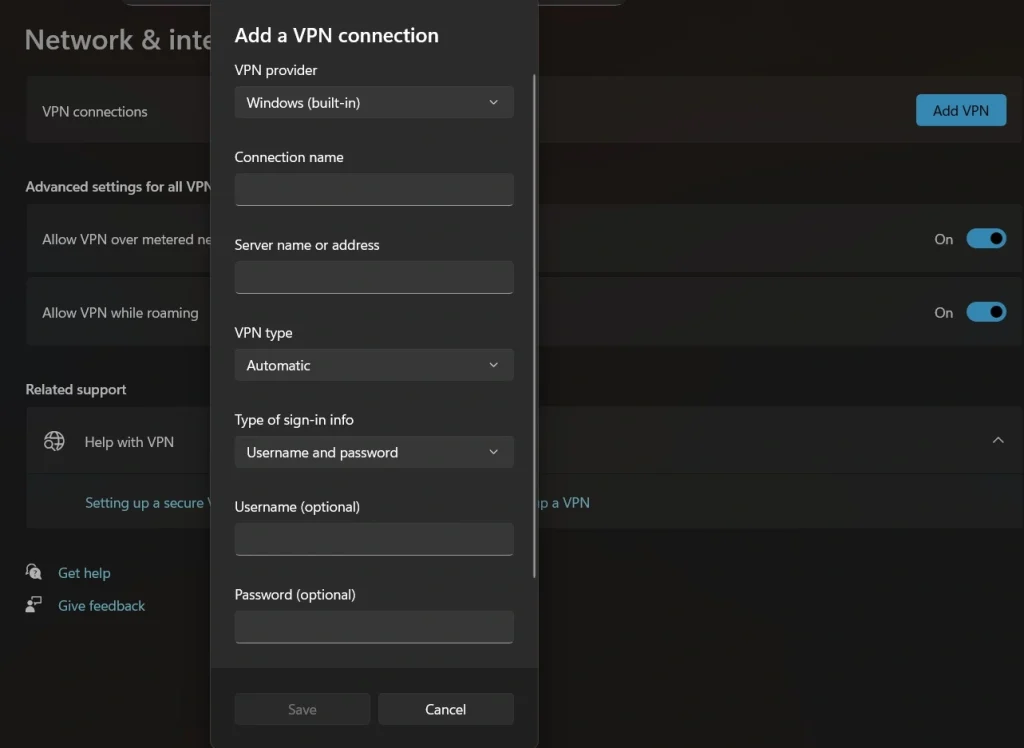
Click the Add a VPN connection button. A form will appear. Choose Windows as the VPN provider. Enter the Connection Name. You can use any name you like. Enter the Server Name or address given by your provider. This information is important. It links Windows to the correct server.
Choose the VPN type based on your provider’s guide. Enter your username and password. These details activate your account. You may see other fields. Leave them as they are unless your provider asks for changes.
Step 3: Connect
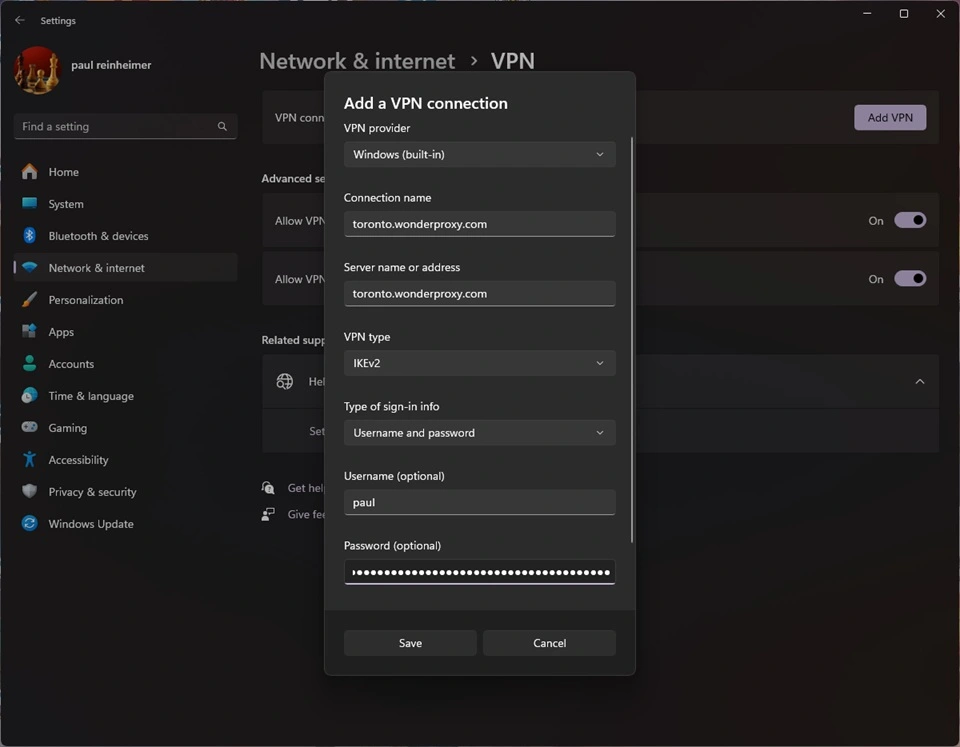
Click Save. Now your VPN profile is ready. You will see it in the list. Click it. Press Connect. Your VPN will start working in a few seconds. If it fails, check your internet or your login details. Once it works, your connection becomes private.
Using these four steps, you can set up a secure VPN connection on Windows with ease. You can also configure a VPN on Windows using the app offered by your provider. Many users like this method because it is easier. The app handles most settings by itself.
Advanced Tips for Better Security
Go Beyond Basic Setup
You can improve your VPN security by using extra steps. These tips help you get stronger protection. They also keep your system stable. Follow them only if you need higher control.
- Use stronger protocols
Choose OpenVPN or IKEv2 if your provider supports it. These options are safer than older ones. - Turn on the kill switch
Many VPN apps include a kill switch. It stops internet traffic if the VPN drops. This protects your privacy. - Enable auto-start
Set your VPN to start with Windows. This keeps your device protected from the moment it starts. - Use split tunneling with care
This feature allows some apps to bypass the VPN. Use it only if needed. - Update the VPN app
Providers release updates to fix issues. Keep your app current. - Avoid fast but weak servers
Some servers have high speed but lower strength. Pick the server that your provider recommends for safety. - Check DNS leak protection
Use a tool to test for leaks. Many VPN apps include built-in leak protection. - Log out of unused sessions
Some accounts allow multiple logins. Log out of devices you do not use. This reduces risk.
Conclusion
A VPN is now a common tool for personal and work use. It protects you on public networks. It guards your identity. It adds a strong layer of safety to your browsing. Once you set up a secure VPN connection on Windows, the system shields your activity each time the connection is active.
With the steps in this guide, the setup becomes simple. You only need a few minutes. Once the VPN is active, you can browse with more comfort. You can use public networks with less fear. You can work with important data in a safer way.
FAQs
Does a VPN slow down my internet?
A VPN can reduce your speed a little. The encryption process takes extra time. Good providers keep this delay small. You can use a nearby server to stay fast. Test a few servers to see which one works best.
Can I use a VPN for gaming
You can use a VPN while gaming. Some players use it for privacy. Others use it to avoid tracking. Your ping may rise a bit. Choose a fast server for better play. Try different regions if a game server feels slow.
Will my VPN work at all times
Your VPN will work as long as it stays connected. Some apps pause when the system sleeps. You can change the settings so it stays active. Keep the app updated for better stability. If it drops often, try a different protocol.
Author Bio:
Dinesh Lakhwani 

Dinesh Lakhwani, the entrepreneurial brain behind “TechCommuters,” achieved big things in the tech world. He started the company to make smart and user-friendly tech solutions. Thanks to his sharp thinking, focus on quality and the motto of never giving up, TechCommuters became a top player in the industry. His commitment to excellence has propelled the company to a leading position in the industry.
Popular Post
Recent Post
How to Activate Windows with a Product Key for Windows 11 & Windows 10
It always shows up at the worst time. You are halfway through a report, or about to join a video call. Then you spot it in the bottom right corner of the screen. Activate Windows. Go to Settings to activate Windows. Initially, an unactivated copy of Windows may seem like a minor inconvenience. Over time, […]
Is Easy Duplicate Finder Worth It? Honest Review
The photos folder looked normal at first glance. Then the storage warning popped up. One trip photo appeared four times. A tax PDF sat in three different folders. Two old setup files were still in Downloads, and each one was over 500 MB. Nobody plans this mess. Copies pile up slowly. A download runs twice. […]
Wise Duplicate Finder Review: Real Results from Wise Duplicate Finder
Read my honest Wise Duplicate Finder review. See features, pricing, pros and cons, and real PC test results. Find out if this free duplicate cleaner can free up your Windows storage.
How to Recover Deleted Files from Pen drive, USB Drive, SD Card
Introduction: On tech forums, you’ll often see posts like this: “I connected my pen drive to my laptop this morning, but the folder was empty. All my college project files had vanished. I don’t have a backup. Can someone help me?” Stories like this are very common. Pen drives, USB drives and SD cards are […]

How To Recover Files Deleted from the Recycle Bin [Windows 11]
Losing a file can happen in seconds. You clear your desktop, hit Delete, and empty the Recycle Bin. Then, just when you need that file again, it seems to have vanished. This guide will walk you through ways to restore files removed from the Recycle Bin. We will begin with simple fixes, then look at […]

Disk Drill Data Recovery Tool Explained: Full Review and Guide
It happens in a split second. You delete a folder by mistake. Your drive stops showing up. A photo album from your last trip just vanishes. And your stomach drops. Lost files feel personal. They are not just data. They are memories, work hours, and sometimes years of effort packed into a few gigabytes. When […]
Recover Deleted Files In Windows 11 With Software & Without
Introduction What is the first thing that goes through your mind the second an important file vanishes from a Windows 11 PC? For most people, it is a mix of panic and disbelief, followed by a frantic click through every folder that file could possibly be hiding in. It happens in a split second: one […]
EaseUS Data Recovery Wizard: Everything To Know
Data loss does not always come from a big disaster either. Most cases start small and boring. A drive gets formatted by mistake. A laptop freezes mid-save and restarts on its own. A memory card stops showing up after being pulled out too fast. None of these feel like emergencies at first, until you realize […]

Recuva Data Recovery Tool: Is it Actually Worth it?
When I first tried Recuva Data Recovery, I wanted to see if it could really bring back lost files. The tool is free, small in size, and promises quick recovery, which made me curious enough to test it on my own PC. The setup was fast, and the wizard guided me step by step. I […]