
A slow computer makes it hard to focus. Programs take too long to open. Free space keeps shrinking until the disk is almost full. This happens to most PC owners at some point. Even new machines can slow down after a while. That is the exact problem cleanup tools are built to solve. They comb […]
10 Best Screen Sharing Apps for iOS and Android
Introduction:
Screen sharing has become crucial for seamless interaction in today’s interconnected world. With remote work, project collaborations, and staying connected being our everyday essentials, screen-sharing apps have evolved to meet our on-the-go needs, aligning perfectly with our constant companions. Well, you guessed it right, our smartphones and tablets.
In this blog post, we have hand-picked the 10 best screen sharing apps for iOS and Android that you can use to boost productivity and cater to your on-the-go needs. This comprehensive guide covers the description, features, pros, cons, price, and compatibility of each app so that you can pick the finest screen-sharing app suiting your needs and requirement.
10 Best Screen-Sharing Apps for iOS and Android
From feature-rich apps with advanced functionalities to user-friendly interfaces, here is the list of sharing apps for iOS and Android that deserve your attention.
1. Zoom
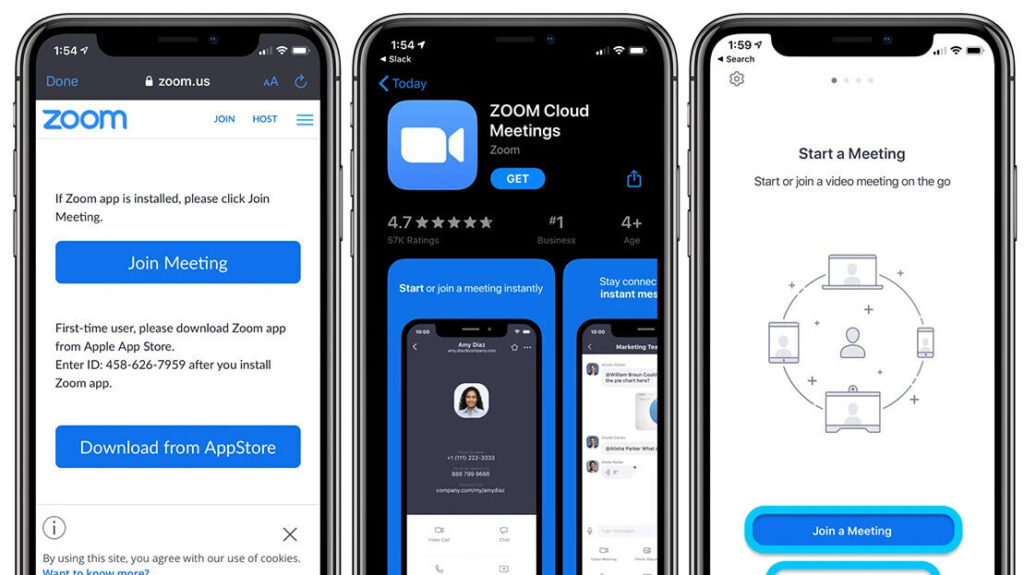
Zoom is a versatile app for Android and iOS that gained immense popularity, especially during the pandemic. The app offers a seamless screen-sharing experience along with robust functionality and an easy-to-use interface. You can use this app to share screens with others during video meetings, presentations, webinars, and more.
Features:
- Allows multiple users to share screens simultaneously.
- Group video conferencing.
- Annotation and whiteboarding.
- Grants remote control access to participants, enabling them to interact with your shared screen.
- Captures and saves screen-sharing sessions.
Pros:
- User-friendly interface.
- Cross-platform compatibility.
- Interactive collaboration tools.
- Ideal app for hosting large meetings and webinars.
Cons:
- The host has to be connected to a desktop to allow multiple users for screen sharing.
- The free plan only allows users to host meetings for up to 40 minutes.
Compatibility: iOS and Android.
Price: Free, offers in-app purchases.
2. Skype
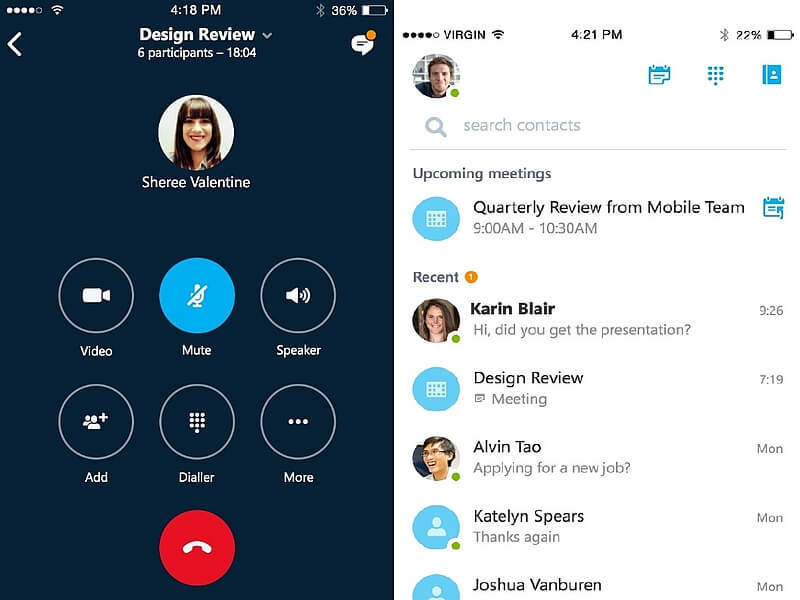
Skype provides a convenient solution for sharing screens during audio and video calls on iOS and Android devices. It allows users to share their screens with others during audio and video calls, making it easier to collaborate, demonstrate, or troubleshoot. With its extensive user base and cross-platform compatibility, Skype has remained a timeless choice for many individuals.
Features:
- Integration with new Bing, AI-powered with OpenAI.
- Allows you to make free video calls to up to 100 people.
- Personalized news section.
- Detects motion usage and orients the camera automatically.
- Allows you to communicate via text and share files along with screen sharing.
- Call quality optimization.
Pros:
- Cross-platform compatibility.
- Reliable, secure, and established platform.
- Enhances collaboration during screen-sharing sessions.
Cons:
- Limited features compared to other dedicated screen-sharing apps.
- Might encounter occasional glitches or screen delays during poor network connectivity.
Compatibility: and Android.
Price: Free, offers in-app purchases.
3. Microsoft Teams
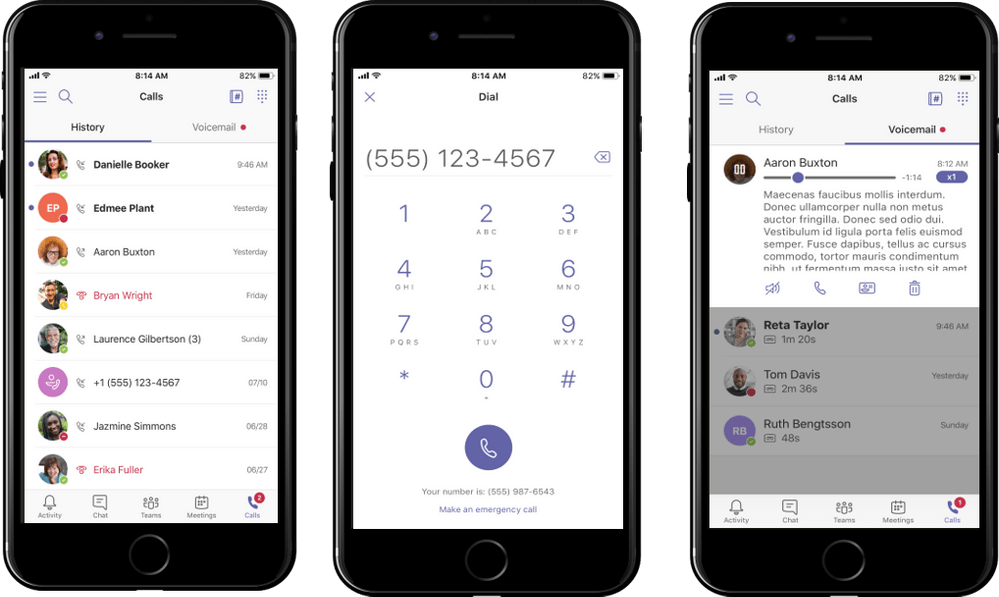
Microsoft Teams mobile app with screen-sharing functionality provides a convenient and integrated solution for collaborative work on iOS and Android devices. Its seamless integration with Microsoft 365, user-friendly interface, and suite of collaboration tools make it a popular choice for businesses and organizations looking for comprehensive screen-sharing and collaboration capabilities.
Features:
- Integration with Microsoft 365.
- Features a “presentation mode” to focus attention on the shared screen.
- Allows real-time collaborations and visual demonstrations.
- Straightforward invite-sharing process via a sharing link or calendar invite.
Pros:
- Familiar and user-friendly interface.
- Robust collaboration controls.
- Seamless file sharing.
Cons:
- Video quality can be enhanced.
- Guests can only share screens during meetings when the admin enables it.
Compatibility: iOS and Android.
Price: Free.
4. Google Meet
When it comes to top-notch security, Google Meet proves to be one of the finest screen sharing apps for both iOS and Android platforms. It employs high-end encryption and security measures to protect meetings and screen-sharing sessions, ensuring the confidentiality of shared content. It offers a secure digital space allowing users to connect and collaborate remotely through audio and video meetings.
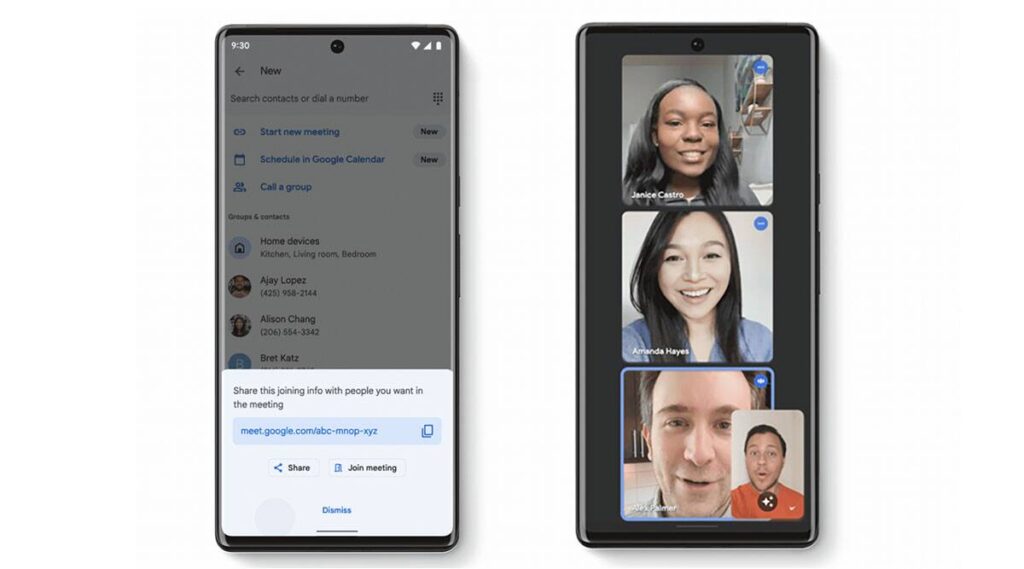
Features:
- Multiple participants can share their screens simultaneously, promoting a collaborative environment.
- Integrated with Google Workspace.
- Communicate via text chat during meetings.
- Low-light mode and noise cancellation.
- Encrypted video calls.
Pros:
- Google Meet is easily accessible to users with Google accounts and does not require additional software downloads.
- User-friendly interface.
- Easily accommodates a large number of participants.
Cons:
- Advanced features and extended functionalities are only available in the paid subscription.
Compatibility: iOS and Android.
Price: Free.
5. TeamViewer
We are sure you have probably heard about TeamViewer. Unlike other apps in the segment, TeamViewer is majorly used for troubleshooting and screen sharing. Hence, it cannot be used for video calling purposes which is a downside. However, TeamViewer mobile app enables users to remotely access and control their computers or share their screens with others from their mobile devices.
Features:
- Convenient for collaboration, troubleshooting, or giving presentations remotely.
- Supports transferring files between the mobile device and the connected computer or server.
- The app provides end-to-end encryption, ensuring the privacy and security of remote connections and transferring data.
Pros:
- Cross-platform compatibility.
- Enables real-time collaboration.
- Ideal app for troubleshooting.
Cons:
- Limited features are available on the mobile version of the app.
- The paid subscription is a bit pricey.
Compatibility: iOS and Android.
Price: Free.
6. Join.me
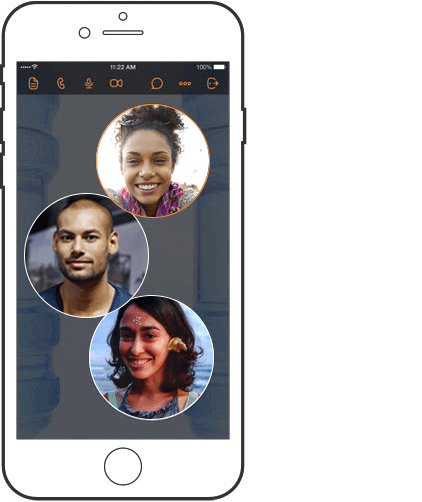
Developed by LogMeIn.Inc, Join.me is a screen-sharing app for iOS and Android that you can use for hosting meetings and sharing content virtually with ease. It enables users to host or join online meetings, presentations, and video conferences, making it easy to collaborate with others regardless of their physical location.
Features:
- Hosts and schedules meetings in just a few clicks.
- Includes a unique “Meeting Lock” feature for enhanced security.
- Share whiteboards easily via AirDrop, Messenger, Mail, Slack, Trello, Evernote, and other apps.
Pros:
- The paid version of the app offers a free-trial period of up to 14 days that you can use without providing credit card information.
- Cross-platform compatibility.
- Intuitive user interface.
Cons:
- The free version only supports basic features.
- Might encounter occasional glitches and screen delays.
Compatibility: iOS and Android.
Price: Free, offers in-app purchases.
7. AnyDesk
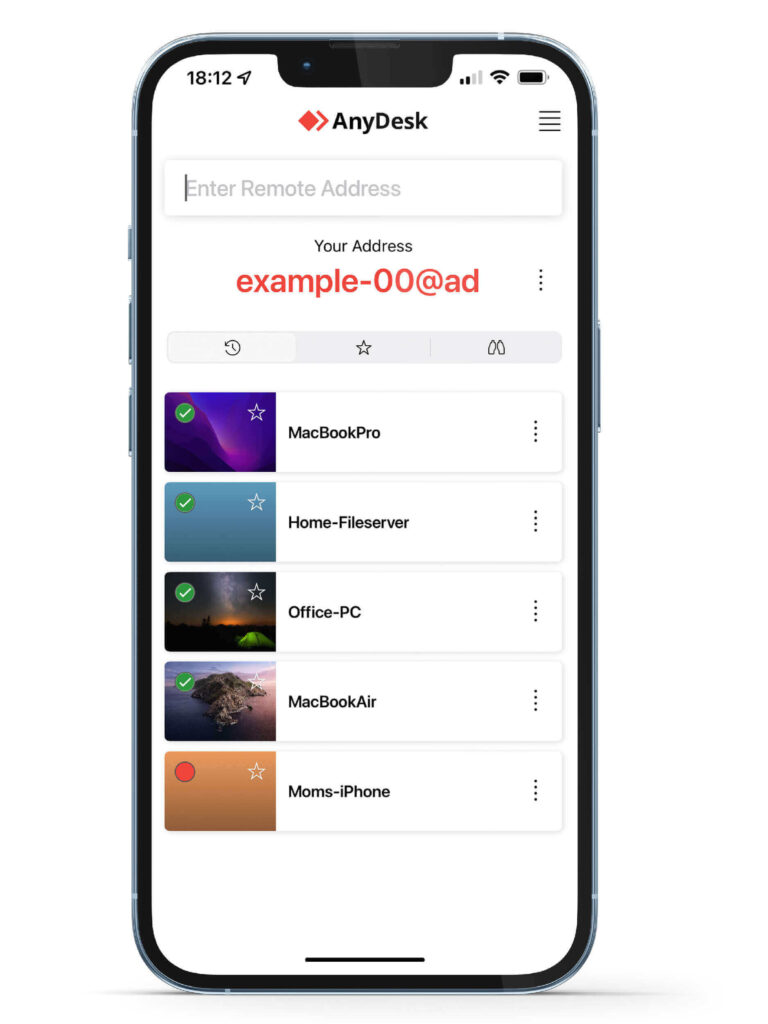
Here comes our next pick on our list of finest screen sharing apps for iOS and Android. The AnyDesk mobile app provides users with the ability to remotely access and control their computers or devices from their smartphones or tablets. It offers a convenient solution for screen sharing, enabling users to collaborate, troubleshoot, or provide support remotely.
Features:
- Follow strong banking-standard encryption to secure your screen-sharing sessions.
- High-frame rates and low latency.
- Uses the DeskRT video codec to provide fast and responsive screen sharing, even on slower network connections.
- Seamless file transfer and sharing options.
Pros:
- Ad-free.
- Easy to use.
- Secure and reliable.
- Ideal for remote troubleshooting.
Cons:
- Limited collaboration features.
- The touch interface has a few limitations.
- Might be resource-intensive at times.
Compatibility: iOS and Android.
Price: Free.
8. ScreenMeet Support
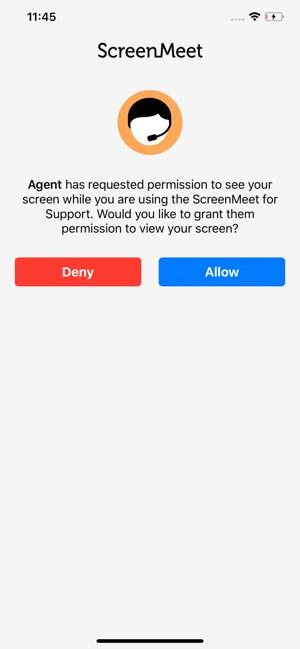
ScreenMeet is a user-friendly screen sharing app for Android and iOS that enables real-time mirroring and broadcasting of your mobile screen. It provides an intuitive solution for professionals to effortlessly showcase demos, presentations, and more, eliminating the need for complex software downloads.
Features:
- Enables real-time screen sharing.
- Annotation and drawing tools to highlight specific areas of the screen.
- Technicians can use a laser pointer to indicate where you should tap.
Pros:
- Quick and instant screen sharing.
- Free to use.
- Secure and reliable.
- Eliminates the hassle of installing any additional software.
Cons:
- Can be slow at times.
- Not as feature-rich compared to other screen-sharing apps.
Compatibility: iOS and Android.
Price: Free.
9. Mikogo
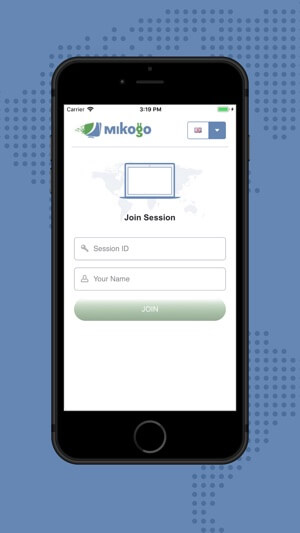
Mikogo is a versatile cross-platform app that enables real-time screen sharing, facilitating remote meetings, presentations, training sessions, and collaborative work. Participants can effortlessly view and interact with shared content, fostering productive and engaging virtual interactions.
Features:
- Includes an intuitive whiteboard feature that allows users to draw on the screen.
- Supports a chat feature that allows you to communicate with others in real time.
- Records screen-sharing sessions.
- Various file-sharing options.
Pros:
- A feature-rich app ideal for both businesses and individuals.
- Versatile applications that can be used to perform a variety of tasks including presentations, training, or troubleshooting.
- Flexible control options.
Cons:
- Not as widely used compared to other screen-sharing apps.
- Some features may only be available along with the paid version.
Compatibility: iOS and Android.
Price: Free.
10. Zoho Assist
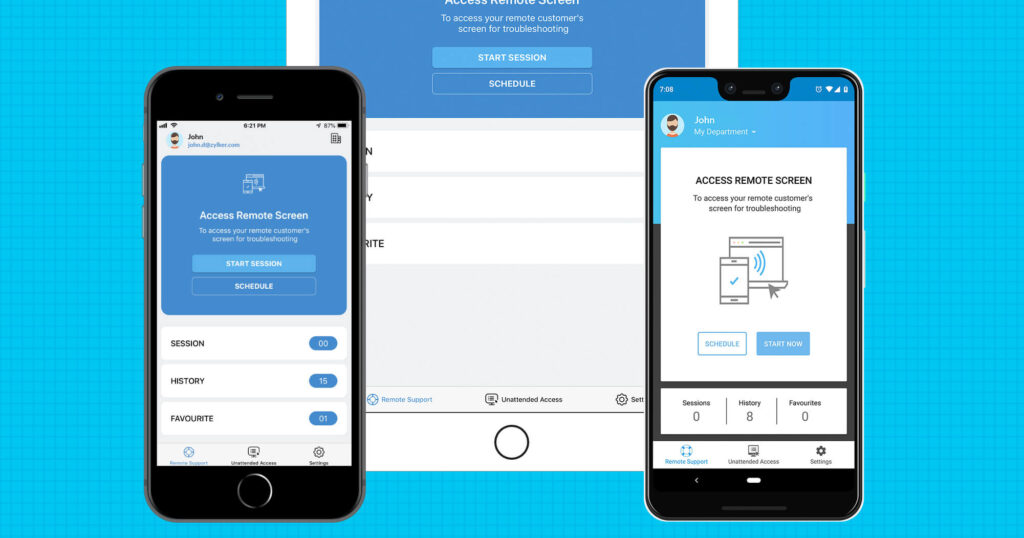
Zoho Assist is a remote support and screen sharing app for iOS and Android. It allows you to connect to and control another device from your device. Zoho Assist is a great screen-sharing app that offers a variety of features and is easy to use.
One notable advantage of Assist is its seamless compatibility across various leading platforms. With Zoho Assist, technicians can initiate remote support, screen sharing, or unattended access sessions to provide real-time assistance to customers and resolve issues promptly.
Features:
- Remote desktop access.
- App lock feature.
- Supports both light mode and dark mode interface.
- Scheduled remote desktop sessions.
Pros:
- Reliable performance.
- Ideal for both technicians and end-users.
- Seamless file transfer.
- 24×7 customer support.
Cons:
- Poor networks can impact the performance of screen sharing.
- The free plan has a time limit of 15 minutes per session.
Compatibility: iOS and Android.
Price: Free.
Conclusion
When it comes to screen sharing on iOS and Android devices, there is a wide range of excellent apps available. Whether you’re looking for remote support, collaborative work, presentations, or simply sharing your screen with others in real time, these best screen-sharing apps have got you covered. With these apps, you can improve productivity, and effortlessly share your screen with others.
FAQs:
Can I use screen-sharing apps for customer support or remote troubleshooting?
Absolutely! These apps are designed to facilitate remote support and troubleshooting, enabling technicians to assist users in real time. You can pick any of the above-listed screen-sharing apps to get the job done with ease.
Do these apps require an internet connection?
Yes, an internet connection is necessary for establishing remote connections and conducting screen-sharing sessions. Also, make sure that your device is connected to a stable Internet connection to experience a seamless screen-sharing session.
Can I share my screen with multiple participants simultaneously?
Yes, many of these apps support screen sharing with multiple participants, enabling effective collaboration and presentations.
Author Bio:
Dinesh Lakhwani 

Dinesh Lakhwani, the entrepreneurial brain behind “TechCommuters,” achieved big things in the tech world. He started the company to make smart and user-friendly tech solutions. Thanks to his sharp thinking, focus on quality and the motto of never giving up, TechCommuters became a top player in the industry. His commitment to excellence has propelled the company to a leading position in the industry.
Popular Post
Recent Post

Fortect Software Review: The Ultimate PC & Mobile Cleaning, Optimization & Security Tool
Slow computers are a common problem for almost every Windows user. Well, yes! Over time, your PC picks up junk files. These files sit quietly in the background. They take up space and slow things down. Programs open slower. Windows takes longer to boot. Even simple tasks like opening a folder can feel sluggish. There […]
CCleaner PC Optimizer Review: A Complete Guide for Windows Users
If your computer has started to feel slow, you are not alone. Most Windows PCs slow down over time. Junk files pile up. The registry gets messy. Too many apps open when you start your PC. All this adds up and makes even a good machine feel tired. This is where a PC cleaner tool […]
Auslogics Duplicate File Finder: Full Review and User Guide
A computer quietly gathers clutter over time. This includes duplicate photos, repeated downloads, and forgotten backups hiding in random folders. This buildup slowly eats away at storage and can make even a fast PC feel sluggish. Manually finding and deleting duplicates is tedious. It means checking every folder, comparing file names, and guessing which copies […]

CCleaner Duplicate File Finder: Key Features, Pricing, Step-by-Step Guide and More
Every computer collects junk over time. Right? Well, yes! Photos often get copied twice. Documents get saved in two folders by mistake. Old downloads pile up and never get deleted. This slowly eats up your storage space, and most people do not even notice until their drive is almost full. That is where a duplicate […]
Duplicate File Finder Pro: A Complete Review, Everything You Should Know
Computers collect thousands of files over time. Well, yes! Many of them end up being duplicates created by backups, downloads, or accidental copies. These extra files take up valuable storage space and make it harder to keep everything organized. Finding and removing them manually can take hours. Right? Duplicate File Finder Pro is a tool […]
Top 3 Duplicate File Finder for Windows 11 & Windows 10
If your PC storage keeps filling up even after you delete big files, duplicate files could be the real reason. Most of us save the same photo twice, download a document more than once, or copy a whole folder by mistake. Over months and years, these duplicate files pile up quietly. You do not even […]
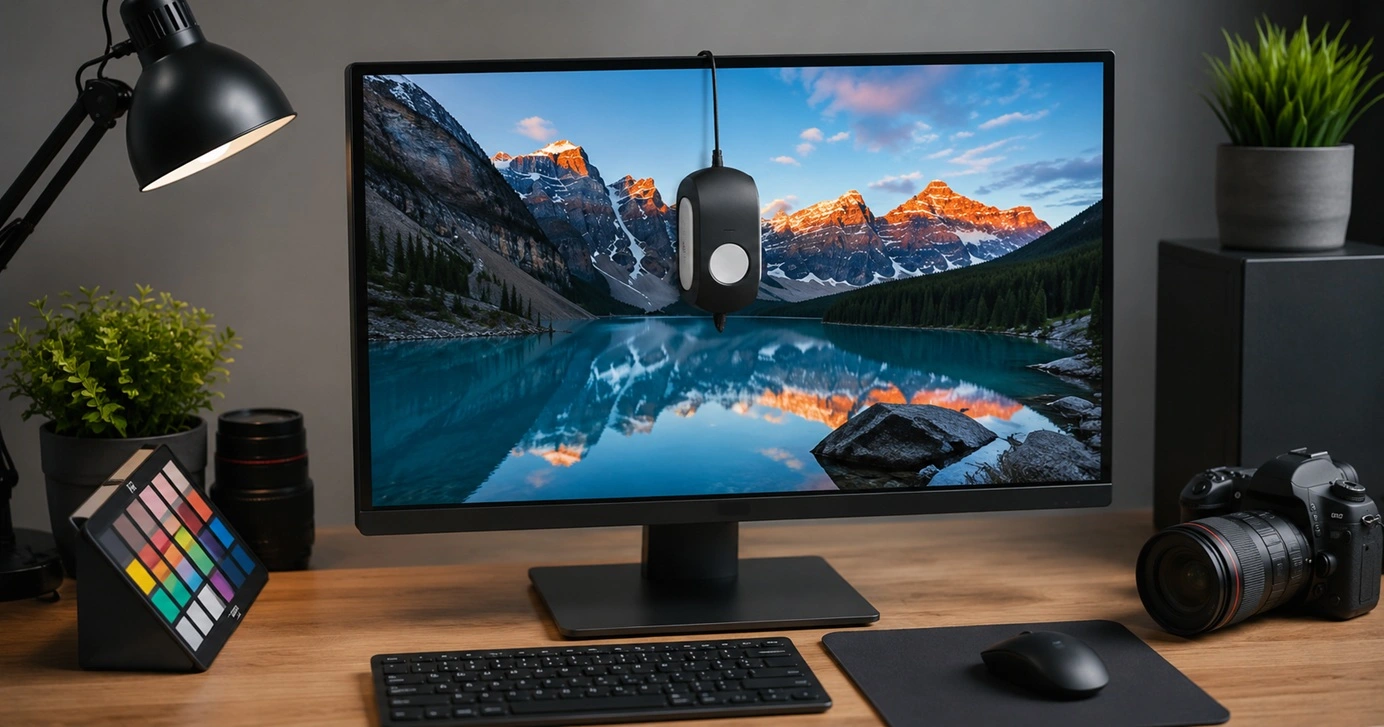
Monitor Screen Calibration Guide: Everything You Should Know
Your monitor shows colors every single day. But are those colors actually correct? Most people never stop to check this. They just use the screen as it comes out of the box. This habit can lead to wrong colors in photos, videos, and work files. Colors may look too warm or too cold without you […]
How To Check Installed RAM and RAM Slots [Complete Guide]
RAM plays an important role in how smoothly a computer runs. Short for Random Access Memory, it stores the data and instructions that Windows and active applications need at any given moment. From opening multiple browser tabs to running games and productivity software, RAM helps keep everything responsive. A system with limited memory may experience […]

What is Microsoft Autopilot Everything You Need To Know
Technology has changed the way companies manage computers. Well, yes! Employees now work from offices, homes, and remote locations. Setting up devices manually for every worker takes time and effort. It can also create mistakes that slow down productivity. This is where Microsoft Autopilot becomes useful. It helps businesses prepare and deploy Windows devices with […]