


A slow computer makes it hard to focus. Programs take too long to open. Free space keeps shrinking until the disk is almost full. This happens to most PC owners at some point. Even new machines can slow down after a while. That is the exact problem cleanup tools are built to solve. They comb […]
Top 14 Duplicate Photo Finder and Remover For Windows [2026]
Introduction:
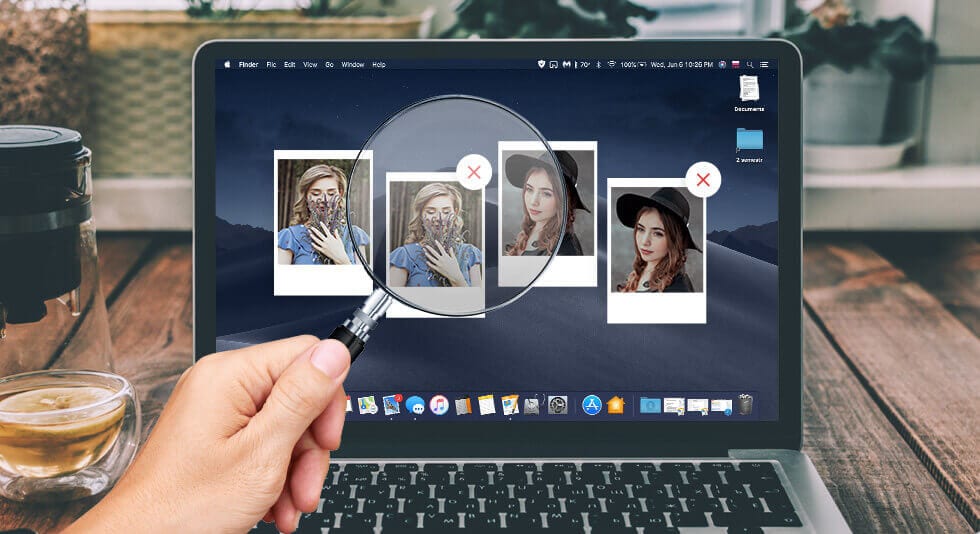
Photos pile up fast. Well, yes! You take ten shots of the same moment. You download the same image twice. You back up your folder and forget you already did it. Before you know it, your storage is packed with copies. A good duplicate photo finder helps you take back that space without losing anything important.
Most people do not realize how many duplicate photos they have until they check. A single vacation can leave you with hundreds of near-identical images. Add downloads, screenshots, and synced folders, and the number grows fast. The good news is that you do not have to sort through all of this by hand. The right tool can scan your entire library and show you exactly what to remove.
This article covers the top 14 tools you can use to find duplicate photos and delete similar and exact looking photos on Windows. Whether you want a simple free tool or a full-featured app, there is something on this list for you. Read on to find the best fit for your needs.
How a Duplicate Photo Finder Works?
A duplicate photo finder scans your selected folders and compares images against each other. Most tools use two main methods. The first is an exact match check. The tool looks at the file content or a hash value. If two files are identical at the byte level, they are flagged as duplicates. This method is fast and very accurate for finding perfect copies.
The second method is visual similarity detection. This is more advanced. The tool converts images into a simplified fingerprint, sometimes called a perceptual hash. It then compares these fingerprints across your library. If two images look alike, even if they have different file names, sizes, or formats, the tool marks them as similar. This helps you delete similar and exact-looking photos that a basic file comparison would miss.
Why You Need a Duplicate Photo Finder?
Storage space is not unlimited. Duplicate images take up room that could be used for new files, apps, or system performance. Removing them is one of the easiest ways to clean up your computer without deleting anything you actually want.
- Recover Storage Space: Every duplicate takes up space. A large library can have gigabytes of redundant files. When you remove duplicate photos, you free up room for things that matter.
- Speed Up Backups: Backups go faster when there are fewer files. Cutting out copies means your next backup takes less time and uses less space on your backup drive or cloud account.
- Reduce Photo Management Confusion: When the same image appears five times in your library, it is hard to stay organized. Cleaning duplicates makes it easier to find what you are looking for.
- Save Cloud Storage Costs: If you pay for cloud storage, duplicates are costing you money. A duplicate photo cleaner can cut your cloud usage significantly.
- Improve App and Viewer Performance: Photo viewers and gallery apps slow down when they have to load thousands of files. Fewer files mean faster performance.
- Protect Original Files: Some tools help you identify which copy is the original and which is the duplicate. This means you keep the best version and delete the rest safely.
- Reduce Mental Clutter: A tidy photo library feels better to browse. When you clean duplicate photos, you make the whole experience of looking through your images more enjoyable.
- Support Better Organization: Once duplicates are gone, it is easier to sort photos into albums, label them, or move them to the right folders. A clean start makes everything smoother.
Precautions: Handle With Care Before You Start Scanning
Before you run any scan, it is smart to take a few steps to protect your files. These tools are powerful, and a little preparation goes a long way. Here is what to keep in mind before you use a duplicate photo remover.
- Back Up First: Create a backup before running any scan so you can recover files deleted by mistake.
- Preview Before Deleting: Always review results before bulk deletion to catch anything wrongly flagged.
- Check Folder Selection: Make sure you are scanning the right folders and not system or document folders.
- Start Small: Run a test scan on one folder first if you are new to the tool.
- Do Not Trust Auto-Select Blindly: Review auto-selected files before confirming deletion.
- Check File Dates and Paths: Keep the copy in the more organized folder and remove the other.
- Use the Recycle Bin: Send deleted files to the Recycle Bin instead of permanently removing them.
- Update Before Scanning: Always use the latest version for the most accurate results.
Top 5 Comparison Table: Top Duplicate Photo Finder Tools for Windows PC
Before diving into the full list, here is a quick look at five popular tools side by side. This table covers the key points that most users care about most when choosing a similar photo finder.
| Tool | Free Version | Visual Similarity | Auto-Select | Supported Formats | Best For |
| dupeGuru | Yes | Yes | Yes | JPEG, PNG, RAW, more | All users |
| Duplicate Cleaner Pro | Trial only | Yes | Yes | 30+ formats | Power users |
| VisiPics | Yes | Yes | No | JPEG, PNG, BMP, GIF | Beginners |
| AllDup | Yes | Yes | Yes | 40+ formats | Free tool seekers |
| Awesome Duplicate Photo Finder | Yes | Yes | No | JPEG, PNG, BMP | Simple scans |
Top 14 Duplicate Photo Finder and Remover For Windows
Here are the top 14 tools to find duplicate photos and manage your library on Windows.
1. dupeGuru
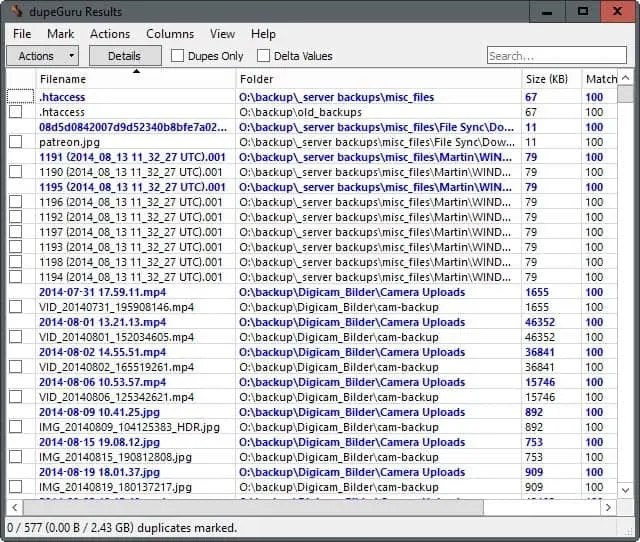
dupeGuru is a free and open-source tool that works on Windows, macOS, and Linux. It has a special picture mode designed specifically to find duplicate photos, including similar images that are not exact copies. The interface is clean and easy to navigate, even for first-time users.
It uses a fuzzy matching algorithm in picture mode, which means it can detect near-duplicate images even if they have been resized or lightly edited. You can set the match threshold to control how strict or loose the comparison should be.
Key Features:
- Fuzzy match algorithm for finding similar images
- Adjustable match threshold for flexible scanning
- Bulk delete support for fast cleanup
- Dedicated picture mode separate from file mode
Pros:
- Completely free and open-source
- Works on Windows, macOS, and Linux
- Handles large photo libraries well
- Actively maintained with regular updates
Cons:
- Interface looks dated compared to newer tools
- No built-in side-by-side preview pane
2. Duplicate Cleaner Pro
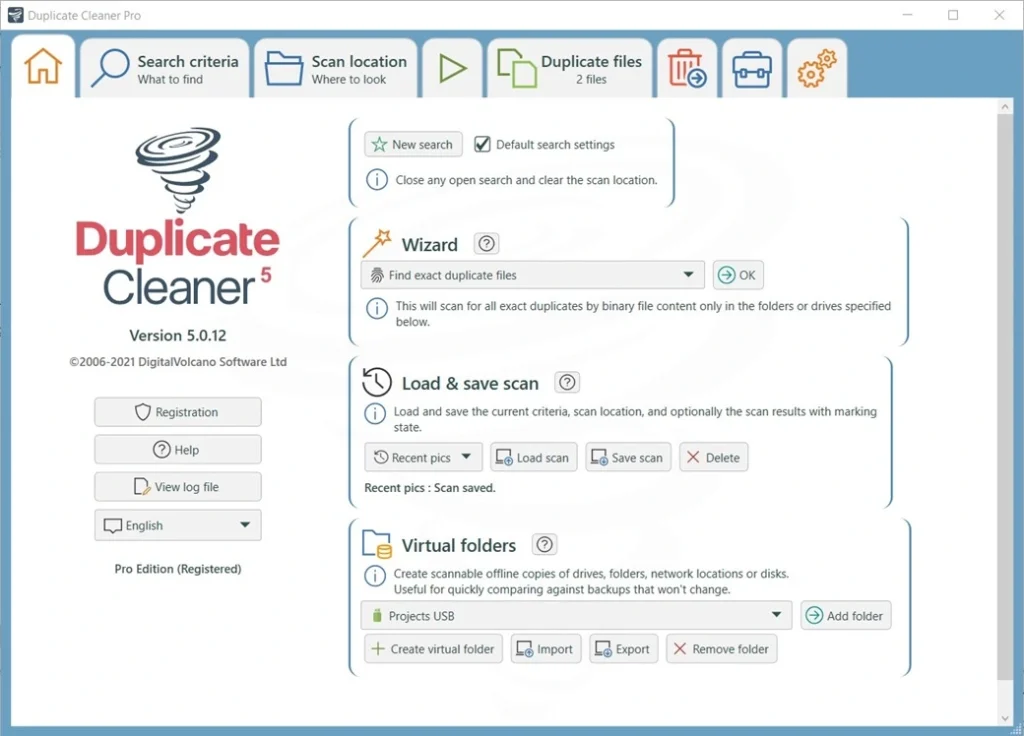
Duplicate Cleaner Pro is one of the most complete tools on this list. It goes beyond just photos and can find duplicates across many file types. For images, it offers visual comparison tools that make it easy to review matches before deleting.
The image viewer lets you see two photos side by side. This is very helpful when you want to make sure you are keeping the right version. It also supports a wide range of image formats, making it a strong duplicate photo remover for mixed libraries.
Key Features:
- Side-by-side image comparison viewer
- Support for 30+ image formats
- Smart selection assistant for bulk actions
- Scans internal and external drives
Pros:
- Very powerful with detailed results
- Excellent preview tools before deletion
- Works across many file types, not just photos
- Trusted by a large user base
Cons:
- No full free version available
- Can be slow when scanning very large folders
3. VisiPics
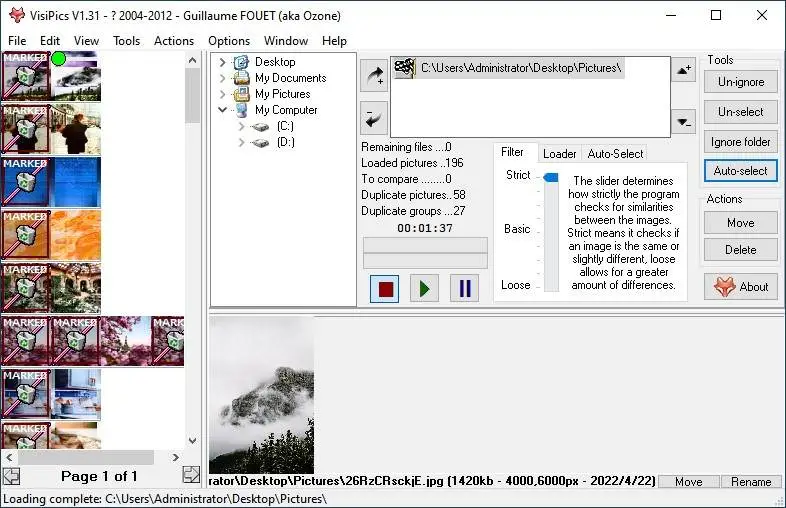
VisiPics is a lightweight tool built just for finding duplicate and similar images. It has a simple two-panel layout. The left side shows your results and the right side shows a preview. You can adjust the similarity slider to control how strict the matching is.
This tool is a good choice if you want something simple and free. It does not have a lot of advanced settings, but it does the core job well. It is one of the easier tools to use if you want to delete similar and exact looking photos without a learning curve.
Key Features:
- Adjustable similarity slider for flexible matching
- Real-time image preview panel
- Simple two-panel layout for easy review
- Lightweight with low system resource use
Pros:
- Completely free to use
- Fast scanning on most systems
- Very beginner-friendly design
- No installation complications
Cons:
- Limited image format support
- No batch export or reporting of results
4. AllDup
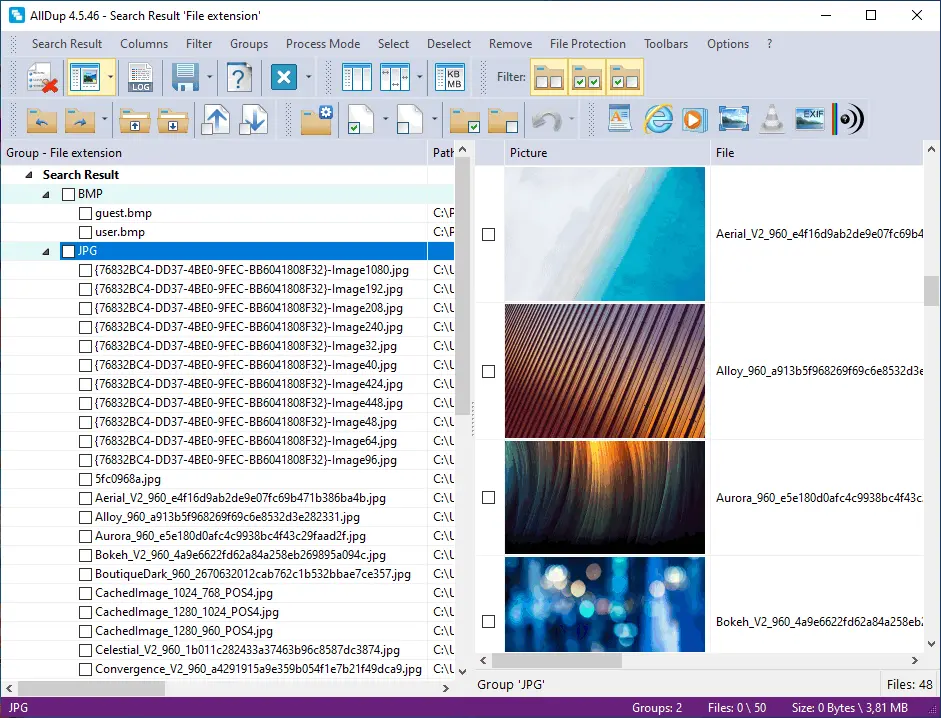
AllDup is a free duplicate file finder that includes strong image comparison features. It supports over 40 file formats and can handle very large scans without slowing down. The interface is more detailed than some tools, which gives you more control over how the scan runs.
You can filter results by file size, date, and folder. This makes it easier to clean duplicate photos from specific parts of your library. AllDup also includes a built-in file viewer so you can preview images before removing them.
Key Features:
- Supports 40+ file formats including images
- Advanced filters by size, date, and folder
- Built-in file viewer for previewing results
- Highly customizable scan settings
Pros:
- Completely free with no feature limits
- Fast performance on large libraries
- Very flexible and customizable
- Regularly updated by the developer
Cons:
- Interface can feel overwhelming for new users
- Learning curve higher than simpler tools
5. Awesome Duplicate Photo Finder
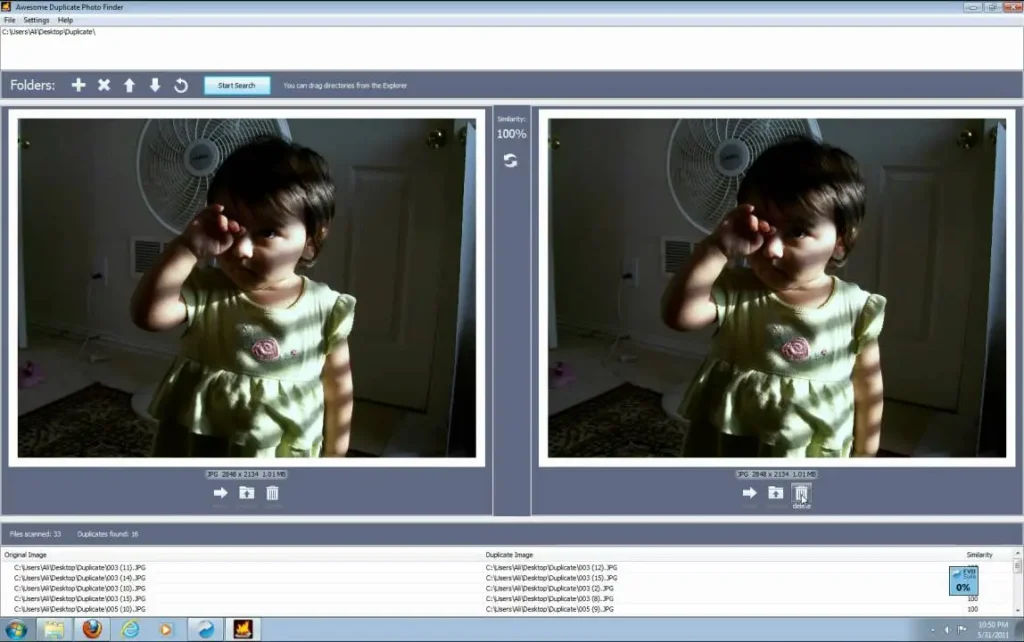
Awesome Duplicate Photo Finder lives up to its name with a clean, user-friendly design. It focuses entirely on images and uses visual comparison to find similar photo finder results even when file names and metadata are different.
The tool is free and requires no installation. You just run it and point it at your folders. The results are shown in a simple list, and you can preview images before choosing what to delete.
Key Features:
- Visual matching regardless of file name or metadata
- Portable with no installation required
- Simple results list with image preview
- Focused entirely on photo duplicates
Pros:
- Free to use with no hidden costs
- Works straight out of the box
- Clean and simple interface
- Good for quick one-off scans
Cons:
- Limited image format support
- No auto-select feature for bulk actions
6. Cisdem Duplicate Finder
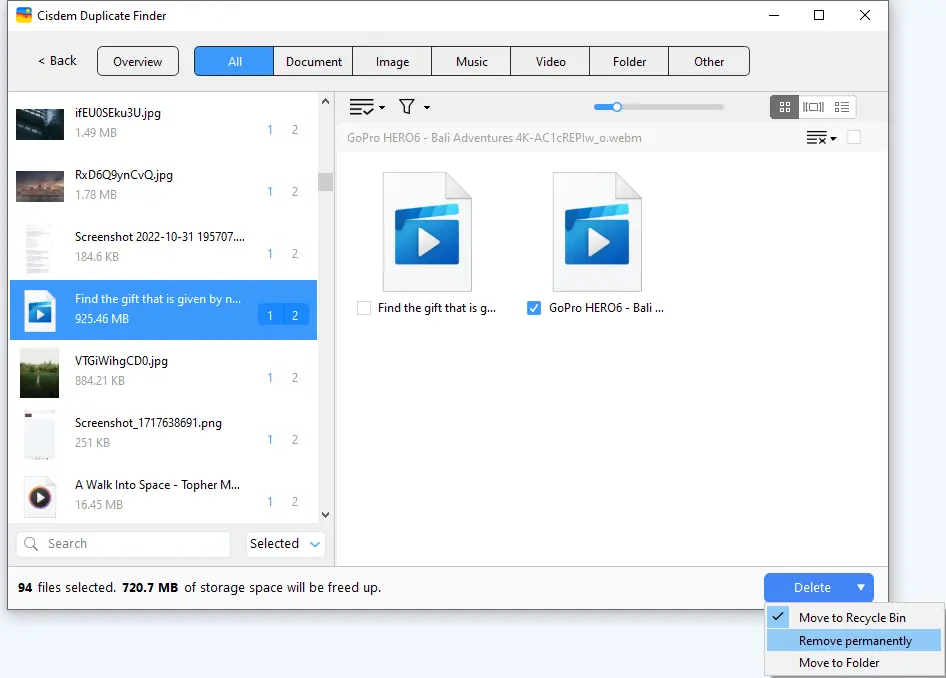
Cisdem Duplicate Finder is a well-known tool that works smoothly on Windows. It scans folders for both exact and similar duplicate photos using a visual comparison engine. The interface is clean and walks you through the process without confusion.
The tool supports a wide range of image formats and delivers results quickly even on large folders. It groups duplicates clearly so you can review and delete with confidence. It is a solid pick for anyone who wants a reliable duplicate photo cleaner without a steep learning curve.
Key Features:
- Visual comparison engine for exact and similar matches
- Supports a wide range of image formats
- Clean grouped results layout for easy review
- Fast scanning even on large photo libraries
Pros:
- Easy to use for all experience levels
- Clean and well-organized interface
- Accurate and reliable scan results
- Works well with external drives
Cons:
- Full version requires a paid license
- Free trial limits the number of deletions
7. digiKam
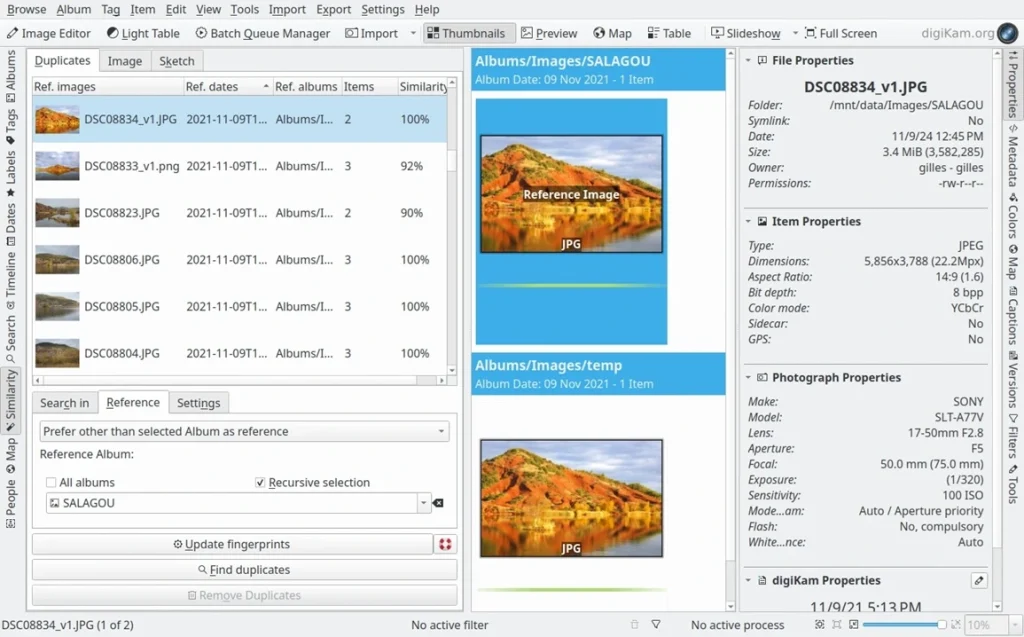
digiKam is a full photo management app with a built-in tool to find duplicate photos. It is free and open-source. The duplicate detection feature compares images using fingerprinting and can find near-identical photos across your library.
Since it is a complete photo manager, you can organize, tag, and edit photos in the same app. This makes it a good choice if you want more than just a duplicate scanner.
Key Features:
- Fingerprint-based duplicate image detection
- Full photo management including tagging and editing
- Open-source with active community support
- Works with large photo libraries
Pros:
- Completely free and open-source
- Does much more than just find duplicates
- Active development and strong community
- Good for serious photographers
Cons:
- Large app with a longer setup process
- Slower to start compared to dedicated tools
8. Duplicate Photo Fixer Pro
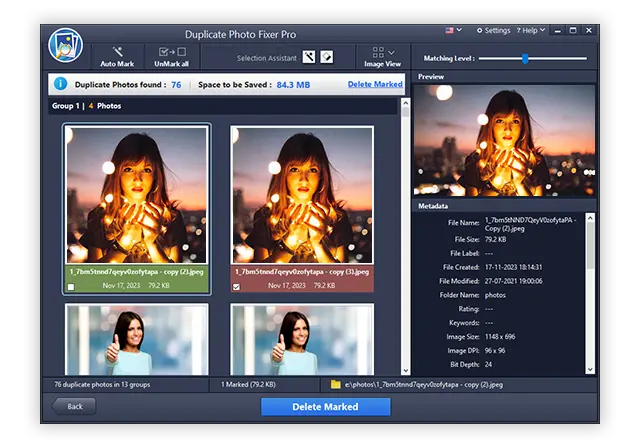
Duplicate Photo Cleaner is a dedicated tool designed to remove duplicate photos from Windows and macOS. It uses both exact match and visual similarity methods to scan your library. The results screen lets you preview matches before making any deletions.
It supports a wide range of image formats and integrates with external drives and connected storage. The interface is clean and guides you through the process step by step. It is a reliable duplicate photo cleaner for both casual and serious users.
Key Features:
- Dual detection using exact match and visual similarity
- Support for external drives and connected storage
- Step-by-step guided interface
- Preview screen before any deletion
Pros:
- Easy to use for all experience levels
- Supports a wide range of image formats
- Reliable and accurate scan results
- Works on both Windows and macOS
Cons:
- Full features require a paid license
- Free trial has a limited scan capacity
9. SimilarImages
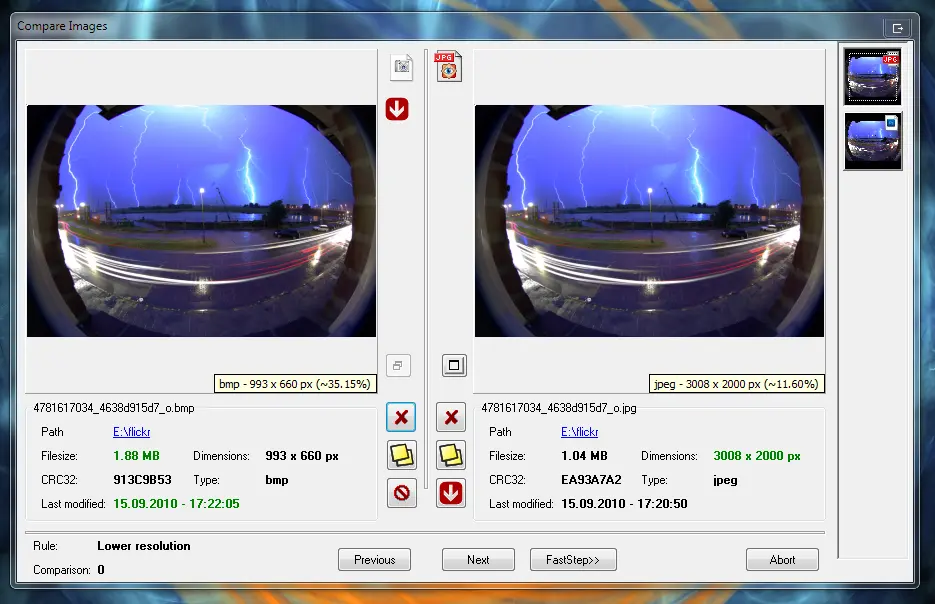
SimilarImages is a simple, no-fuss tool focused on finding visually similar photos. It scans folders and groups images that look alike. The tool is free and lightweight, making it a good option for users with older hardware.
The interface is basic but functional. You can see grouped results and delete what you do not need. It is not the most advanced tool on the list, but it handles the core task of finding similar images without any setup complications.
Key Features:
- Visual grouping of similar image results
- Lightweight design for low-end systems
- Free with no installation needed
- Simple folder-based scanning
Pros:
- Fast and easy to run
- No install required, portable use
- Good for older or low-spec computers
- Easy to understand results layout
Cons:
- No advanced settings or filters
- Limited image format support
10. Duplicate Files Fixer
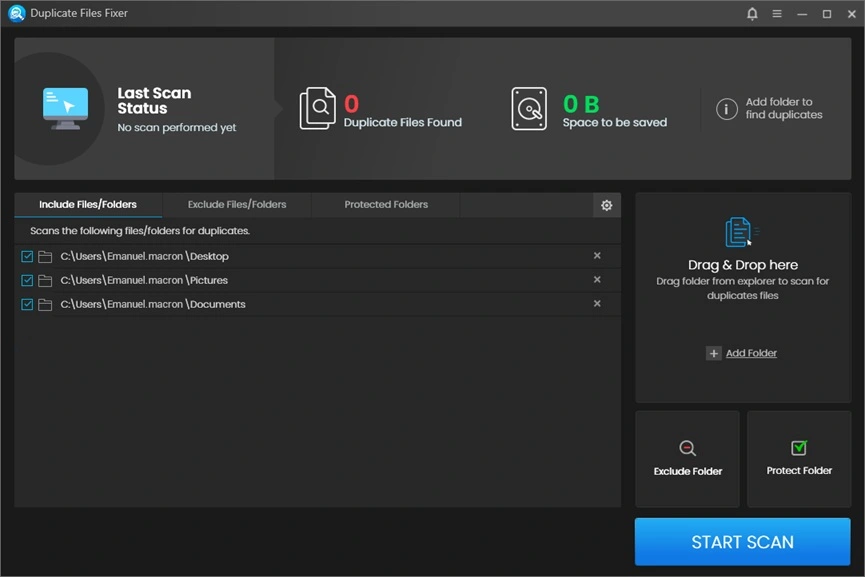
Duplicate Files Fixer is a simple and effective tool available for Windows users. It scans folders for duplicate photos and other file types using both exact match and visual similarity detection. The interface is straightforward and guides you through each step without any confusion.
The tool also integrates with cloud storage, which makes it useful if your photos are spread across local and online folders. Results are displayed in a clean layout and you can preview images before deciding what to delete. It is a dependable option for users who want quick and accurate results.
Key Features:
- Exact match and visual similarity detection
- Cloud storage integration for broader scans
- Step-by-step guided interface
- Preview option before any deletion
Pros:
- Easy to set up and use
- Works with both local and cloud storage
- Clean and simple results layout
- Good free tier for basic needs
Cons:
- Advanced features require a paid upgrade
- Scan speed slows down on very large libraries
11. Fast Duplicate File Finder
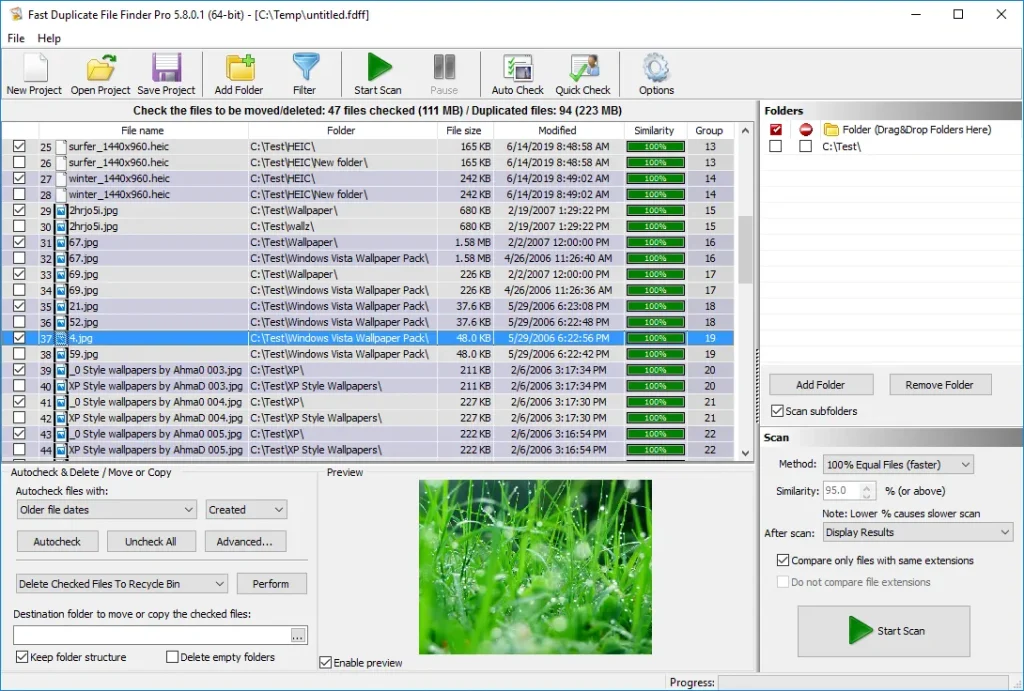
Fast Duplicate File Finder handles all file types but has a strong image comparison mode. It uses visual hashing to compare images and can identify near-duplicates even if they are in different formats or have been slightly edited.
The free version covers basic scans, and the paid version adds more advanced features. It is fast, as the name suggests, and handles large collections without a significant slowdown.
Key Features:
- Visual hashing for near-duplicate image detection
- Supports multiple file formats beyond images
- Fast scanning engine for large libraries
- Free tier available with core functionality
Pros:
- Quick performance on large collections
- Accurate visual comparison results
- Free tier is genuinely useful
- Simple and straightforward to operate
Cons:
- Advanced features cost extra
- Image-specific settings are limited in the free version
12. Ashisoft Duplicate Photo Finder
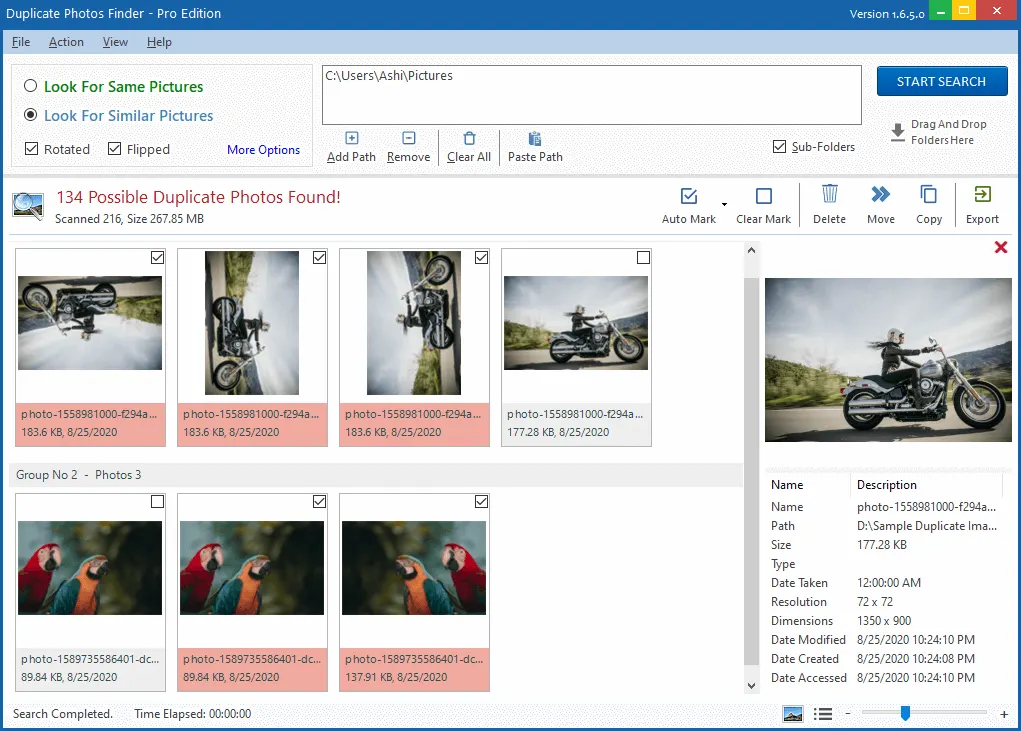
Ashisoft offers a dedicated image duplicate scanner that is easy to set up. It scans selected folders and shows grouped duplicates with previews. You can delete files with one click after reviewing the results.
The tool also includes a scheduler so you can run automatic scans at set times. This is a useful feature for users who want to keep their library clean without doing it manually every time.
Key Features:
- Grouped duplicate results with image previews
- Scheduled scan feature for automatic cleanup
- One-click delete after review
- Dedicated image-focused scanning engine
Pros:
- Easy and quick to set up
- Scheduled scanning saves time
- Straightforward results layout
- Good for regular maintenance use
Cons:
- Interface design looks outdated
- Fewer format options than some competitors
13. AntiDupl.NET
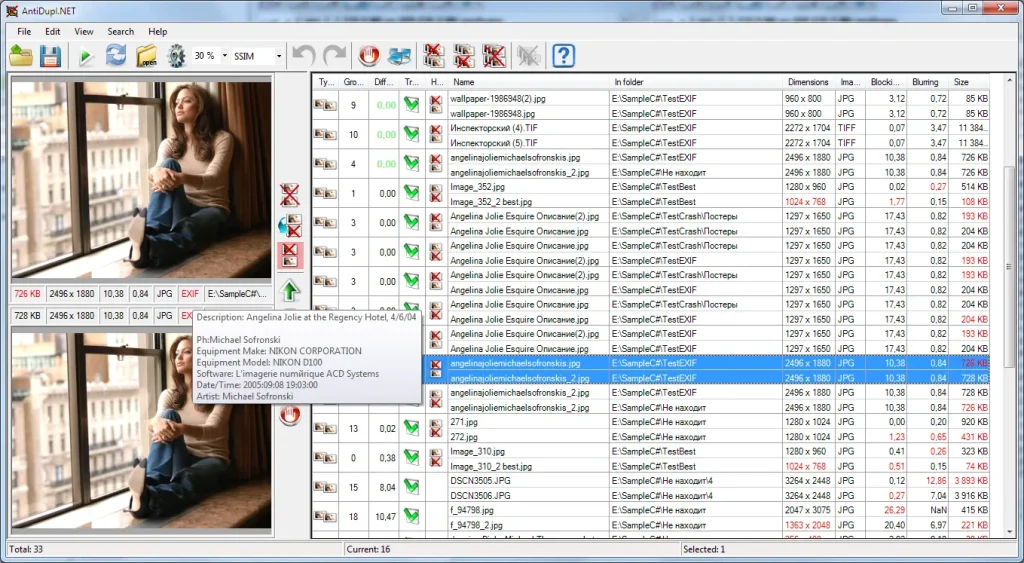
AntiDupl.NET is a free, open-source tool that specializes in finding duplicate and defective images. It compares images visually and shows results in a side-by-side view. You can browse through each pair and choose which one to keep.
The tool is especially good for photographers who want detailed control over each deletion decision. It is not the fastest tool on this list, but it gives you very precise results.
Key Features:
- Side-by-side visual comparison of duplicate pairs
- Detects both duplicate and defective images
- Open-source with full transparency
- Manual review mode for precise control
Pros:
- Completely free and open-source
- Very precise and detailed results
- Good for careful, file-by-file review
- Unique defective image detection feature
Cons:
- Slower scan speed than most other tools
- Basic and plain interface design
14. PictureEcho
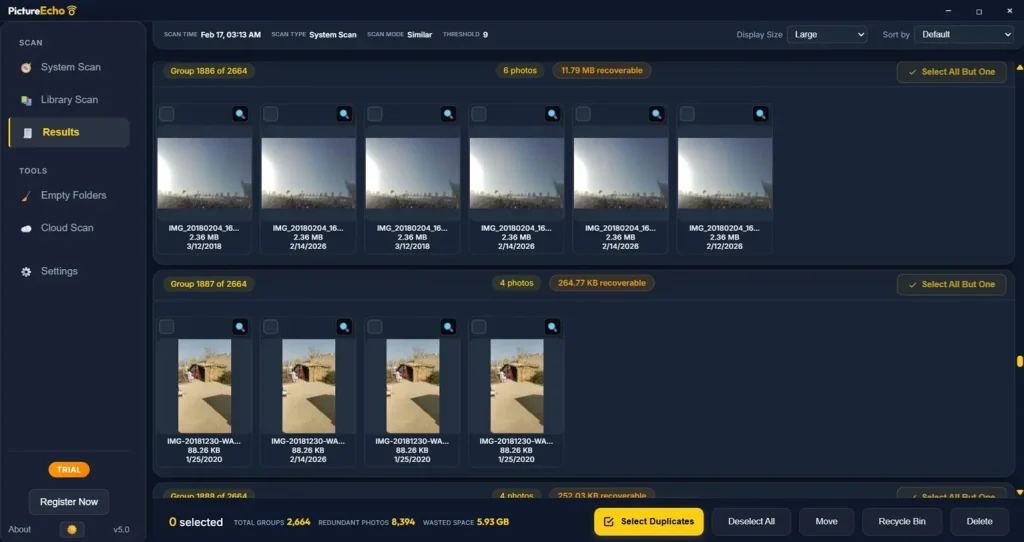
PictureEcho wraps up this list as a user-friendly option for everyday Windows users. It scans your photos using visual similarity detection and organizes results in a clear layout. You can filter results by similarity level and review images before deleting.
It supports major image formats and works well with both local folders and external drives. The free version covers most basic needs, and the premium version unlocks larger scan sizes and faster processing.
Key Features:
- Visual similarity detection with an adjustable filter
- Supports local folders and external drives
- Clear results layout organized by similarity
- Free version with upgrade option available
Pros:
- Clean and easy-to-use interface
- Good free tier for basic needs
- Works well with external storage
- Suitable for everyday Windows users
Cons:
- Large libraries may require the paid version
- Processing speed slower on the free plan
How We Built This List So You Can Trust It?
Picking tools for a list like this takes more than just reading product pages. Every tool on this list was evaluated against a clear set of criteria. Here is what guided the selection process.
- Scan Accuracy: Tools were checked for finding true duplicates with minimal false positives.
- Ease of Use: Only approachable tools made the list, even for non-technical users.
- Format Support: JPEG, PNG, BMP, and RAW format support was checked for each tool.
- Speed: Tools that handled large libraries without slowing down scored higher.
- Preview Options: Tools needed a reliable preview feature before deletion to qualify.
- Free vs Paid Value: Free tiers were tested to make sure they offer real value, not just a teaser.
- Update History: Actively maintained tools were preferred over abandoned ones.
- User Reviews: Only tools with consistent positive feedback from real users made the cut.
Conclusion
Duplicate photos are easy to accumulate and hard to ignore once your storage starts filling up. The 14 tools covered in this article make it simple to find duplicate photos, review them, and clean them out without risking your original files. Whether you need a free lightweight scanner or a full-featured duplicate photo remover, there is a right fit for every type of user on this list.
Take a few minutes to pick a tool that matches your needs, back up your files, and run your first scan. You may be surprised how much space you recover. A cleaner photo library is easier to manage, faster to back up, and a lot more enjoyable to browse.
Your Unasked Questions, Answered Here:
Can a duplicate photo finder delete photos that look similar but are not exact copies?
Yes, most modern tools use visual similarity detection to find photos that look alike, even if they are not byte-for-byte identical. They convert images into a simplified fingerprint and compare those fingerprints. If two images match closely enough, they are flagged as similar. You can usually control how strict this matching is using a threshold or slider. This is what makes it possible to delete similar and exactly looking photos in a single scan.
Will these tools work on RAW files from my camera?
Several tools on this list do support RAW file formats, including Photo Duplicate Cleaner and Duplicate Cleaner Pro. However, not every tool handles RAW files equally well. If you shoot in RAW, check the format support section of any tool before you run a scan. Using a tool that does not support your format means it may miss duplicates or skip those files entirely.
Is it safe to let the tool auto-select which photos to delete?
Auto-select is a helpful starting point, but you should always review the selections before confirming the deletion. Auto-select follows rules like keeping the largest file or the oldest file, but those rules do not always match what you would choose. Take a few minutes to look through the list before you hit delete. Sending files to the Recycle Bin instead of permanently deleting them also gives you a safety net.
Can I use these tools on photos stored on an external hard drive?
Yes. Most of the tools on this list support external drives. You can point the scan at any drive that appears in Windows Explorer, including USB drives and external hard disks. Some tools also support network drives. Just make sure the drive is connected and recognized by Windows before you start the scan. Scanning external drives takes longer, so give the tool extra time to finish.
FAQs:
What is the best free duplicate photo finder for Windows?
dupeGuru and AllDup are both excellent free options. dupeGuru is especially good for image-specific scans because it has a dedicated picture mode with fuzzy matching. AllDup is a great all-rounder that supports over 40 file formats and runs fast even on large libraries. Both are actively maintained and easy to download.
How long does a duplicate photo scan take?
Scan time depends on how many photos you have and which tool you use. A folder with a few hundred images may take under a minute. A library with tens of thousands of photos could take ten to twenty minutes or more. Tools that use visual similarity detection tend to take longer than those that only check exact matches. Running a scan overnight or during a break is a practical approach for very large libraries.
Do I need to pay for a good duplicate photo cleaner?
Not necessarily. Several free tools on this list, including dupeGuru, VisiPics, and AllDup, do a solid job for most users. Paid tools like Duplicate Cleaner Pro offer more features, better previews, and broader format support, but free tools are a good place to start. If you find that a free tool does not meet your needs, you can always upgrade to a paid option later.
Author Bio:
Dinesh Lakhwani 

Dinesh Lakhwani, the entrepreneurial brain behind “TechCommuters,” achieved big things in the tech world. He started the company to make smart and user-friendly tech solutions. Thanks to his sharp thinking, focus on quality and the motto of never giving up, TechCommuters became a top player in the industry. His commitment to excellence has propelled the company to a leading position in the industry.
Popular Post
Recent Post

Fortect Software Review: The Ultimate PC & Mobile Cleaning, Optimization & Security Tool
Slow computers are a common problem for almost every Windows user. Well, yes! Over time, your PC picks up junk files. These files sit quietly in the background. They take up space and slow things down. Programs open slower. Windows takes longer to boot. Even simple tasks like opening a folder can feel sluggish. There […]

CCleaner PC Optimizer Review: A Complete Guide for Windows Users
If your computer has started to feel slow, you are not alone. Most Windows PCs slow down over time. Junk files pile up. The registry gets messy. Too many apps open when you start your PC. All this adds up and makes even a good machine feel tired. This is where a PC cleaner tool […]
5 Best PC Cleaners for Windows 11 & 10 | Top PC Optimizers
Remember when your PC felt fast? Every click was quick. Every app opened in seconds. Now it feels like a different machine. Windows takes forever to boot. Programs freeze for no reason. Even opening a browser feels like a chore. You are not alone in this. Almost every PC slows down over time. Files pile […]

Auslogics Duplicate File Finder: Full Review and User Guide
A computer quietly gathers clutter over time. This includes duplicate photos, repeated downloads, and forgotten backups hiding in random folders. This buildup slowly eats away at storage and can make even a fast PC feel sluggish. Manually finding and deleting duplicates is tedious. It means checking every folder, comparing file names, and guessing which copies […]

CCleaner Duplicate File Finder: Key Features, Pricing, Step-by-Step Guide and More
Every computer collects junk over time. Right? Well, yes! Photos often get copied twice. Documents get saved in two folders by mistake. Old downloads pile up and never get deleted. This slowly eats up your storage space, and most people do not even notice until their drive is almost full. That is where a duplicate […]
Duplicate File Finder Pro: A Complete Review, Everything You Should Know
Computers collect thousands of files over time. Well, yes! Many of them end up being duplicates created by backups, downloads, or accidental copies. These extra files take up valuable storage space and make it harder to keep everything organized. Finding and removing them manually can take hours. Right? Duplicate File Finder Pro is a tool […]
Top 3 Duplicate File Finder for Windows 11 & Windows 10
If your PC storage keeps filling up even after you delete big files, duplicate files could be the real reason. Most of us save the same photo twice, download a document more than once, or copy a whole folder by mistake. Over months and years, these duplicate files pile up quietly. You do not even […]
Monitor Screen Calibration Guide: Everything You Should Know
Your monitor shows colors every single day. But are those colors actually correct? Most people never stop to check this. They just use the screen as it comes out of the box. This habit can lead to wrong colors in photos, videos, and work files. Colors may look too warm or too cold without you […]
How To Check Installed RAM and RAM Slots [Complete Guide]
RAM plays an important role in how smoothly a computer runs. Short for Random Access Memory, it stores the data and instructions that Windows and active applications need at any given moment. From opening multiple browser tabs to running games and productivity software, RAM helps keep everything responsive. A system with limited memory may experience […]