



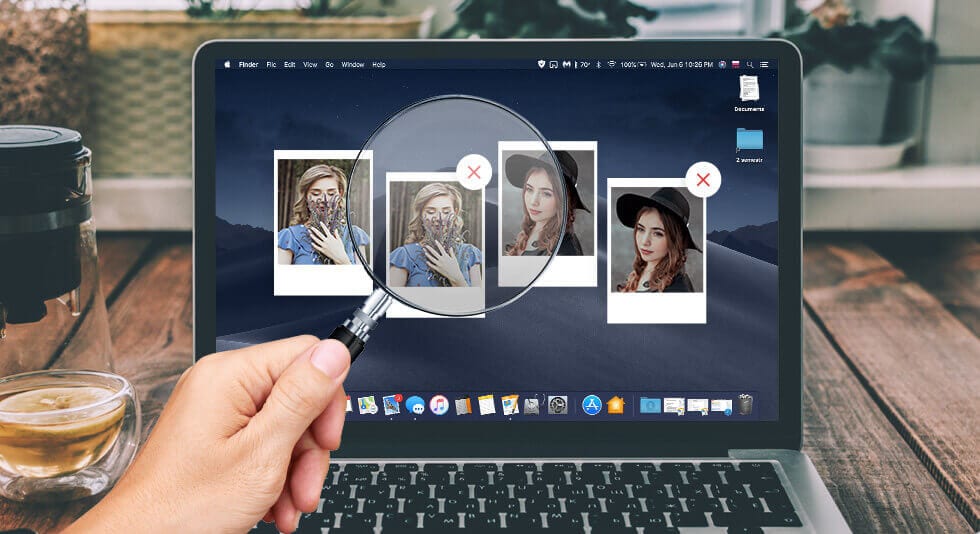


The photos folder looked normal at first glance. Then the storage warning popped up. One trip photo appeared four times. A tax PDF sat in three different folders. Two old setup files were still in Downloads, and each one was over 500 MB. Nobody plans this mess. Copies pile up slowly. A download runs twice. […]
5 Cybersecurity Tips To Manage Your Remote Personnel Challenges
Did you know that your company’s information can unintentionally be put at risk by you and your employees when working remotely? This could possibly lead to fraud, data breaches, and a plethora of other unwanted consequences.
Although remote working offers many benefits, it also comes with some risks. Continue reading if you want to learn more about the benefits, risks, and ways to lessen a breach as well as tips on how to mitigate one. Learn tips to ensure that cybersecurity is front and center for your workforce.
The Remote Workforce — Is This a New Trend?
Although the world seems to be opening up, many people have gotten comfortable with the new work-from-home trend. So much so that 70% of the global population is working remotely at least once a week. It doesn’t matter what title they use:
● eWorkers
● Teleworkers
● Road Warriors
● Digital Nomads
● Telecommuters
● Remote Workers
● Off-site Employees
One thing is for certain, and two things are for sure, remote workers are here to stay. If your business intends on taking advantage of this thriving pool of talent that’s working remotely, you will need to make some adjustments to the unparalleled cybersecurity risks that come along with it.
Remote Work — Risks and Benefits
Working remotely does come with its share of benefits, but it also comes with substantial risks to you, your company, and your brand if your network is not up-to-date on cybersecurity measures and gets hacked. One benefit is that you could see a reduction in business expenses. Schedules tend to be more flexible, and you don’t have to leave your home, woo-hoo!
The Remote Endpoint
One risk that businesses have to think about now is the remote endpoint. With cybersecurity being challenging for employers, having the correct tools to lessen the risk is essential. Transitioning to a remote workforce will require remote endpoint management.
Businesses believe that their own remote workers can work in a remote environment while being productive, as long as an approach that includes an effective endpoint management security solution is critical. With SOC services, we can also assist IT administrators in overseeing your company’s:
● Remote Endpoints
● Cloud infrastructure
● Network Security
Did you know that Remote Endpoint Protection and Management is currently a leading priority on an IT administrator’s shortlist? Start with the emergence of client management tools, progressing through enterprise mobility management, including mobile device management. The industry has undergone constant transformations.
One significant issue concerning remote work is cybersecurity threats – which is why it is crucial that your company is equipped with the proper applications for your remote working staff – as well as having protected remote endpoints.
Protect Devices With a Sophisticated Endpoint Security Solution
When it comes to remote work, it’s quite different from working in the office, and it’s more challenging to protect telecommuters. One thing to keep in mind is that even though your employee is remote, the same cannot be said about your network. Once your employee clocks/logs in, attackers can enter your network and cause havoc.
Once logged in, your stored documents are at risk because you’re connected to your company’s network. By implementing policies that guarantee that your remote staff has a trustworthy security solution. For instance, with an endpoint security tool by AVG, you can facilitate the prevention of a cyber incident from occurring. It is also essential that the utilized endpoint security solution interacts with remote endpoints that render a thorough endpoint detection and response (EDR) module.
Five Cybersecurity Tips For Your Remote Personnel
1. What Are Some Features of An Endpoint Security Solution?
Real-Time Antivirus Scanning
Antivirus software identifies malware on your computer with active scanning functionality that consistently checks your computer for intrusion from malicious threats.
Behavioral Analysis
The endpoint security solution ought to possess vigorous behavioral analysis functionality. When dealing with malicious executables, you need to understand that they are configured to misdirect security, so behavioral analysis on new executables must be performed securely.
Detection Exploitation
Many of the applications and platforms that you use regularly for work could be harboring hidden threats. Many applications can have vulnerabilities, so make sure that your endpoint security has an exploit detection module.
Endpoint Detection and Response (EDR)
System admins are unable to queue themselves pending team member logins for manual deletion requests. Therefore, it’s critical that when scanning for malware and viruses, any compromised endpoint be secluded. Your endpoint security solution must possess a full EDR module that permits your administrators to remotely:
● Mitigate infection
● Isolate endpoints
● Conduct Forensics
Check out Managed Crowdstrike
2. Maintain Operating Systems and Program Updates
One of the greatest vulnerabilities is operating systems and applications, which are repeatedly being found and exploited by cybercriminals. Once they’ve gained access, they infiltrate your devices and networks and exploit your personal data.
Remote workers should regularly conduct updates to guarantee that required patches are applied.
3. Set Wi-Fi Configuration Encryption
It is pivotal that you remind your remote workers to configure their Wi-Fi encryption, since you (the employer) do not have complete control of it. It is the employers’ responsibility to ensure that their remote employees are hooked to the internet via an adequately configured Wi-Fi point.
For instance, your home router was probably not set up with a unique password, rather it’s likely using the default password issued by the manufacturer.
Hackers can use this vulnerability to hijack your traffic by hard-coding those default passwords and turning them into malicious software. Remote workers should also change their passwords regularly and use a virtual private network (VPN) to connect to your workplace network when working in a public place.
Proxies can also be used as an additional security measure to protect remote workers’ internet connection. They act as an intermediary between the user and the internet, encrypting all traffic and hiding the user’s IP address from potential hackers.
If you’re interested in using proxies to protect your remote workers’ internet connection, there are many free proxy lists available online that you can try out. However, it’s important to choose a reputable provider and exercise caution when using any online service.
4. For Email and Messaging — Use Corporate Services
Make sure that your remote workers have access to the company’s tools and IT services to assist in maintaining network security. When employees utilize tools, applications, and email for sharing work-related data, it, can assure that your company’s data is secure.
You should also consider a remote worker’s security policy, which will also deem your network more secure.
5. Remain Vigilant
Hacker techniques are evolving daily, as they are relentless. Remind remote employees that they should not click on email attachments or links that they’re not familiar with, and to be mindful of their cyber environment.
Final Thoughts
A pint of prevention is worth a quart of cure. Although working remotely does provide benefits to your employees, it also brings quite a high level of risk to your company. Train your employees on cybersecurity threats regularly to keep your business safe online.
Author Bio:
Dinesh Lakhwani 

Dinesh Lakhwani, the entrepreneurial brain behind “TechCommuters,” achieved big things in the tech world. He started the company to make smart and user-friendly tech solutions. Thanks to his sharp thinking, focus on quality and the motto of never giving up, TechCommuters became a top player in the industry. His commitment to excellence has propelled the company to a leading position in the industry.
Popular Post
Recent Post
Wise Duplicate Finder Review: Real Results from Wise Duplicate Finder
Read my honest Wise Duplicate Finder review. See features, pricing, pros and cons, and real PC test results. Find out if this free duplicate cleaner can free up your Windows storage.
How to Recover Deleted Files from Pen drive, USB Drive, SD Card
Introduction: On tech forums, you’ll often see posts like this: “I connected my pen drive to my laptop this morning, but the folder was empty. All my college project files had vanished. I don’t have a backup. Can someone help me?” Stories like this are very common. Pen drives, USB drives and SD cards are […]

How To Recover Files Deleted from the Recycle Bin [Windows 11]
Losing a file can happen in seconds. You clear your desktop, hit Delete, and empty the Recycle Bin. Then, just when you need that file again, it seems to have vanished. This guide will walk you through ways to restore files removed from the Recycle Bin. We will begin with simple fixes, then look at […]

Disk Drill Data Recovery Tool Explained: Full Review and Guide
It happens in a split second. You delete a folder by mistake. Your drive stops showing up. A photo album from your last trip just vanishes. And your stomach drops. Lost files feel personal. They are not just data. They are memories, work hours, and sometimes years of effort packed into a few gigabytes. When […]
Recover Deleted Files In Windows 11 With Software & Without
Introduction What is the first thing that goes through your mind the second an important file vanishes from a Windows 11 PC? For most people, it is a mix of panic and disbelief, followed by a frantic click through every folder that file could possibly be hiding in. It happens in a split second: one […]
EaseUS Data Recovery Wizard: Everything To Know
Data loss does not always come from a big disaster either. Most cases start small and boring. A drive gets formatted by mistake. A laptop freezes mid-save and restarts on its own. A memory card stops showing up after being pulled out too fast. None of these feel like emergencies at first, until you realize […]

Recuva Data Recovery Tool: Is it Actually Worth it?
When I first tried Recuva Data Recovery, I wanted to see if it could really bring back lost files. The tool is free, small in size, and promises quick recovery, which made me curious enough to test it on my own PC. The setup was fast, and the wizard guided me step by step. I […]

GetData Recover My Files Data Recovery Tool: Honest Review
A hard drive error brings a special kind of silence. Well, yes! The screen freezes, then a message appears saying the drive can’t be found or must be formatted. In that moment, years of photos and work files feel at risk. It never happens at a good time. Coffee spills near a laptop, a memory […]

Windows File Recovery: A Complete Review [Tried & Tested]
Imagine this. You spend hours perfecting a video project. You hit save. Then your laptop freezes, reboots, and when the screen comes back. The file is gone. Your stomach sinks. It’s not just you. Lost files happen all the time. A dropped hard drive, a bad update, an accidental delete, or a corrupted partition can […]