Apple Pay Not Working! Here’s How to Fix It (10 Fixes)

Last updated on August 28th, 2025 at 1:10 pm
Today, people are more and more relying upon digital payments because they are safe and fast. But sometimes, when you have to make an urgent payment, and your Apple Pay is not working, there is nothing more frustrating than it.
Apple Pay might have military-grade level security, but it is still prone to errors. However, Apple Pay stopped working on the iPhone is fixable. Using the right solution, you can easily fix Apple Pay issues.
So, let’s find the right solutions to make Apple Pay work on your iPhone.
Why is Apple Pay Not Working?
Apple Pay is a secure and encrypted application to make digital payments directly via the wallet app or an NFC scan. But in some situations, Apple Pay might not work or respond, such as:
- Pending iOS updates
- Older caches
- Poor internet connection
- Problem with the card or bank
10 Ways to Fix Apple Pay Not Working on iPhone – Apple Pay Stopped Working
When Apple Pay is not working on your iPhone, don’t panic and just follow these fixes:
Fix 1. Check your iPhone battery life
If your iPhone’s battery is below 20%, Low Battery Mode kicks in and shuts off unimportant operations on your phone. Thus, your Apple Pay will not work on a low battery iPhone. So, first, plug in your iPhone to a charger and then make payments using Apple Pay.
Fix 2. Make sure Apple Pay is not down
Apple provides good services to its users. But sometimes, Apple’s system goes down due to some internal glitches. In that situation, the Apple Pay app will show an error.
Go to the Apple’s System Status page, and if a green circle appears next to the Apple Pay & Wallet, it means the Apple services are working fine. If there is no green circle, you have to wait for Apple to fix the problem.
Fix 3. Hard restart your iPhone
Hard restarting your iPhone device can reset all background services, clear caches, and fetch new security tokens. This might also fix the Apple Pay not working issues like difficulty in using NFC or selecting the right card.
Here’s how you can hard restart iOS devices:
- For an iPhone with a home button: Press and hold the Power and Home button together for an iPhone with a home button until the Apple logo appears.
- For an iPhone without a home button: Press and hold the Power and Volume Down button simultaneously till the Apple logo appears.
Fix 4. Re-sign into your Apple ID
If Apple Pay is still not working after restarting your iPhone, try to sign out and sign back into your Apple ID.
Go to the Settings app > Apple ID > Sign Out.
Now restart your iPhone and leave it connected to a charger for a while. After a few minutes, open the Settings app and enter your Apple ID and password to log back in.
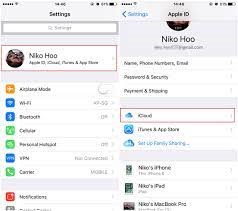
If security or identification issues prevented Apple Pay from responding on your device, this should have been fixed.
Fix 5. Re-add your card or bank account
This is an extreme fix, but if hard restart and re-login to Apple ID didn’t work for you, this fix might work for you. Redefining payment methods will refresh your payment services that can initiate Apple Pay working on your iPhone.
Here follow these steps to re-add card or bank account to Apple Pay:
Step 1. Go to the Settings app and tap on Wallet and Apple Pay. Select the payment method you want to remove and scroll to the bottom. And tap on Remove this card.
Step 2. Confirm your action by typing your passcode.
Step 3. Once the payment method is removed, hard restart your device.
Step 4. Restart your device, open the Wallet app and tap on + sign to add a new payment method.
Step 5. You can scan your card using the app or manually type details. Then, just follow the on-screen instructions to add a card to Apple Pay. After that, you will be able to use Apple Pay without any problem.
Fix 6. Reset your settings
If mismatched settings from the newer iOS update are creating a problem for the Apple Pay app, resetting your iPhone settings is the best solution.
To reset iPhone settings, tap on the Settings app > Transfer or Reset iPhone > Reset > Reset All Settings.
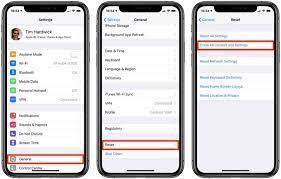
Enter your passcode to confirm the action. Usually, the iPhone will automatically restart after this, but you can manually hard restart it if it doesn’t. This method will reconfigure Apple Pay in the Settings app.
Fix 7. Remove iPhone case
If you are using an NFC scan to make payments, your iPhone case might come in the way. So, try taking off your case and then scanning the card again.
Fix 8. Select your card manually
When Apple Pay and the terminal are working fine on your iPhone, the app will automatically launch your default card to make payments. But if there is any glitch, you might need to manually select a credit card and then try the terminal again. You can manually select the card as follows:
Step 1. Open the Wallet app on your iPhone.
Step 2. Choose the card you want to use.
Step 3. Take your phone near the point of sale terminal. If it’s working, you can now make your payment normally.
Fix 9. Reset your iPhone
This is a drastic solution that we will not recommend. Resetting your iPhone will remove all your data and take your phone to the condition you have purchased it. Unless you have fully backed up your iPhone data, we don’t recommend this solution.
But if not only Apple Pay, many other apps are not working on your iPhone, factory resetting the device is unavoidable. So, we repeat, first backup your iPhone and then—
Go to the Settings app > General > Reset iPhone > Erase All Content and Settings.
Fix 10. Miscellaneous Solutions
There are a few miscellaneous and small fixes that might fix Apple Pay not working on an iPhone, such as:
- First, check for the Apple Pay app updates.
- Then, close and reopen the app.
- Contact your bank.
- Check your Apple Pay settings.
Bottom Line – Apple Pay Stopped Working
Apple Pay is a great digital wallet that might experience a few glitches now and then. But as we discussed, it is easy to fix the Apple Pay not working issues.
So, use the problem-appropriate solutions to make quick and safe payments using Apple Pay.
Please follow us on social networks for more how-to guides if you find this post helpful.
Author Bio:
Dinesh Lakhwani 

Dinesh Lakhwani, the entrepreneurial brain behind “TechCommuters,” achieved big things in the tech world. He started the company to make smart and user-friendly tech solutions. Thanks to his sharp thinking, focus on quality and the motto of never giving up, TechCommuters became a top player in the industry. His commitment to excellence has propelled the company to a leading position in the industry.
Popular Post



Recent Post
How To Switch To A Dark Background Theme In Windows [2026]
Most people spend many hours each day in front of a computer screen. Office work, online classes, editing, browsing, and streaming all require long screen time. A bright white background may look clean at first. However, over time, it can feel sharp and tiring. The strong contrast between white backgrounds and black text may cause […]
How to Switch From Local To Microsoft Account On Windows
Many users begin with a local account when they set up a new Windows computer. A local account works only on that single device. It stores settings, files, and preferences locally. It does not connect to online Microsoft services. For basic offline use, it works well. However, as digital needs grow, many users want better […]
How to Switch Windows 10 to a Local Account: Complete Guide
Windows 10 allows users to sign in with either a Microsoft account or a local account. When you set up a new computer, the system often suggests using a Microsoft account. This account connects your device to Microsoft services such as Outlook, OneDrive, and the Microsoft Store. It also syncs settings, themes, and passwords across […]
How To Change Default Apps For File Types In Windows
Windows is designed to make using your computer easy. One way it does this is by assigning default apps to different file types. This means when you open a file, Windows automatically opens it with a specific program. For example, photos may open with Photos, music with Groove Music, and PDFs with Edge. These default […]
How To Adjust The Mouse Pointer Speed: Complete Guide
Using a computer every day means you use the mouse a lot. The mouse pointer moves on the screen and helps you click, scroll, and select items. Many people never think about the speed of the mouse pointer. They have used the default setting for years. This can cause small problems over time. A slow […]

How to Change Mouse Scrolling Settings In Windows
A mouse is one of the most used computer tools. People use it every day. They scroll through emails. They scroll through documents. They scroll through websites and images. The movement becomes automatic. Most users do not notice it. That is why problems often go unnoticed. Scrolling problems show up slowly. At first, it feels […]

Keyboard Light Settings: Keyboard Lighting Control [Complete Guide]
Keyboards are no longer simple typing tools. Well, yes! Over time, they have evolved to include features that improve comfort, visibility, and overall experience. One of the most useful features today is keyboard lighting. It helps users work comfortably in low-light conditions. It also reduces strain when typing for long hours. Many users first notice […]
Customizing Pointer Appearance: Complete Guide
The way your mouse pointer looks on your computer may seem like a small detail. But customizing pointer appearance can make using your PC more comfortable and visually appealing. Many users do not realize that they can change the pointer size, color, and style to fit their needs. Whether you want a bigger pointer for […]
How To Choose a Computer Monitor: Monitor Buying Guide
Buying a monitor looks easy. Many people think all screens are the same. That belief causes regret later. A monitor is not just a display. It is a daily tool. You read on it. You work on it. You relax with it. Small problems become big over time. Poor brightness hurts eyes. Bad size causes […]

How To Get Help With File Explorer in Windows 11 [Complete Guide]
File Explorer is one of the most important tools in Windows 11. It is used to open folders, view files, and manage stored data. Almost every action on a Windows computer depends on it in some way. When users open documents, save downloads, or organize photos, File Explorer is always involved. Because it is used […]