







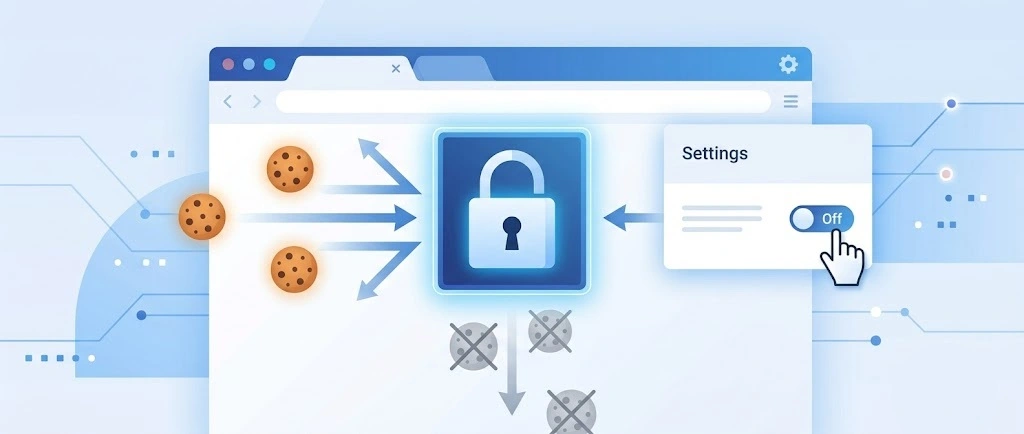
So, search for a pair of shoes once online. Close the tab. By evening, those same shoes are sitting on your news site, your video app, and even your recipe blog. Nobody placed them there by chance. A cookie did. Well, yes! Cookies are small files that websites place on your device while you browse. […]
How To Check Screen Time On android?
Digital Well-being is an essential health aspect that you need to take care of. It is very important to understand that mobile phones should not be used so much that it becomes a threat to your social life. Additionally, with several applications that are interesting, you could get addicted to using your mobile. However, to improve your digital well-being, you can check your screen time on your android mobile phones and control your routine.
In this article, we are going to learn how to implement virtual well-being and parent restrictions on android. It moreover describes how to configure app timers, sleep mode, attention mode, as well as parental controls.
How to Configure Virtual Wellness on Android?
Android’s Digital Wellness function monitors your everyday screen usage, notifications, as well as phone unlocks. This option is useful if you simply can’t bring yourself to quit using and cut back on a certain app. You may set up a certain amount of hours every day to concentrate on particular apps.
After you have reached your daily screen time restriction, you won’t be able to access that application again unless the countdown resets at nightfall. This Digital Wellbeing option is accessible via your phone’s settings. It must be enabled because it is not enabled by default. Here’s how you do it.
- Go to the Settings menu.
- Select Digital Wellbeing & Parental Controls.
- Tap on the three-dot button in the upper right corner and choose to manage your data.
- Switch to Daily device usage. The circular chart upon that Digital Wellbeing screen indicates which applications you have used. Within the circle, users can really see the overall screen time, as well as how many instances you’ve unlocked and how many alerts you’ve gotten.
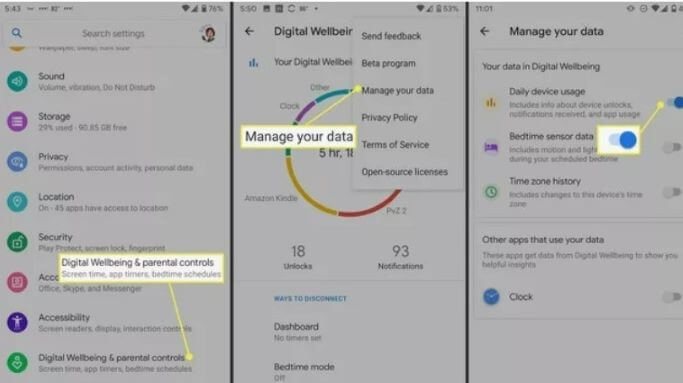
5. Your phone would then record app use, notifications, and the device unlocks.
You may also reach Digital Wellbeing through an app shortcut. Scroll down to the bottom of the home screen and choose the Show icon.
Keep an eye on your screen time
The Digital Wellbeing application includes two sorts of features to assist you in reducing screen time as well as obstructions: Ways to disengage and Minimize interruptions.
Application timers, sleeping mode, and concentrate mode are all ways to unplug. Shortcuts to application notification management, including the Do Not Disturb option, are available in the Minimize Interruptions tab.
How to Configure App Timers
Set up a daily schedule for the applications you use most often to avoid getting lost in the Instagram rabbit tunnel or playing games while you must be studying or communicating with others. When you exceed the threshold, you’ll receive a message that the timeframe has expired, the application will become grey, and users won’t be permitted to access it till after midnight until you deliberately turn it off.
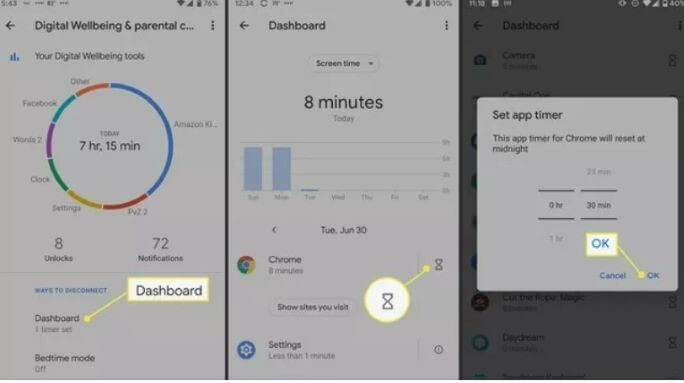
- Navigate to Dashboard.
- You’ll get a summary of the applications you use most often. To examine screen time, alerts, and instances opened on a regular or hourly basis, tap the application. To set up a timeframe, click the hourglass symbol beside the application.
- You may also specify a timer by going to the application details page and selecting App Timer.
- Set a timer (all schedules refresh at nightfall) and then press OK.
How to Configure Bedtime Mode?
Bedtime mode assists you in winding down by shutting your phone as well as setting the display monochrome so you don’t remain up late surfing around social networks or reading. Bedtime mode may offer a variety of things to assist you in limiting your time on screen. To begin, enable the Do Not Disturb option, change the display to grayscale, then maintain the screen black.
You may choose whether any of these functions are engaged at sleeping. You may program the hours and days when you wish to utilize bedtime mode, and then it will turn on and off immediately, so you shouldn’t have to bother about forgetting. You may also configure Bedtime mode to activate just when the smartphone is plugged in for charging.
You may activate the sleep setting on a routine and whenever you plug up your phone to recharge before going to sleep. In both cases, you specify asleep as well as awakening time.
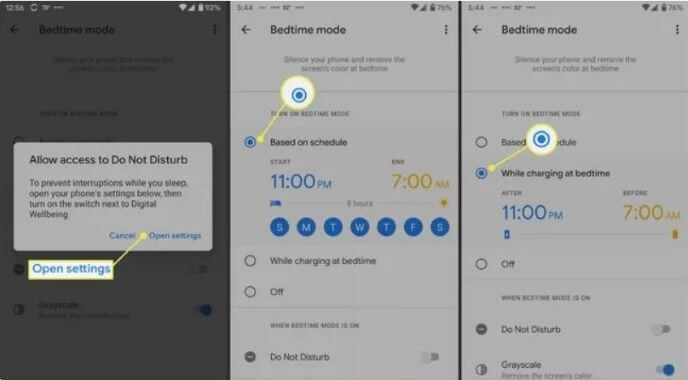
Select Customize to also have the Do Not Disturb switch on while you’re in sleep and to select if the screen becomes grey.
How to Activate Focus Mode
Focus mode allows you to halt applications directly or even on a routine. You can select a time as well as a day after, or several days. If you want to take breaks from concentrate mode, you may do so from here.
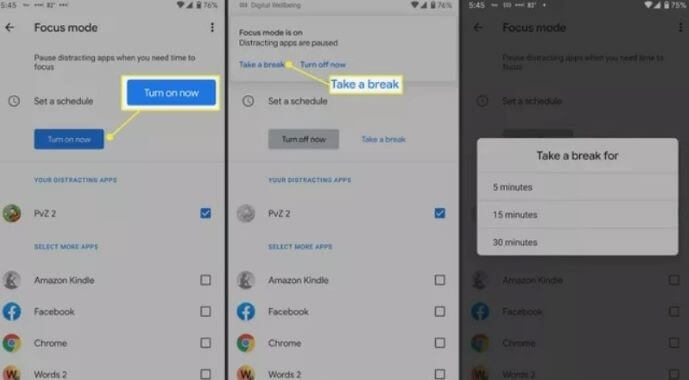
In the Reduce Interruptions area, you may control app notifications as well as enable do not disturb mode. Parental controls can help you manage your children’s screen time. The final part is dedicated to parental restrictions. Unless you’re the default parent profile on a child’s phone, you may control their profile.
Set Android Phone’s Parent Control systems
You may begin configuring parental controls using the Digital wellness settings screen, but first, you must install Home Link, a Google program. Now you and your children must possess a Google account in order to use the application.
- Navigate to Settings > Digital Wellbeing and Parental Controls.
- At the end of the window, select Set up parental controls.
- Press Start on the next screen.
- Select Parent.
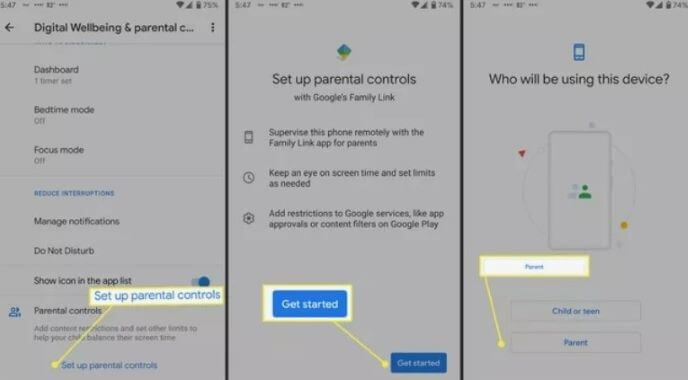
5. There will be a popup for you to install the Family Link application. Install it and then continue the on-screen instructions.
What Is Google Family Link & How Do You Use It?
Until you can adjust your children’s time on screen as well as other controls, you’ll connect the google accounts on your mobile phone.
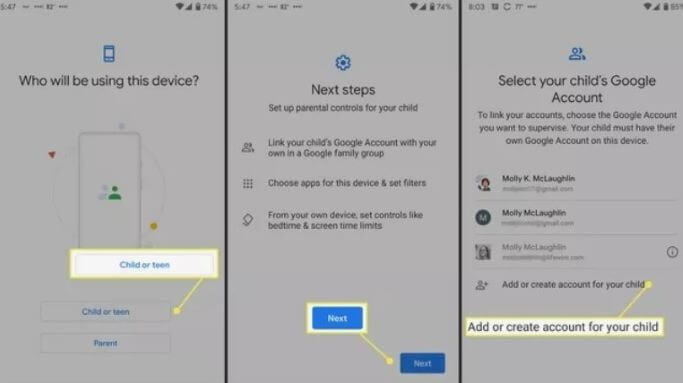
- Go to Settings > Digital wellbeing & parental controls on your children’s smartphone.
- At the foot of the window, choose Set up parental controls.
- Tap Begin on the following screen.
- Select Child or teen.
If your children’s account does not appear on the page, select Add or Create Account. After you’ve registered it, choose it from the selection. Then, continue following the on-screen instructions.
Conclusion
Digital Wellbeing is also a wonderful tool to keep track of your children’s screen usage. You must first install the Family Link application on the Google Play Store in order to activate the parental controls provided by Digital Wellbeing. Then you should configure it all on your smartphone and also on your children’s smartphone.
When everything is in place, you can examine your children’s screen use, establish time restrictions for them, block their applications before sleep, and do other things. And in the growing wake of social media, it is very important to monitor your screen time, as well as your children’s time. It will help you in a lot of ways.
Author Bio:
Dinesh Lakhwani 

Dinesh Lakhwani, the entrepreneurial brain behind “TechCommuters,” achieved big things in the tech world. He started the company to make smart and user-friendly tech solutions. Thanks to his sharp thinking, focus on quality and the motto of never giving up, TechCommuters became a top player in the industry. His commitment to excellence has propelled the company to a leading position in the industry.
Popular Post
Recent Post
How To Disable Background Apps In Windows: 4 Quick Methods
A slow PC rarely gives a warning. One day, it simply takes longer to start. Apps open late. The fan runs loud, even when the screen is almost empty. Most people blame old hardware. Often, that is not the real reason. The real reason is hiding in plain sight. Windows keeps many apps active in […]
How to Activate Windows with a Product Key for Windows 11 & Windows 10
It always shows up at the worst time. You are halfway through a report, or about to join a video call. Then you spot it in the bottom right corner of the screen. Activate Windows. Go to Settings to activate Windows. Initially, an unactivated copy of Windows may seem like a minor inconvenience. Over time, […]
Is Easy Duplicate Finder Worth It? Honest Review
The photos folder looked normal at first glance. Then the storage warning popped up. One trip photo appeared four times. A tax PDF sat in three different folders. Two old setup files were still in Downloads, and each one was over 500 MB. Nobody plans this mess. Copies pile up slowly. A download runs twice. […]
Wise Duplicate Finder Review: Real Results from Wise Duplicate Finder
Read my honest Wise Duplicate Finder review. See features, pricing, pros and cons, and real PC test results. Find out if this free duplicate cleaner can free up your Windows storage.
How to Recover Deleted Files from Pen drive, USB Drive, SD Card
Introduction: On tech forums, you’ll often see posts like this: “I connected my pen drive to my laptop this morning, but the folder was empty. All my college project files had vanished. I don’t have a backup. Can someone help me?” Stories like this are very common. Pen drives, USB drives and SD cards are […]

How To Recover Files Deleted from the Recycle Bin [Windows 11]
Losing a file can happen in seconds. You clear your desktop, hit Delete, and empty the Recycle Bin. Then, just when you need that file again, it seems to have vanished. This guide will walk you through ways to restore files removed from the Recycle Bin. We will begin with simple fixes, then look at […]
Disk Drill Data Recovery Tool Explained: Full Review and Guide
It happens in a split second. You delete a folder by mistake. Your drive stops showing up. A photo album from your last trip just vanishes. And your stomach drops. Lost files feel personal. They are not just data. They are memories, work hours, and sometimes years of effort packed into a few gigabytes. When […]

Recover Deleted Files In Windows 11 With Software & Without
Introduction What is the first thing that goes through your mind the second an important file vanishes from a Windows 11 PC? For most people, it is a mix of panic and disbelief, followed by a frantic click through every folder that file could possibly be hiding in. It happens in a split second: one […]

EaseUS Data Recovery Wizard: Everything To Know
Data loss does not always come from a big disaster either. Most cases start small and boring. A drive gets formatted by mistake. A laptop freezes mid-save and restarts on its own. A memory card stops showing up after being pulled out too fast. None of these feel like emergencies at first, until you realize […]