

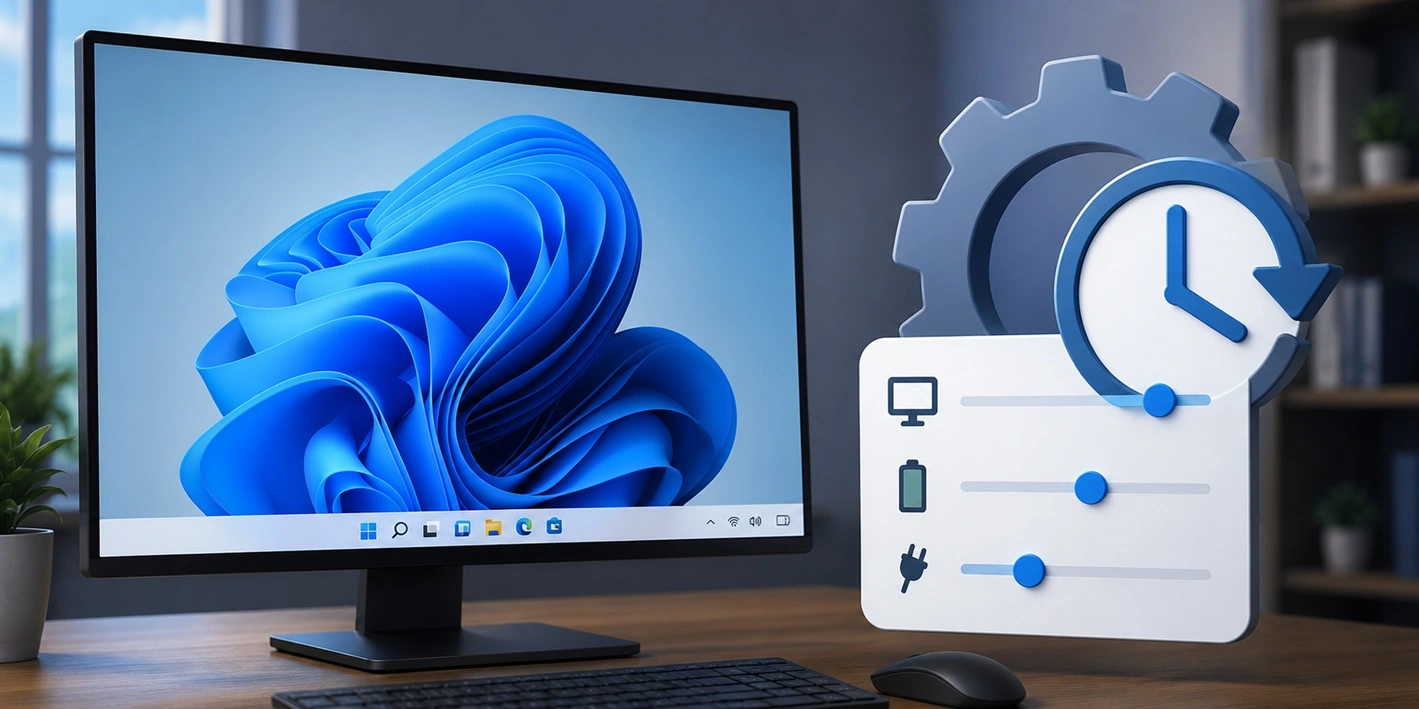
Your Windows screen does not stay on forever. After a certain amount of idle time, it turns off or locks automatically. This is a normal feature found on both laptops and desktop PCs. It helps save battery power and reduces electricity use. It also keeps your files and personal information safe when you step away […]
Reclaiming Disk Space On Windows Without Losing Files
Running low on storage can slow down programs and trigger that annoying “low disk space” warning. Files accumulate over time, cluttering the drive. The good news? It’s possible to reclaim space without deleting anything important.
Reclaiming disk space on Windows without losing files is easier than you think. Your computer stores many temporary files, old backups, and cached data. These files take up space but serve no real purpose. You can safely remove them to get back precious storage space.
This guide shows you exactly how to reclaim disk space on Windows without losing files. You’ll learn safe methods that protect your data. We’ll cover built-in Windows tools and proven techniques. By the end, your computer will run faster with plenty of free space.
Part 1: Is It Possible To Reclaim Disk Space On Windows Without Losing Files?
Absolutely, you can free up disk space on Windows without risking your personal files. During regular use, Windows generates various temporary files—like browser caches, system logs, outdated updates, and leftover setup files. These can be removed safely to reclaim valuable storage.
Windows often holds onto duplicate files and outdated system restore points, which can gradually eat up valuable space. It also keeps old drivers and unused language packs. Removing these safely is a great way to free up extra storage.
Understanding which files are safe to remove is essential. Windows offers built-in tools to guide you through this process, and third-party cleaning apps can be helpful as well. With the right approach, freeing up space without affecting your important files becomes an easy and efficient task.
Part 2: Precautions Before Applying The Below Steps
Taking precautions is crucial before you start reclaiming disk space on Windows without losing files. These safety steps protect your important data from accidental deletion. They also ensure your system remains stable after cleaning.
Essential precautions to follow:
- Create a full system backup – Use Windows Backup or third-party software to backup all important files and system settings
- Make a system restore point – This allows you to undo changes if problems occur after cleaning
- Close all running programs – This prevents file conflicts and ensures thorough cleaning
- Check available disk space – Note your current free space to measure cleaning effectiveness
- Run as administrator – Many cleaning operations require administrator privileges to work properly
- Scan for malware first – Remove viruses that might be taking up space or hiding among legitimate files
- Review what will be deleted – Always preview files before permanent deletion to avoid losing important data
- Keep installation files for important programs – Don’t delete installers for software you might need to reinstall
Part 3: 5 Best Methods To Reclaim Disk Space On Windows Without Losing Files
Method 1: Using the Disk Cleanup Tool
Windows Disk Cleanup is the safest way to start reclaiming disk space on Windows without losing files. This built-in tool identifies temporary files, system cache, and other safe-to-delete items. It’s designed specifically to protect your personal files while removing unnecessary data.
The tool scans your hard drive and presents options for cleaning. It shows exactly how much space each category will free up. You maintain full control over what gets deleted. This makes it perfect for beginners who want to clean their system safely.
Disk Cleanup focuses on removing the most common storage-hogging files first. It clears out temporary internet files, items in the Recycle Bin, and outdated Windows update data. Additionally, it deletes thumbnail caches and leftover temporary files from programs.
Why choose Disk Cleanup:
- Built into Windows – no additional software needed
- Microsoft-approved cleaning methods ensure system stability
- Shows space savings before deletion for informed decisions
Steps to use Disk Cleanup:
- Type “Disk Cleanup” in Windows search and open the tool, then select your main drive (usually C:).

- Select the file types you want to delete by checking their boxes, review how much space each will free up, and then click “OK” to begin the cleanup process.
Method 2: Storage Sense Feature
Storage Sense is an automated cleaning feature built into Windows 10 and 11. It works quietly in the background to keep your system tidy. This modern tool reclaims disk space without touching your personal files and needs very little input from you—ideal for anyone who prefers hands-off maintenance.
Storage Sense automatically deletes temporary files and clears out your Recycle Bin on a set schedule. It can also remove older files from your Downloads folder. You’re in control—customize what it cleans and how frequently it operates.
This method works continuously to prevent space problems. It keeps your system optimized without manual intervention. Storage Sense is gentle and only removes files that are truly unnecessary. Your important documents and programs remain untouched.
Why choose Storage Sense:
- Automatic operation prevents future space issues
- Customizable settings let you control what gets cleaned
- Runs silently without interrupting your work
- Integrates perfectly with modern Windows versions
Steps to enable Storage Sense:
- Go to Settings > System > Storage, then turn on Storage Sense and click “Configure Storage Sense”.

- Set your preferred cleaning schedule and file deletion timeframes, then click “Clean now” to start immediate cleaning
Method 3: Uninstall Unused Programs
Unused programs often sit idle on your computer for months or even years, quietly consuming valuable storage. Uninstalling them is a smart and safe way to free up disk space without touching your personal files. It’s a quick win for better performance and more room.
Windows tracks when you last used each program. This information helps you identify candidates for removal. Large programs that you rarely use should be your first targets. Games, old software versions, and trial programs are common space wasters.
Uninstalling through Windows Settings is the cleanest method. This process removes the program and most associated files. It’s much more thorough than simply deleting program folders. The built-in uninstaller ensures complete removal.
Why choose program uninstallation:
- Frees up large amounts of space quickly
- Removes programs you no longer need or use
- Improves system performance by reducing installed software load
- Simple process with no risk to personal files
Steps to uninstall unused programs:
- Open Settings > Apps. Sort by “Size” to see the largest programs first.

- Select programs you don’t use. Click “Uninstall,” and follow the removal wizard prompts
Method 4: Move Files to External Storage
Moving large files to external storage is a safe way of reclaiming disk space on Windows without losing files. This method preserves all your data while freeing up internal storage. It’s ideal for photos, videos, and documents you don’t access frequently.
External hard drives and cloud storage offer plenty of space for archived files. You can move entire folders to these locations. The files remain accessible when needed, but don’t consume internal disk space. This approach works well for multimedia collections.
Cloud storage services provide automatic synchronization, too. Your files stay backed up and accessible from anywhere. Services like OneDrive, Google Drive, and Dropbox offer generous storage space. You can access moved files from any device with internet access.
Why choose external storage:
- Keeps all files safe and accessible when needed
- Provides additional backup protection for important data
- Offers unlimited expansion potential with larger drives
- Allows access to files from multiple devices via cloud sync
Steps to move files to external storage:
- Connect an external drive or set up a cloud storage account, then create organized folders for different file types.

- Select large files or folders you rarely access, cut them using Ctrl+X, then paste to an external storage location
Method 5: Clean System Files and Caches
System files and caches build up over time and consume significant space. Cleaning these is an advanced method for reclaiming disk space on Windows without losing files. This approach targets hidden files that regular cleaning tools might miss. It’s especially effective on older systems.
Windows stores update files even after installation completes. Old driver packages remain on your system, too. Browser caches can grow to several gigabytes over time. These files serve no purpose once they’re outdated, but continue taking up space.
Advanced cleaning requires more technical knowledge but offers greater space savings. You can safely remove Windows update cleanup files and old driver installations. Clearing browser caches and temporary files provides immediate space relief, too.
Why choose system file cleaning?
- Targets hidden files that consume significant space
- Provides deeper cleaning than basic tools offer
- Removes outdated system components safely
- Offers maximum space recovery potential
Steps to clean system files:
- Run Disk Cleanup as an administrator, click the “Clean up system files” button, then select additional categories like “Windows Update Cleanup”.

- Clear browser caches by going to browser settings, finding the “Clear browsing data” option, then select cached files and temporary data.

Author’s Tip
The best approach to reclaiming disk space on Windows without losing files is to combine multiple methods. Don’t rely on just one technique. Start with Disk Cleanup for safety, then move to more advanced methods. This layered approach maximizes your space savings while maintaining system stability.
Set up Storage Sense to run automatically after your initial cleaning. This prevents future space problems before they start. Regular maintenance is easier than major cleanups. Your system will run smoother with consistent care and attention.
Always monitor your disk space regularly. Check your storage usage monthly to catch problems early. Quick weekly cleanups prevent major space crunches. When you stay proactive about disk management, reclaiming disk space on Windows without losing files becomes routine maintenance rather than emergency repair.
Conclusion
Reclaiming disk space on Windows without losing files is completely achievable with the right approach. The methods in this guide are safe and effective. They target unnecessary files while protecting your valuable data. Your computer will run faster with more available storage space.
Start with the simpler methods like Disk Cleanup and Storage Sense. These provide immediate results with minimal risk. As you become more comfortable, try advanced techniques like system file cleaning. Each method builds on the others for maximum effectiveness.
Regular maintenance prevents future space problems. Set up automatic cleaning where possible. Monitor your disk usage monthly and clean proactively. With these habits, you’ll never worry about running out of space again. Your Windows system will stay fast and responsive for years to come.
Frequently Asked Questions
Q: Is it safe to delete temporary files when reclaiming disk space on Windows without losing files?
Yes, temporary files are completely safe to delete. Windows creates these files during program operation but doesn’t need them after programs close. Deleting temporary files is one of the safest ways to free up space without any risk to your personal data or system stability.
Q: How often should I perform disk cleanup to maintain free space?
Perform basic disk cleanup weekly and thorough cleaning monthly for optimal results. Set up Storage Sense to run automatically for continuous maintenance. Regular cleaning prevents major space issues and keeps your system running smoothly without manual intervention.
Q: What’s the difference between Disk Cleanup and Storage Sense for reclaiming disk space?
Disk Cleanup is a manual tool that requires user action each time you want to clean files. Storage Sense runs automatically in the background and can be scheduled for regular cleaning. Both are safe methods for reclaiming disk space on Windows without losing files, but Storage Sense offers better ongoing maintenance.
Author Bio:
Dinesh Lakhwani 

Dinesh Lakhwani, the entrepreneurial brain behind “TechCommuters,” achieved big things in the tech world. He started the company to make smart and user-friendly tech solutions. Thanks to his sharp thinking, focus on quality and the motto of never giving up, TechCommuters became a top player in the industry. His commitment to excellence has propelled the company to a leading position in the industry.
Popular Post
Recent Post
How to Recover Unsaved Word Document? [Complete Guide]
It can be frustrating when a Word document suddenly disappears. You may have spent hours writing a report, assignment, or letter. Then your computer crashes, the power cuts out, or Word closes before you save the file. In that moment, it may seem like all your work is gone. This happens more often than most […]

What Is A Zero-Day Attack And How Can You Defend Against One?
Picture this. A hacker finds a secret crack in your favorite app. You don’t know it’s there. The company that built the app doesn’t know either. But the hacker does. And they use it right away, before anyone can stop them. This is the heart of a zero-day attack. It strikes when a flaw is […]

Iolo System Mechanic PC Cleanup Software: Hands-On Performance Review
PCs feel fast on the first day. Every click is quick. Apps open right away. With time, things slow down. Programs take longer to load. Files open slowly. Fans get loud even during light use. This happens to almost every computer, no matter how careful you are. The reason is clear. Junk files build up […]

Advanced SystemCare PC Cleanup Tool: A Detailed Review
You turn on your PC and wait. And wait. The same laptop that once opened apps in a snap now feels tired. This is not bad luck. It just happens over time. Files pile up. The registry gets messy. Old drivers stay installed long after they are useful. Junk data quietly eats up space on […]
Avast Cleanup PC Cleaner and Optimizer: Everything You Need to Know
A slow computer makes it hard to focus. Programs take too long to open. Free space keeps shrinking until the disk is almost full. This happens to most PC owners at some point. Even new machines can slow down after a while. That is the exact problem cleanup tools are built to solve. They comb […]

Fortect Software Review: The Ultimate PC & Mobile Cleaning, Optimization & Security Tool
Slow computers are a common problem for almost every Windows user. Well, yes! Over time, your PC picks up junk files. These files sit quietly in the background. They take up space and slow things down. Programs open slower. Windows takes longer to boot. Even simple tasks like opening a folder can feel sluggish. There […]

CCleaner PC Optimizer Review: A Complete Guide for Windows Users
If your computer has started to feel slow, you are not alone. Most Windows PCs slow down over time. Junk files pile up. The registry gets messy. Too many apps open when you start your PC. All this adds up and makes even a good machine feel tired. This is where a PC cleaner tool […]
5 Best PC Cleaners for Windows 11 & 10 | Top PC Optimizers
Remember when your PC felt fast? Every click was quick. Every app opened in seconds. Now it feels like a different machine. Windows takes forever to boot. Programs freeze for no reason. Even opening a browser feels like a chore. You are not alone in this. Almost every PC slows down over time. Files pile […]

Auslogics Duplicate File Finder: Full Review and User Guide
A computer quietly gathers clutter over time. This includes duplicate photos, repeated downloads, and forgotten backups hiding in random folders. This buildup slowly eats away at storage and can make even a fast PC feel sluggish. Manually finding and deleting duplicates is tedious. It means checking every folder, comparing file names, and guessing which copies […]