9 Easy Tips to Fix Common Android Problems
Last updated on August 15th, 2024 at 4:20 pm
If you are a proud member of the vast Android community of the world, then you must feel yourself very lucky. Why? That’s because being part of such a huge community you can fix common Android problems without visiting your local repair shop. Well, mostly Android is a very stable and reliable operating system, but sometimes small troubleshooting problems can disturb your device.
But, no need to worry as 99% of the Android phone problems can be solved quickly with the help of right trick. Below we have discussed few Android problems that you can fix instantly.
How to fix common Android problems?
1. Google Play Store Crash
Well, if your Google Play Store crashes after the launch, then this is a problem related to the corrupted cache. Normally, by simply wiping the cache you will be able to fix this issue. Most of the Android device has the same setup so you should open Settings > Apps > Swipe right to locate “all”> Google Play Store > Wipe cache > Restart phone.
If this doesn’t work, then you can try to wipe cache for the – Google Play Services and Google Services Framework. Always remember to restart your device after wiping the cache.
2. Not Availability of Proper Space
Android allot the fixed space for apps which can’t be changed by users. So, you might face the error where you won’t be able to download new apps even if your device has a sufficient amount of space left. The simplest way to free space on your Android device is to uninstall some apps. However, if you are using music apps like Spotify, then you might don’t know where all files are stored. So, in that case, the easiest way to free up space is by using the cleaning apps.
3. Google Play Store Not Installing Apps
It is a common Android error when Google Play Store won’t download apps. To solve this problem two different types of fixes are available – wipe Google Play cache and erase the Play Store history. The first solution is going to the same as we have discussed in step one. However, to remove the history of your Play Store, you have to- Open Play Store > Go to Settings > Select Clear History.
4. Reinstall Google Play Store
You can’t delete Google Play Store from your device without the root access and most of the users who think that they have deleted the Play Store, they have just disabled it. To reinstall Google Play Store on your device which you have accidentally deleted, you have to visit Settings > Apps >Swipe right to locate ‘Disabled’ tab or select it from Apps menu > Google Play Store > Press on Enable.
5. Install Google Play Store
Some of the Android phones and tablets won’t come with the default install Google Play Store. In that case, the user will have to locate an APK from the third party sources and manually install the Play Store. However, before downloading, you have to enable third-party sources. By visiting Settings > Security > Then check the box with option “Unknown source”. Once the box is checked you will be able to download the Play Store on your device.
6. Older Version of Google Play Store
Sometimes the newest version of Google Play won’t work on your device. In that case, you can try installing an older version. You can install the older version of the Play Store using the third-party sources on your devices.
7. Free Up Memory on Android Device
If you want to fix common Android problems by freeing up the memory, then you can easily do that. Here, by memory, we are referring to RAM. The android operating system works great with the minimal number of apps. That’s because some apps are running in the background even when you aren’t using them. That means the more app you install, the more apps are going to freely run in the background and keep on using your device’s memory over time.
8. System UI Error
It is a common Android error when System user interface stops working. If you try to restart your device and this hasn’t fixed the problem, then you should wipe System user interface cache. To wipe cache do to Settings > Apps > Swipe left to “All” and select System UI > Then wipe the cache and restart the device.
9. Download Not Working
Sometimes the apps that you try to download on your Android fails, then its problem related to downloading manager corrupt cache. That you can fix by wiping out the cache by following steps Settings > Apps > Swipe left to “All” and select Download Manager > Then wipe the cache and restart the device.
Conclusion
Well, these are some easy ways to fix common Android problems at home. However, if your Android device is giving you a lot of trouble, then you should invest in the latest Android gadgets that come with better performance and features.
Author Bio:
Dinesh Lakhwani 

Dinesh Lakhwani, the entrepreneurial brain behind “TechCommuters,” achieved big things in the tech world. He started the company to make smart and user-friendly tech solutions. Thanks to his sharp thinking, focus on quality and the motto of never giving up, TechCommuters became a top player in the industry. His commitment to excellence has propelled the company to a leading position in the industry.
Popular Post



Recent Post
Resolving Microphone Detection Problems: Latest Guide [2026]
Microphones are important tools in daily life. People use them for office meetings, online classes, interviews, gaming, customer support, and content creation. When a system fails to detect a microphone, communication stops at once. This situation can cause stress and confusion. Many users believe the microphone is damaged. In reality, most problems are simple and […]
How To Switch To A Dark Background Theme In Windows [2026]
Most people spend many hours each day in front of a computer screen. Office work, online classes, editing, browsing, and streaming all require long screen time. A bright white background may look clean at first. However, over time, it can feel sharp and tiring. The strong contrast between white backgrounds and black text may cause […]
How to Switch From Local To Microsoft Account On Windows
Many users begin with a local account when they set up a new Windows computer. A local account works only on that single device. It stores settings, files, and preferences locally. It does not connect to online Microsoft services. For basic offline use, it works well. However, as digital needs grow, many users want better […]
How to Switch Windows 10 to a Local Account: Complete Guide
Windows 10 allows users to sign in with either a Microsoft account or a local account. When you set up a new computer, the system often suggests using a Microsoft account. This account connects your device to Microsoft services such as Outlook, OneDrive, and the Microsoft Store. It also syncs settings, themes, and passwords across […]
How To Change Default Apps For File Types In Windows
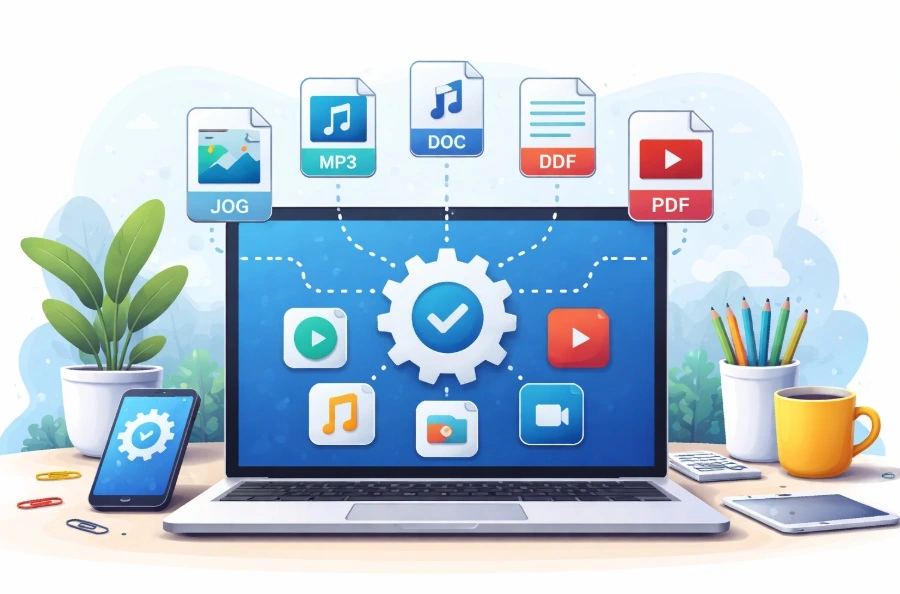
Windows is designed to make using your computer easy. One way it does this is by assigning default apps to different file types. This means when you open a file, Windows automatically opens it with a specific program. For example, photos may open with Photos, music with Groove Music, and PDFs with Edge. These default […]
How To Adjust The Mouse Pointer Speed: Complete Guide
Using a computer every day means you use the mouse a lot. The mouse pointer moves on the screen and helps you click, scroll, and select items. Many people never think about the speed of the mouse pointer. They have used the default setting for years. This can cause small problems over time. A slow […]

How to Change Mouse Scrolling Settings In Windows
A mouse is one of the most used computer tools. People use it every day. They scroll through emails. They scroll through documents. They scroll through websites and images. The movement becomes automatic. Most users do not notice it. That is why problems often go unnoticed. Scrolling problems show up slowly. At first, it feels […]
Keyboard Light Settings: Keyboard Lighting Control [Complete Guide]
Keyboards are no longer simple typing tools. Well, yes! Over time, they have evolved to include features that improve comfort, visibility, and overall experience. One of the most useful features today is keyboard lighting. It helps users work comfortably in low-light conditions. It also reduces strain when typing for long hours. Many users first notice […]
Customizing Pointer Appearance: Complete Guide
The way your mouse pointer looks on your computer may seem like a small detail. But customizing pointer appearance can make using your PC more comfortable and visually appealing. Many users do not realize that they can change the pointer size, color, and style to fit their needs. Whether you want a bigger pointer for […]
How To Choose a Computer Monitor: Monitor Buying Guide
Buying a monitor looks easy. Many people think all screens are the same. That belief causes regret later. A monitor is not just a display. It is a daily tool. You read on it. You work on it. You relax with it. Small problems become big over time. Poor brightness hurts eyes. Bad size causes […]