




Antivirus is the one kind of software that people think about at only two moments. The first is right after installing it. The second is right after something goes wrong. In between, it runs quietly, and most users never check if it is doing a good job. That silence makes the choice harder. Windows 10 […]
Top 10 Best Free Music Notation Software: Comparison Table
Music notation software helps composers and students create sheet music quickly. It replaces pen and paper with digital tools. These programs allow you to write, edit, and playback compositions. They are ideal for beginners and professionals alike.
Free music notation software has improved a lot. Many offer advanced features without cost. You can arrange instruments, hear playback, and export files easily. Choosing the right software depends on your workflow and the complexity of your compositions.
Top 5 Music Notation Software Comparison
The top free music notation tools vary in features, interface, and playback options. The table below highlights the strengths of each for different user types.
| Software | Best For | Supported Platforms | Key Features | Ease of Use | Playback Quality |
| Notion 6 | Composers & students | Windows, macOS | Realistic playback, instrument library | Medium | High-quality audio |
| Sibelius First | Beginners & hobbyists | Windows, macOS | Step-time input, templates | Easy | Good for simple scores |
| Minitool MovieMaker | Quick music sketches | Windows | Basic notation, simple editing | Very easy | Moderate |
| MuseScore | All-round free option | Windows, macOS, Linux | Multi-instrument support, plugins | Medium | Clear playback, customizable |
| Impro-Visor | Jazz & improvisation | Windows, macOS | Lead sheets, chord charts | Medium | Focused on jazz style playback |
Common Questions About Music Notation Software
Do free music notation apps work for professional compositions?
Yes. Many free programs like MuseScore and Notion 6 offer professional-level tools. They support multi-instrument scores and high-quality playback. Advanced composers may prefer paid versions for additional features, but free options are sufficient for most work.
Can beginners easily learn these tools?
Most free software provides tutorials and templates. Simple interfaces like Sibelius First and Minitool MovieMaker are ideal for beginners. Even complex software like MuseScore has learning resources online.
Is the playback quality good in free music notation software?
Playback quality varies by software. Notion 6 and MuseScore offer realistic instrument sounds. Simpler apps may use basic MIDI sounds. For high-fidelity audio, a good set of virtual instruments helps.
Best Free Music Notation Software
For the best music and movie composition experience, we suggest you use well-tested, high-quality music notation software only. After careful evaluation, we prepared the list of these free options.
1. Notion 6
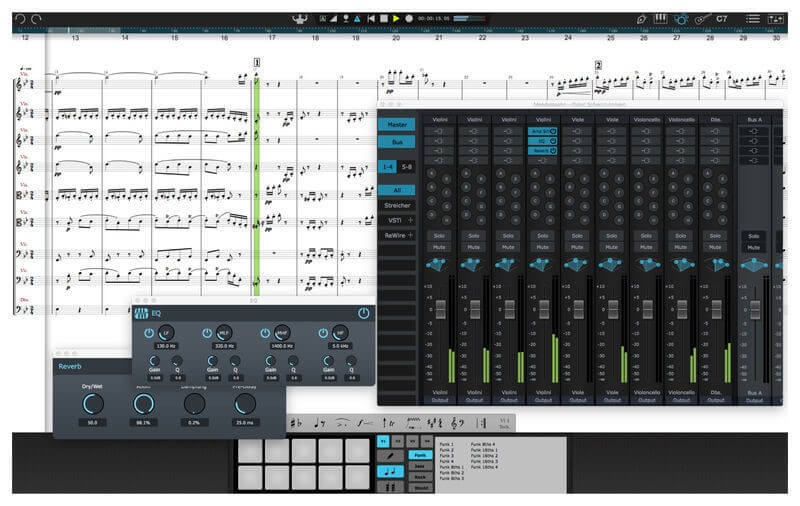
Use this software like you would a digital keyboard or a piano. It has a simple interface which makes it easier to use the features to compose new musical compositions. You can search for specific notation sections and split the chords progression. See the whole composition all at once on your screen for accurate playback and editing.
Compatibility: Windows, Mac
Prices:
Features:
- Specifications similar to digital keyboard or piano
- Comes with a virtual keyboard
- Add exotic chord symbols and notes
- Comprehensive palette with diverse musical notes/chords
Pros:
- Intuitive workflow guarantee
- Simple setup and usage
- Compatible with mobile phones and tablets
Cons:
- Takes up a lot of hard drive space
2. Sibelius First
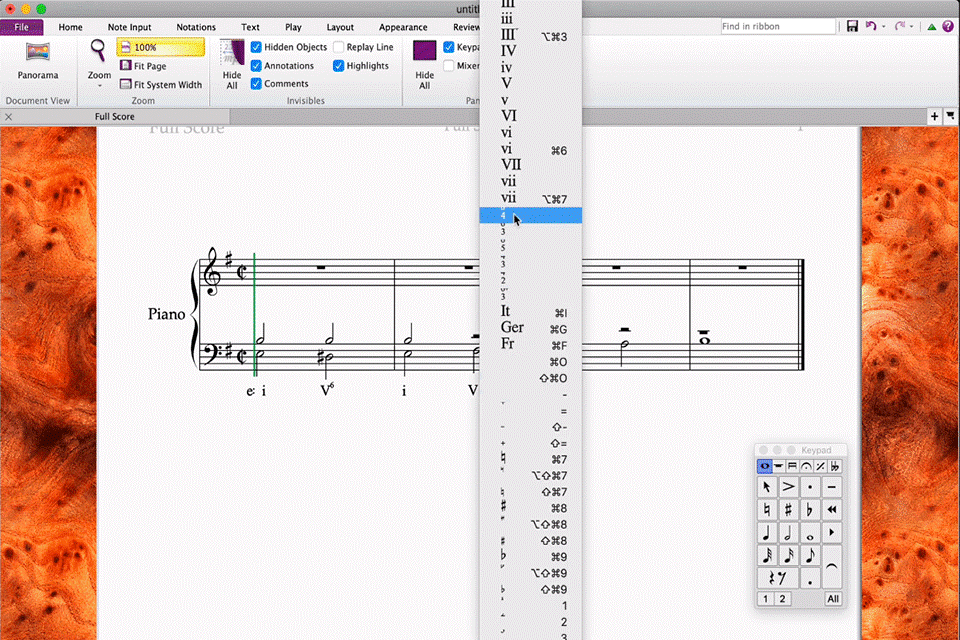
Sibelius First is one of the best free music notation software available for iOS. People can easily store their chord charts and audio files through this software in digitized format. Users can install this application on their iPad devices. It includes a vast library of tabs for different key signatures, making it more straightforward for composing music.
Compatibility: Windows, Mac
Prices: Free
Features:
- Compatible with different software types
- Share compositions easily
- Huge library for chord chart/popular song storage
- Type musical notes easily for composition
Pros:
- User-friendly software
- The simple notation entry process
Cons:
- The full version is costly
3. Minitool MovieMaker
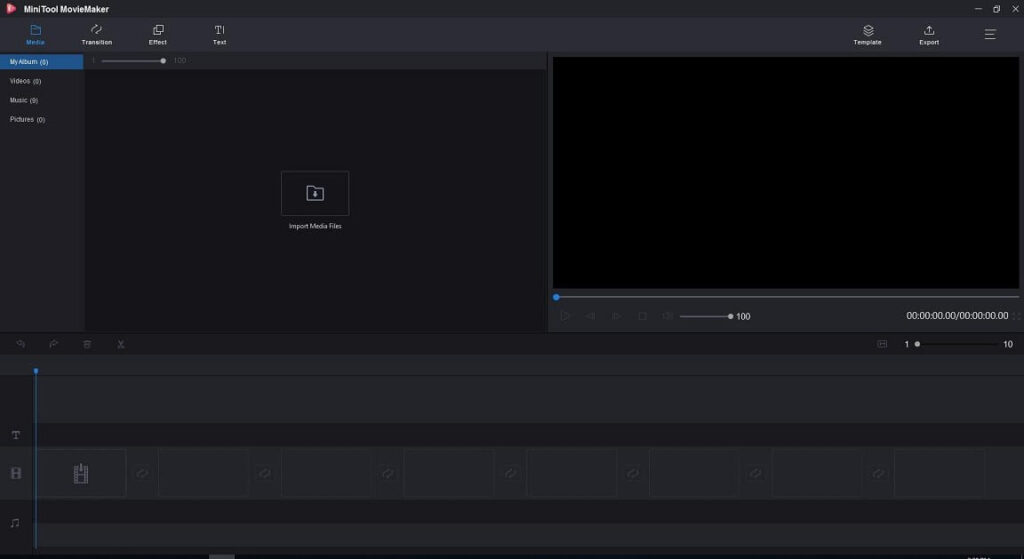
Minitool MovieMaker is one of the most trusted video/music editors available. Using this software, you can quickly transform simple videos into professionally stylized movies with high-quality titles and stunning transitions. Then, add your new sound composition.
You can trim or split your larger video files into smaller clips and add creative filters. In terms of audio, there are features to edit sound and music in different clips focusing on notation.
Compatibility: Windows
Prices:
Features:
- Audio editing for different video clips
- Add motion/effect/transition to every clip with one click
- Undo/redo all video and image edits
- Edit color in videos/pictures with one-click optimization
Pros:
- Simple and clear interface
- Attractive video templates for editing
- Free to use
Cons:
- Not primarily for music editing/notation
4. MuseScore
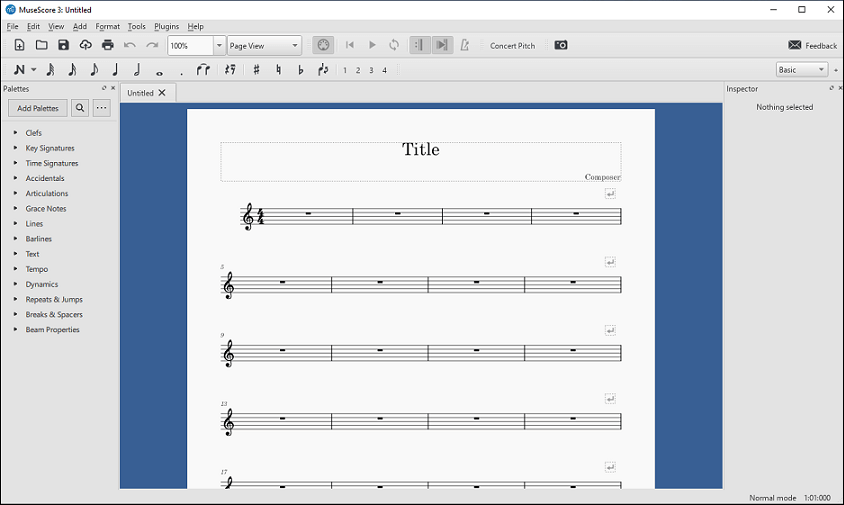
MuseScore is a free, open-source form of music notation software for different OS types. It is a suitable tool for composers to develop, play, and print out personalized sheet music. Furthermore, you can use it to add, arrange, and compose musical signatures, notations and instrumental sounds easily.
Compatibility: Windows, Linux, macOS
Prices:
Features:
- Supports different OS types
- You can export your audio files as MIDI, FLAC, MP3, OGG, etc.
- Download and print sheet music as SVG, PNG, PDF, and other formats
- Supports MIDI keyboard
Pros:
- Easy to use interface
- Free to download
- A good amount of features (input/output)
Cons:
- Limited support
- No available volume mixer
5. Impro-Visor
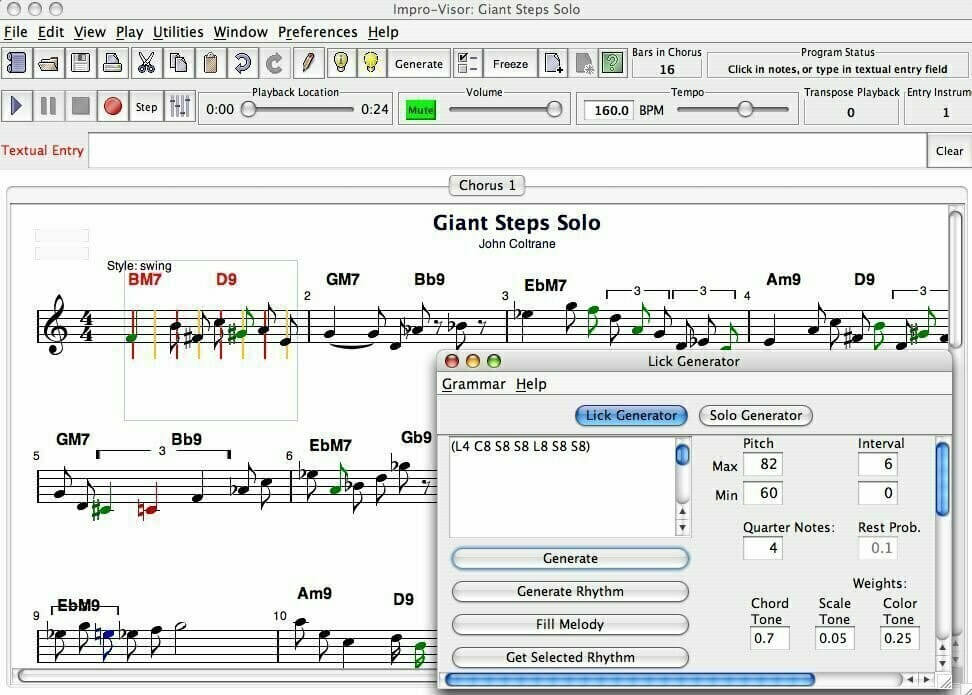
Intro-visor is an open-source, free music notation software with a wide range of features. You can easily understand and add chords, notes, keys, melody, harmony, and more. Users can create lead sheets covered in music notations. It is easy to import external MIDI files, and you can export them as the same later or get a printout.
Compatibility: Windows, Mac, Linux
Prices:
Features:
- Record music for different MIDI devices
- Import MIDI files and edit notations
- Set up song BPM, include rest measure, harmonic notes/simple notes, expand melody, etc.
- Additional features like LeedSheet Textual Editor, Grammar Controllers, Voicing Keyboard, etc.
Pros:
- A diverse range of features
- Import external files and export finished audio files easily
Cons:
- Light feature
6. EasyABC
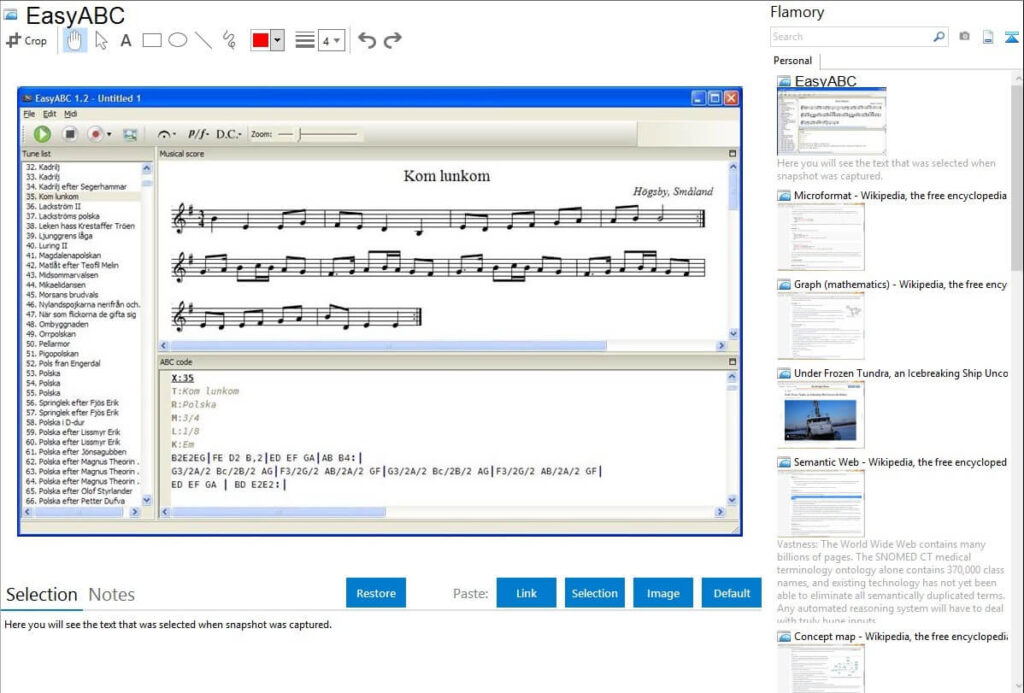
EasyABC is a suitable free music notation software many composers use for their music composition tasks. It has an open-source structure and accepts ABD coding. This software is better for users who want to understand and use ABC notation language and then write or edit their text code version into digitized sheet music.
Compatibility: Windows, BSD, Linux, Mac
Prices:
Features:
- Write sheet music from the basic level and export it in different printable formats
- Edit content with ABC typing support for matching the correct symbols, including note duration, automatic uppercase/lowercase, etc.
- View and resolve code errors in a dedicated section
- Transpose of different musical notes, align bars, modify note length, etc.
Pros:
- Easy to learn and use
- Simple note/tune sorting method (specify the fields)
- Multiple ABC typing options
Cons:
- Slow update possible
7. Forte Home
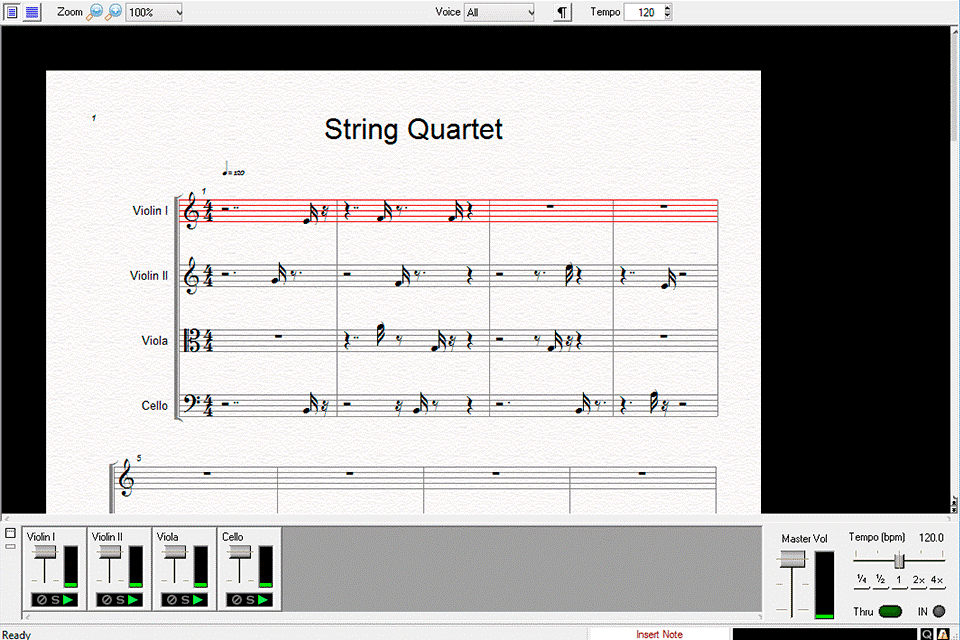
Another suitable option for music notation functionality is the Forte Home option. This tool is excellent for total beginners training for classical guitar-based music composition. Instead of serving as a standard music editing tool, Forte Home takes a more educational approach.
Compatibility: Windows 10/8/7
Prices:
Features:
- Expanded library and modules on first-time music notation practices
- Best for guitar note playing, editing, and earn
- Export audio in MP3/WAV
- MIDI live recording
Pros:
- Easy to use features
- Many editing functions are available
Cons:
- The desktop version cannot work with Mac
8. Finale PrintMusic
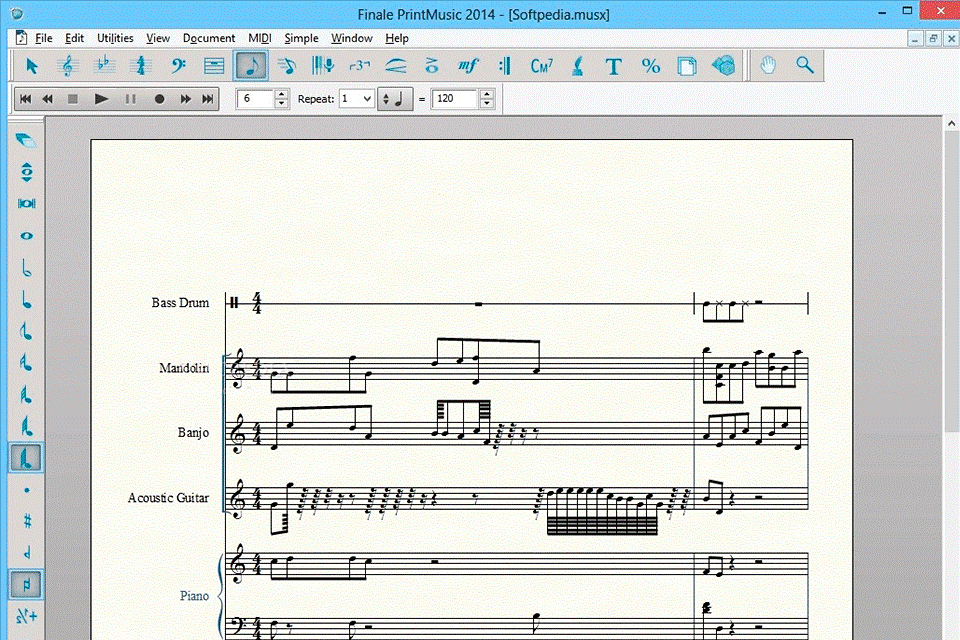
Finale PrintMusic is suitable for composers looking for high-quality free music notation software. The tool has an easy-to-use responsive interface that makes it suitable for more accessible new composers to operation. Personalize the interface element as per your preferences.
Compatibility: Windows
Prices:
Features:
- Customizable user interface
- Modify chromatic scale of audio
- Add key and time signatures
- Include song titles/songs, and optimize tone with the integrated tone generator tool
Pros:
- Best for beginners
- Intuitive interface
Cons:
- A virtual keyboard is not available
9. Cakewalk Sonar
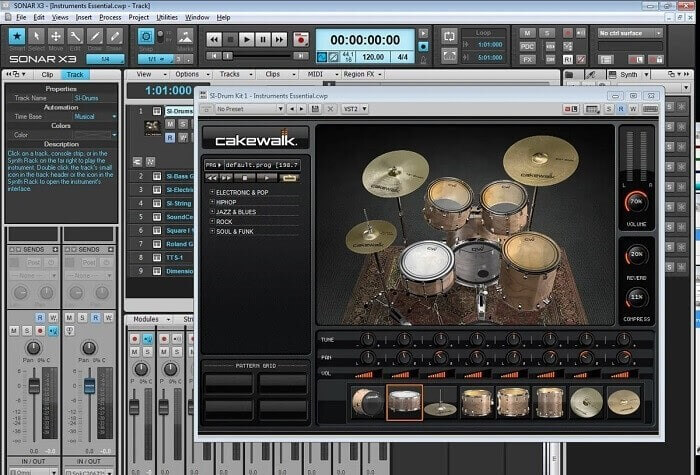
Cakewalk Sonar is a free-to-use tool for music notation through PC. You can utilize it for different professional-level music editing and recording functions. Many beginners and professional-level composers create new tunes or master different arrangements.
Compatibility: Windows
Prices:
Features:
- Specialized V-vocal technology support for individual vocal editing
- Connectivity with real instruments like controllers, synthesizers, and electric guitars
- Touch control-based multi-monitoring mode
- Utilize integrated emulators
Pros:
- Professional-level music notation
- Multi-device support
Cons:
- No built-in sampler
10. NanoStudio
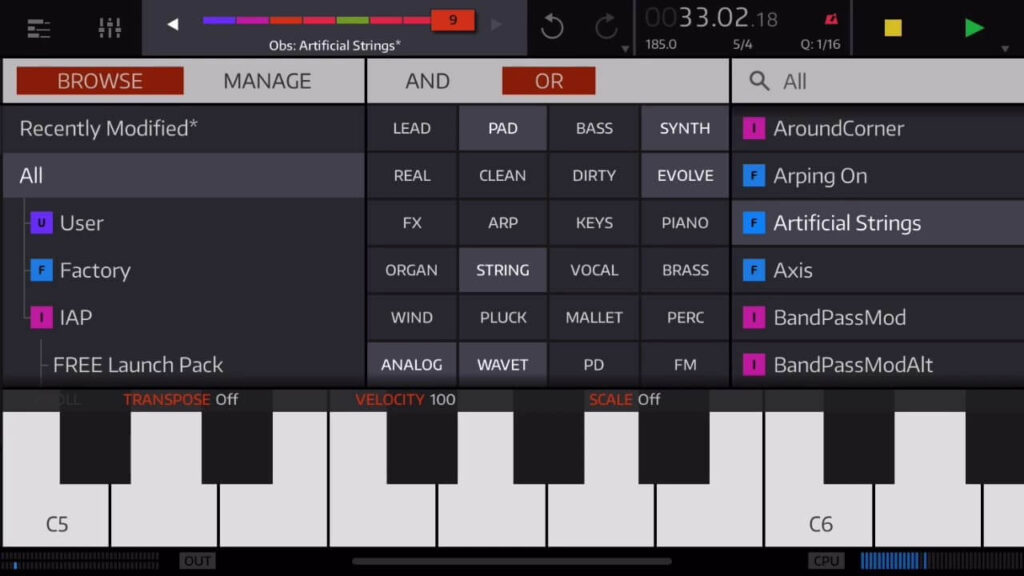
NanoStudio works as a top-notch but simple software for music composition. It comes with a clear and intuitive interface design, multiple tool support, and robust functionality. Users get both sampling and virtual synthesizer options for sound generation.
Compatibility: Windows, Android, iOS, Mac
Prices: XXX
Features:
- Simplified music composition through a smooth interface
- Manage and create DJ sets
- Sampling and virtual synthesizer support
- Compatible with different devices like drum machines, microphones, sequences, mixer, etc.
Pros:
- Plugin your equipment easily
- Utilize effects and filters for music composition
Cons:
- Usage guide is complex
- Not good for beginners
Author’s Tip
Start by choosing software that fits your workflow. Beginners should focus on ease of use and templates. Professionals should look at instrument libraries and playback quality. Testing a few options helps identify the best fit.
Keep your goals in mind. If you plan to share sheet music digitally, check export formats. MIDI and PDF options are important. Regular practice with the software improves speed and composition quality. Don’t rush; take time to explore all tools.
Conclusion
Free music notation software offers powerful features for both beginners and professionals. They allow composition, arrangement, and playback without investing in expensive programs. Most cover basic to advanced needs and support multi-instrument projects.
Choosing the right software depends on your goals. Beginners benefit from simplicity, while experienced composers need detailed tools and high-quality playback. MuseScore, Notion 6, and Sibelius First remain top picks for versatility and performance. With the right software, anyone can produce professional-looking scores efficiently.
FAQs
Can I export sheet music from free notation software?
Yes. Most free music notation programs allow exporting compositions in multiple formats. PDF export is common for printing or sharing readable sheet music. MIDI export helps transfer music to other digital audio software. Some programs also support MusicXML, which preserves notation details for use in other notation tools or collaboration.
Do these programs support multiple instruments?
Yes. Many free tools, including MuseScore and Notion 6, allow you to create scores with multiple instruments. You can arrange full ensembles, orchestras, or simple duets. Each instrument’s part can be edited independently, giving flexibility in composition and orchestration. This makes it suitable for both solo projects and complex arrangements.
Is it possible to hear playback while editing?
Absolutely. Playback is a core feature in nearly all free notation software. You can hear your composition in real time as you enter notes. This helps identify mistakes, test harmonies, and adjust timing immediately. Some programs also allow changing instrument sounds during playback for a more realistic audio experience.
Author Bio:
Dinesh Lakhwani 

Dinesh Lakhwani, the entrepreneurial brain behind “TechCommuters,” achieved big things in the tech world. He started the company to make smart and user-friendly tech solutions. Thanks to his sharp thinking, focus on quality and the motto of never giving up, TechCommuters became a top player in the industry. His commitment to excellence has propelled the company to a leading position in the industry.
Popular Post
Recent Post

Top 5 Lightest Antivirus Software To Protect Your PC
Introduction: Antivirus software helps protect Windows PCs from digital threats. It detects viruses, blocks ransomware, and alerts users about unsafe websites. However, some security tools consume too much RAM and CPU power. This can make everyday tasks feel slow. Older laptops and low-end PCs often face this problem. The computer may take longer to start. […]
How To Disable Cookies in Browser [Complete Guide]
So, search for a pair of shoes once online. Close the tab. By evening, those same shoes are sitting on your news site, your video app, and even your recipe blog. Nobody placed them there by chance. A cookie did. Well, yes! Cookies are small files that websites place on your device while you browse. […]
How To Disable Background Apps In Windows: 4 Quick Methods
A slow PC rarely gives a warning. One day, it simply takes longer to start. Apps open late. The fan runs loud, even when the screen is almost empty. Most people blame old hardware. Often, that is not the real reason. The real reason is hiding in plain sight. Windows keeps many apps active in […]
How to Activate Windows with a Product Key for Windows 11 & Windows 10
It always shows up at the worst time. You are halfway through a report, or about to join a video call. Then you spot it in the bottom right corner of the screen. Activate Windows. Go to Settings to activate Windows. Initially, an unactivated copy of Windows may seem like a minor inconvenience. Over time, […]

Is Easy Duplicate Finder Worth It? Honest Review
The photos folder looked normal at first glance. Then the storage warning popped up. One trip photo appeared four times. A tax PDF sat in three different folders. Two old setup files were still in Downloads, and each one was over 500 MB. Nobody plans this mess. Copies pile up slowly. A download runs twice. […]
Wise Duplicate Finder Review: Real Results from Wise Duplicate Finder
Read my honest Wise Duplicate Finder review. See features, pricing, pros and cons, and real PC test results. Find out if this free duplicate cleaner can free up your Windows storage.
How to Recover Deleted Files from Pen drive, USB Drive, SD Card
Introduction: On tech forums, you’ll often see posts like this: “I connected my pen drive to my laptop this morning, but the folder was empty. All my college project files had vanished. I don’t have a backup. Can someone help me?” Stories like this are very common. Pen drives, USB drives and SD cards are […]

How To Recover Files Deleted from the Recycle Bin [Windows 11]
Losing a file can happen in seconds. You clear your desktop, hit Delete, and empty the Recycle Bin. Then, just when you need that file again, it seems to have vanished. This guide will walk you through ways to restore files removed from the Recycle Bin. We will begin with simple fixes, then look at […]

Disk Drill Data Recovery Tool Explained: Full Review and Guide
It happens in a split second. You delete a folder by mistake. Your drive stops showing up. A photo album from your last trip just vanishes. And your stomach drops. Lost files feel personal. They are not just data. They are memories, work hours, and sometimes years of effort packed into a few gigabytes. When […]