How To Open/Access Computer Management & Advanced Tips

Every Windows computer has many hidden tools. Most users never see them. They only use basic settings. They change wallpapers. They install apps. They adjust sound and display. That is enough for daily work. But problems still happen. The system slows down. Storage fills up. Errors appear without warning. At this stage, normal settings do not help much.
Windows includes a powerful system utility that solves many of these issues. It brings several technical tools together in one place. You do not need to download anything. You do not need special software. This tool is designed for control, clarity, and system insight. It helps users understand what is really happening inside the computer.
Many people avoid system tools because they sound complex. The truth is different. With clear guidance and careful steps, even regular users can benefit. You do not need to touch risky options. Viewing information alone can answer many questions. This guide explains everything slowly and clearly. Each section uses plain words and short sentences to keep reading easy.
What is Computer Management?
Computer Management is a tool built into Windows. It puts different system controls in one place, so you can manage hardware, storage, and settings easily. You don’t need to install anything, and it works on most versions of Windows.
It is mainly used to view system information and perform basic administrative tasks. You can check disk status, manage users, and review system errors. Many features are visual and menu-based, which makes them easier to understand over time. With careful use, even non-technical users can benefit from it.
Key Features
- Disk Management
Allows you to view, create, format, and resize disk partitions. It helps you understand how storage is being used. - Device Manager
Shows all connected hardware devices. It helps detect driver problems and hardware issues. - Event Viewer
Records system events, errors, and warnings. It helps identify the cause of system problems. - User and Group Management
Lets you create, remove, and manage local user accounts. Access levels can also be adjusted. - Service Control
Allows you to start, stop, or review background services that run with Windows.
How to Open Computer Management
Windows offers more than one way to open this tool. You can choose the fastest method. All methods open the same window. The layout remains the same.
You do not need advanced skills to open it. Some actions inside may need admin permission. Opening the tool itself is simple. Follow the steps below carefully.
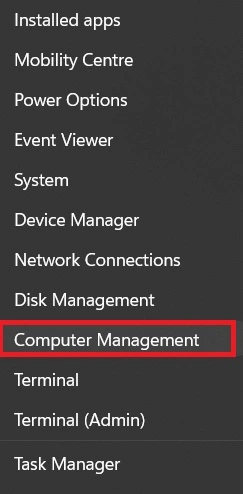
Step 1. Move your mouse to the Start button. Right-click on it. A menu will appear. Click on the option named Computer Management.
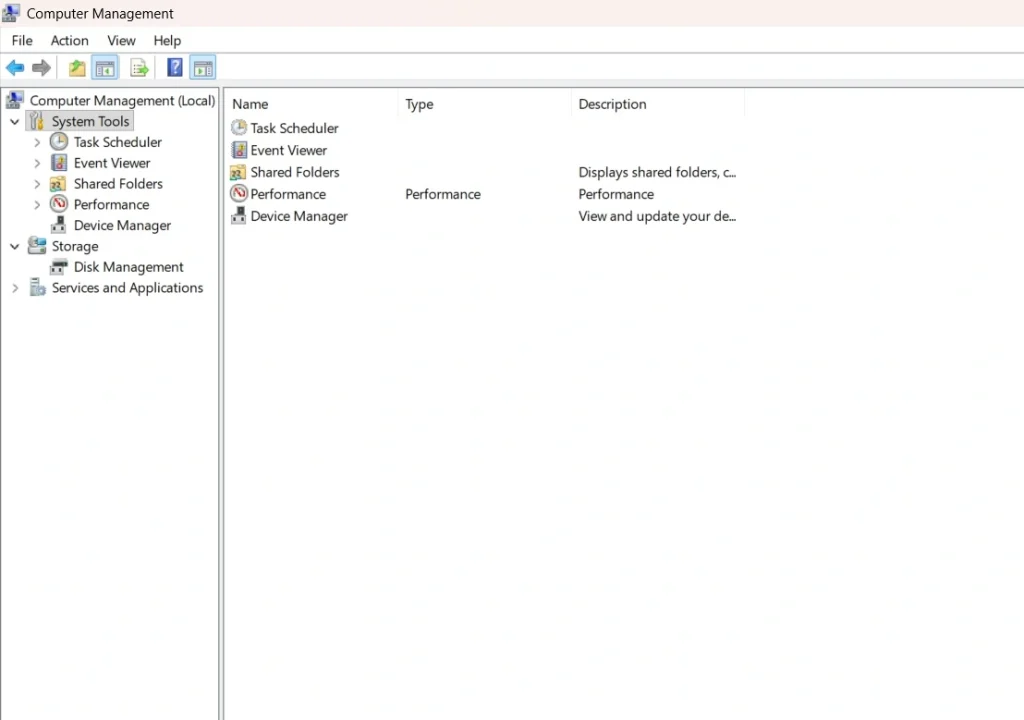
Step 2. After a short wait, the tool will appear in a separate window.
Benefits of Using Computer Management
Using this tool gives you deeper control over your system. It helps you understand how Windows works behind the scenes. You can detect problems early. You can also avoid many common mistakes.
This utility is helpful for home users and office systems. It reduces dependence on third-party tools. It also saves time during troubleshooting. Below are the main benefits explained in simple terms.
- One place for many tools
You do not need to search for different system features. Everything stays organized in one window. - Better storage control
You can see all drives clearly. You can manage partitions and unused space. - Clear system error logs
Errors and warnings are recorded. You can check when and why problems occurred. - User account handling
You can create local users. You can limit access when needed. - Control background services
Many programs run silently. You can stop once you do not need. - Hardware overview
All connected devices appear in one list. You can spot driver issues quickly. - Network and sharing insight
You can view shared folders. You can check who is using them. - No extra downloads required
The tool comes with Windows. This keeps your system clean and stable.
FLUQs: Before You Start Let’s Discuss These Questions First
Is this tool meant only for experts?
No, it is not limited to experts. Anyone can open and use it with basic guidance. Beginners should start by viewing information only. Reading logs, checking disks, and seeing device status are safe actions. Changes should be made slowly and only when the purpose is clear.
Can changes be reversed if something goes wrong?
Some changes can be undone, but not all. Simple actions like restarting services are easy to reverse. Disk or user changes may be permanent. Creating a system restore point before major edits is always a safe step. It gives you a way back if something goes wrong.
Does using this tool harm system performance?
No, using the tool itself does not slow down the system. Opening it or viewing details has no impact on performance. Only specific actions, such as disabling important services, can cause issues. Careful use keeps the system stable.
Advanced Tips
This system utility is more powerful than it looks. With time and care, you can use it for deeper control. The tips below focus on safety and clarity. Always read labels before changing anything.
Study the Event Viewer Section
- Why it matters: Event Viewer logs system activity, including errors, warnings, and informational messages.
- Tip: Focus on entries marked as errors or warnings to identify potential issues. Repeated normal logs can be safely ignored to avoid clutter.
Review Startup Services Carefully
- Why it matters: Startup services affect boot time and system performance.
- Tip: Only disable services you recognize and know are non-essential. Some are critical for system stability, so research before making changes.
Inspect the Disk Layout Often
- Why it matters: Disk Management shows how your storage is partitioned and used.
- Tip: Check for unallocated space regularly. You can use it to create new partitions or expand existing ones, improving storage efficiency.
Rename Drives with Clear Labels
- Why it matters: Clear drive names help avoid confusion during file operations.
- Tip: Use descriptive labels like “Backup Drive” or “Media Storage” to make navigation and disk tasks easier and safer.
Monitor Shared Folder Usage
- Why it matters: Shared folders can expose sensitive data if not monitored.
- Tip: Use the Shared Folders section to see who’s accessing files in real time. This helps with security and troubleshooting access issues.
Check Device Status Icons
- Why it matters: Device Manager shows hardware health and driver status.
- Tip: Yellow warning icons indicate driver problems. Update or reinstall drivers to fix issues and ensure hardware functions properly.
Create Restore Points Before Changes
- Why it matters: Restore points let you roll back system changes safely.
- Tip: Always create a restore point before installing new software or tweaking system settings. It’s a safety net against accidental damage.
Learn Sections One by One
- Why it matters: Computer Management is a powerful tool with many components.
- Tip: Don’t rush. Explore each section—like Services, Disk Management, and Event Viewer gradually to build confidence and understanding.
Conclusion
Windows hides many useful tools from plain sight. This utility brings them together in a simple layout. With patience and care, users gain better control over their systems. You do not need expert knowledge to benefit. Even viewing information improves awareness and confidence.
Regular use helps prevent problems. It reduces reliance on outside software. Over time, you learn how your system behaves. This knowledge leads to better decisions and a more stable computer. Computer management remains one of the most useful built-in tools for long-term system care.
FAQs
Can this tool fix system errors automatically?
No, it cannot fix errors on its own. The tool mainly shows system details, logs, and settings. It helps you understand what is wrong and where the issue started. After that, you decide the next step. You may restart a service, update a driver, or free disk space. The tool supports decision making, not automatic repair.
Is it available in Windows 11?
Yes, it is fully available in Windows 11. The design looks slightly more modern compared to older versions. Some menus may appear in a different style. The core tools remain the same. Disk management, event logs, and device controls all work as expected.
Should I use it often or only when problems appear?
You do not need to open it every day. Occasional checks are enough for most users. It is best used when something feels wrong with the system. Slow startup, disk issues, or device errors are good reasons. Regular viewing can also help you spot problems early.
Author Bio:
Dinesh Lakhwani 

Dinesh Lakhwani, the entrepreneurial brain behind “TechCommuters,” achieved big things in the tech world. He started the company to make smart and user-friendly tech solutions. Thanks to his sharp thinking, focus on quality and the motto of never giving up, TechCommuters became a top player in the industry. His commitment to excellence has propelled the company to a leading position in the industry.
Popular Post



Recent Post
How to Switch Windows 10 to a Local Account: Complete Guide
Windows 10 allows users to sign in with either a Microsoft account or a local account. When you set up a new computer, the system often suggests using a Microsoft account. This account connects your device to Microsoft services such as Outlook, OneDrive, and the Microsoft Store. It also syncs settings, themes, and passwords across […]
How To Change Default Apps For File Types In Windows
Windows is designed to make using your computer easy. One way it does this is by assigning default apps to different file types. This means when you open a file, Windows automatically opens it with a specific program. For example, photos may open with Photos, music with Groove Music, and PDFs with Edge. These default […]
How To Adjust The Mouse Pointer Speed: Complete Guide
Using a computer every day means you use the mouse a lot. The mouse pointer moves on the screen and helps you click, scroll, and select items. Many people never think about the speed of the mouse pointer. They have used the default setting for years. This can cause small problems over time. A slow […]

How to Change Mouse Scrolling Settings In Windows
A mouse is one of the most used computer tools. People use it every day. They scroll through emails. They scroll through documents. They scroll through websites and images. The movement becomes automatic. Most users do not notice it. That is why problems often go unnoticed. Scrolling problems show up slowly. At first, it feels […]

Keyboard Light Settings: Keyboard Lighting Control [Complete Guide]
Keyboards are no longer simple typing tools. Well, yes! Over time, they have evolved to include features that improve comfort, visibility, and overall experience. One of the most useful features today is keyboard lighting. It helps users work comfortably in low-light conditions. It also reduces strain when typing for long hours. Many users first notice […]

Customizing Pointer Appearance: Complete Guide
The way your mouse pointer looks on your computer may seem like a small detail. But customizing pointer appearance can make using your PC more comfortable and visually appealing. Many users do not realize that they can change the pointer size, color, and style to fit their needs. Whether you want a bigger pointer for […]
How To Choose a Computer Monitor: Monitor Buying Guide
Buying a monitor looks easy. Many people think all screens are the same. That belief causes regret later. A monitor is not just a display. It is a daily tool. You read on it. You work on it. You relax with it. Small problems become big over time. Poor brightness hurts eyes. Bad size causes […]

How To Get Help With File Explorer in Windows 11 [Complete Guide]
File Explorer is one of the most important tools in Windows 11. It is used to open folders, view files, and manage stored data. Almost every action on a Windows computer depends on it in some way. When users open documents, save downloads, or organize photos, File Explorer is always involved. Because it is used […]

How To Fix A Frozen Computer: Complete Guide [Windows 11/10]
A frozen computer is one of the most common problems Windows users face. The screen stops responding. The mouse pointer does not move. Keyboard inputs do nothing. You may hear the fan running loudly. Sometimes the system looks alive, but nothing works. This situation often happens when you are busy or working on something important. […]
How to Upgrade Computer RAM: Complete Guide
Upgrading RAM is one of the simplest ways to improve a computer. It helps the system feel faster and smoother. Apps open quicker. Browsers handle more tabs. Games and tools run with less delay. Many users search for how to upgrade computer RAM because it gives real results without high cost. You do not need […]