





Read my honest Wise Duplicate Finder review. See features, pricing, pros and cons, and real PC test results. Find out if this free duplicate cleaner can free up your Windows storage.
How To Archive Your Emails For Free
Introduction
For professionals and regular users alike, email is one of the most common modes of communication available. In the work context, officials use email to compose and send important messages and notifications to other workers, superiors, or customers. For example, many use emails as a medium of promotion and broadcast specific alerts for clients, like product purchase notifications.
One can also utilize other software to Archive older emails without deleting them or turning them into spam. Steps are available for keeping older emails safe without additional costs. Read ahead to know more about it.
Methods to Archive Emails in Different Service Providers for Free
There are different types of service providers available that people use to compose and send their emails. Some, like Outlook or Gmail, are used by organizations and individuals equally. We tried out the methods to Archive older emails for multiple such providers and detailed the steps involved here. To know about them, read ahead.
Method 1: Archive Emails via Outlook
Outlook is a common choice for many users due to its high capacity for email content, multi-OS compatibility, and simple usability. After archiving emails, the messages are transferred to the Archive folder under Outlook. However, they fall under the allotted storage limit, so keep the most crucial email content to avoid storage issues later.
In Outlook, folders like Archive, Sent Items, and Items have default configurations, and users cannot make any modifications. However, it is possible to archive older emails for IMAP and POP account holders. This is because one can create a new folder or turn an older folder in the archive section.
How to do this?
Step 1: Access the Outlook application on your desktop.
Step 2: Open the Inbox section and click on the message you want to archive.
Step 3: Choose Home > Archive.
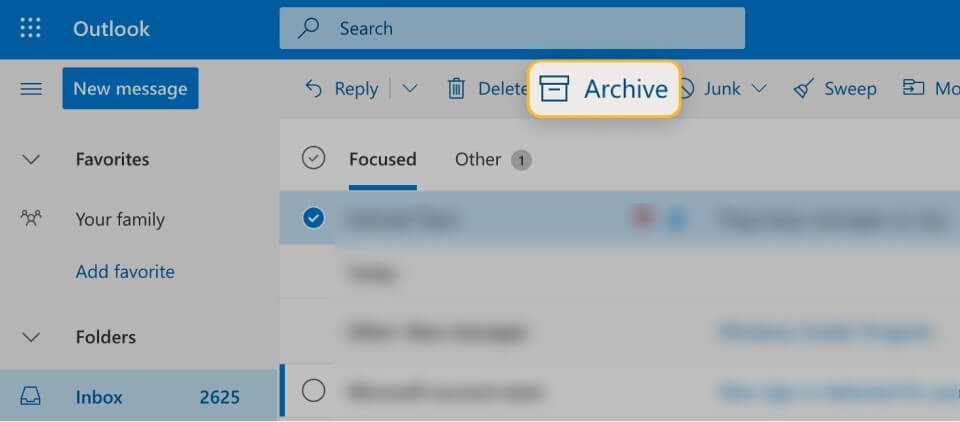
Step 4: Afterwards, you can access the email archive section of Outlook to find the stored email. You can open it through the Archive folder on the left-hand-side screen panel.
Step 5: Under the mobile app version or Outlook Online, you can find the “Archive” option from the top toolbar after choosing the email from the Inbox.
Method 2: Archive Email via Gmail
Gmail is another top service provider for emails globally and has a wide user base. It offers users 15 GB of Cloud storage for free, and a small section of it is allocated for archived emails. Overall, the content in the cloud storage enters from all associated Google apps of a user. So, knowing the right way to organize archived emails is vital to avoid losing any important message by mistake.
When you archive older emails on Gmail, they no longer appear in the Inbox but are not deleted. However, they are available under All Mail. In case you get a reply to an email you archive, that automatically comes up in the Inbox folder. Archiving the messages keeps them stored until a user intentionally deletes or moves them.
How to do this?
Step 1: Open your Gmail account.
Step 2: Hover your cursor on top of a message when you open the desktop Gmail version- multiple icons will appear on the right side of the selected message. Choose the “Archive” option from them.
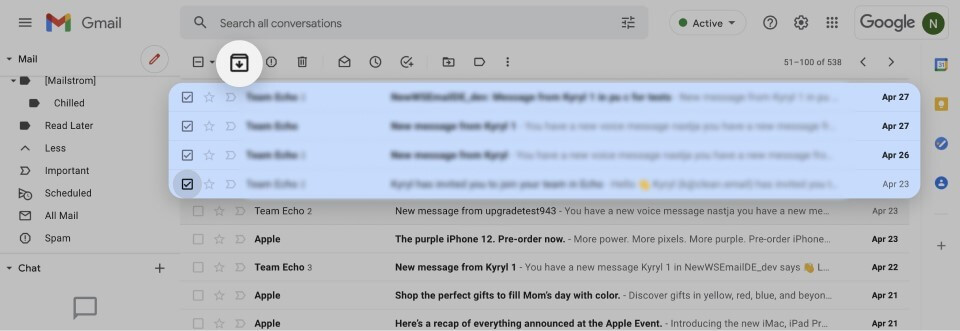
In the mobile app version, you can press hold on the message to show the icons on top of it and select Archive.
Step 3: Later, you can find the “All Mail” tab from the left pane to find the messages you archived.
Step 4: Click on the text field of the search bar for all conversations, and type in specific keywords for the message. For example, if you are looking for your email on holiday leave, search by “Holiday” or “Vacation”, as you had mentioned in the original email.
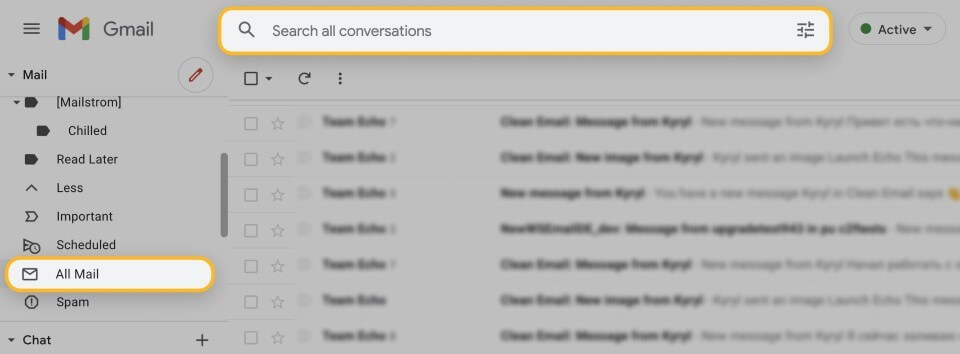
Step 5: In case it is hard to find the right message, add terms like
“has:nouserlabels”, “in:Sent”, etc.
Method 3: Archive Emails via the Mac app
In Mac devices, a specialized Mail app is available for users to register. There is an archive mailbox under it as well for storing emails for free. It is available through the sidebar of the mail, and they do not leave the mailbox until someone intentionally removes them.
How to do this?
Step 1: Access the Mail app on your Mac device.
Step 2: Click on a message or a thread of messages. For the latter, all messages under that conversation thread shifts to the archive folder.
Step 3: Open the toolbar of the Mail app and choose Archive.
Step 4: You can open the Archived messages from the Archive mailbox.
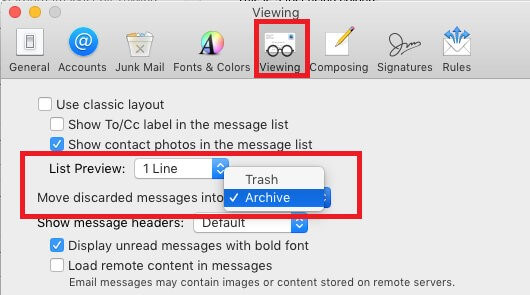
Step 5: To move them from the Mac Mail notification section, access the app > Viewing Preferences. Find “Move Discarded Messages” out of the resulting list and opt for Archive.
Method 4: Archive Emails via iCloud.com
You can archive older emails in iCloud through the Mail app. Here, you can freely store email messages from other email service providers with some steps.
How to do this?
Step 1: Through the Mail sidebar, choose the Archive folder to open.
Step 2: Drag a message you want to archive to this folder. In case the folder does not appear openly, choose the Folder icon and then click on the Archive option from them.
Step 3: To see the archived emails, open the Archive folder through the sidebar and choose the message you want to view again. Drag it directly to the inbox folder (or other folders, if necessary).
Conclusion
Email overloading can become a huge issue for many companies and regular users. This is because users have to focus longer on email management than other crucial activities. With the steps methods here, you can archive hundreds of different emails with some clicks and make the email management process simpler.
Like this, other guides are available here; read those posts to know about other topics.
Author Bio:
Dinesh Lakhwani 

Dinesh Lakhwani, the entrepreneurial brain behind “TechCommuters,” achieved big things in the tech world. He started the company to make smart and user-friendly tech solutions. Thanks to his sharp thinking, focus on quality and the motto of never giving up, TechCommuters became a top player in the industry. His commitment to excellence has propelled the company to a leading position in the industry.
Popular Post
Recent Post

How to Recover Deleted Files from Pen drive, USB Drive, SD Card
Introduction: On tech forums, you’ll often see posts like this: “I connected my pen drive to my laptop this morning, but the folder was empty. All my college project files had vanished. I don’t have a backup. Can someone help me?” Stories like this are very common. Pen drives, USB drives and SD cards are […]

How To Recover Files Deleted from the Recycle Bin [Windows 11]
Losing a file can happen in seconds. You clear your desktop, hit Delete, and empty the Recycle Bin. Then, just when you need that file again, it seems to have vanished. This guide will walk you through ways to restore files removed from the Recycle Bin. We will begin with simple fixes, then look at […]

Disk Drill Data Recovery Tool Explained: Full Review and Guide
It happens in a split second. You delete a folder by mistake. Your drive stops showing up. A photo album from your last trip just vanishes. And your stomach drops. Lost files feel personal. They are not just data. They are memories, work hours, and sometimes years of effort packed into a few gigabytes. When […]
Recover Deleted Files In Windows 11 With Software & Without
Introduction What is the first thing that goes through your mind the second an important file vanishes from a Windows 11 PC? For most people, it is a mix of panic and disbelief, followed by a frantic click through every folder that file could possibly be hiding in. It happens in a split second: one […]
EaseUS Data Recovery Wizard: Everything To Know
Data loss does not always come from a big disaster either. Most cases start small and boring. A drive gets formatted by mistake. A laptop freezes mid-save and restarts on its own. A memory card stops showing up after being pulled out too fast. None of these feel like emergencies at first, until you realize […]

Recuva Data Recovery Tool: Is it Actually Worth it?
When I first tried Recuva Data Recovery, I wanted to see if it could really bring back lost files. The tool is free, small in size, and promises quick recovery, which made me curious enough to test it on my own PC. The setup was fast, and the wizard guided me step by step. I […]

GetData Recover My Files Data Recovery Tool: Honest Review
A hard drive error brings a special kind of silence. Well, yes! The screen freezes, then a message appears saying the drive can’t be found or must be formatted. In that moment, years of photos and work files feel at risk. It never happens at a good time. Coffee spills near a laptop, a memory […]
Windows File Recovery: A Complete Review [Tried & Tested]
Imagine this. You spend hours perfecting a video project. You hit save. Then your laptop freezes, reboots, and when the screen comes back. The file is gone. Your stomach sinks. It’s not just you. Lost files happen all the time. A dropped hard drive, a bad update, an accidental delete, or a corrupted partition can […]

5 Best Data Recovery Software For Windows 11 and Windows 10
Introduction: A crashed drive can ruin a whole day. One minute your photos, work files, and tax records sit safe on your PC. The next minute they are gone. A power cut, a bad update, or one wrong click can wipe out years of memories and months of work in seconds. That sinking feeling is […]