Here’s How to Reduce RAM Usage on Windows PC — 13 Solutions
Last updated on January 26th, 2026 at 1:21 pm
Random Access Memory is the lifeline of your PC. Your Windows computer can lag, crash, and freeze on you without sufficient RAM.
Since all tasks require memory, a PC cannot process effectively during excessive RAM usage. Therefore, you require significant free RAM on your PC to perform day to day operations.
And it is easy to reduce RAM usage on Windows PCs. All you have to do is follow the simple 13 preventive steps, and your RAM will never give you any trouble.
Let’s see easy preventative measures to reduce RAM usage on Windows.
What Happens If Your PC Runs on Low RAM?
Every task you perform on your PC takes up some space. Even right-clicking on an icon takes up a small space from the RAM.
Thus, if your computer’s RAM is being overused, it will lag and be unable to perform the basic tasks. In addition, overused RAM can create several Windows errors, like:
- Application or system crashes
- Slow loading
- Poor web browsing speed
- Decreased PC performance
How to Ensure Your RAM Is Overused?
Your computer can lag, crash or freeze due to other operational reasons too. Thus, if your PC is working slow, it is not a sure shot sign that your RAM is being overused.
So, before coming to a conclusion, first, check your RAM usage. Here’s how to do that:
Step 1. Press the Ctrl + Alt + Delete key combination and select Task Manager.
Step 2. From the Task Manager, click on More Details if it only shows the list of running programs.
Step 3. Go to the Performance tab > Memory.
Step 4. You can check your PC’s RAM usage and how much memory is free and in use on the screen.
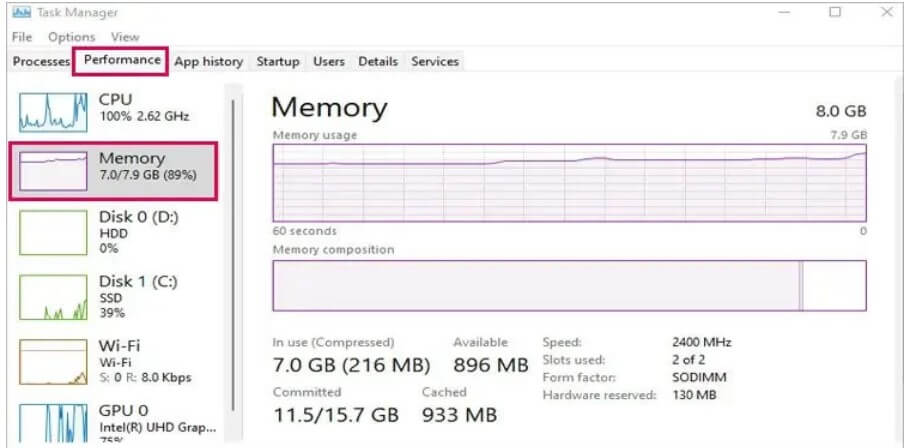
Usually, RAM consumes 3-5 GB when idle. It may vary on operating systems. But, it is recommended to have at least 5 GB of RAM free to perform your tasks smoothly.
Besides this, you can also check the RAM usage for the Task Manager, following these steps:
Step 1. Go to the Task Manager > Process tab > Memory.
Step 2. You can now see every running application’s memory usage.
13 Solutions to Reduce RAM Usage on Your Windows PC
Once it is established that your PC is running on low RAM, don’t rush to replace your RAM. Before investing in a new RAM, you can take the following preventive measures:
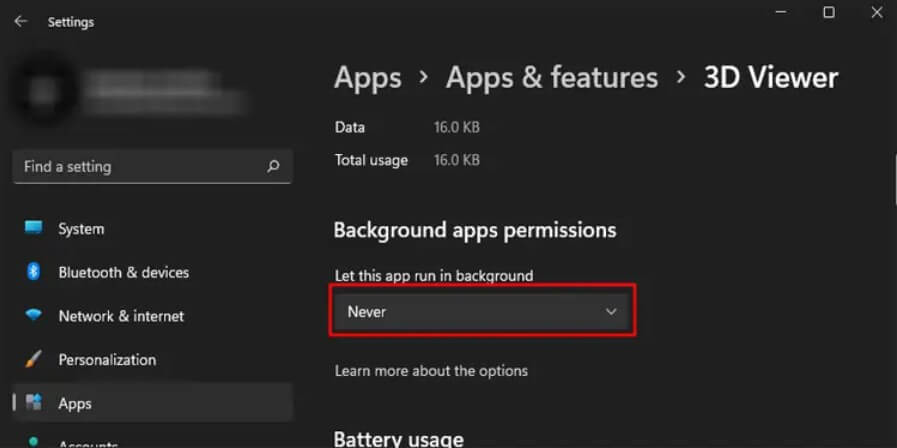
Solution 1. Turn Off Background
You might not realize it, but several programs are running in the background when you are working on your PC. Game launchers, chat programs or antivirus software often run in the background and consume your RAM.
Thus, you can turn off unwanted background programs and free up your RAM space like this:
Step 1. Click on the up arrow icon on the Taskbar. A box saying Show hidden icons will come up on your screen when you hover over it.
Step 2. Right-click on the application you want to stop running in the background.
Step 3. Press Quit or Exit and repeat the process on all unused programs.
Solution 2. Turn Off Programs With High Usage
If you want to turn off background programs that are taking up a large space on your computer, use these steps:
Step 1. Launch the Task Manager by pressing Ctrl + Shift + Esc keys.
Step 2. Expand the More details on the Task Manager pop up.
Step 3. Under the Details tab, left-click on Memory to sort all processes based on the memory usage.
Step 4. Scroll down and check which app is consuming more memory.
Step 5. Select the programs with high memory consumption and press End Task to turn them off.
Solution 3. Disable Startup Application
Programs that startup with your computer is also the reason behind reduced RAM usage on your PC. The startup programs can take up a large space on your RAM and slow down the PC boot up. So, you can disable certain apps from the startup as:
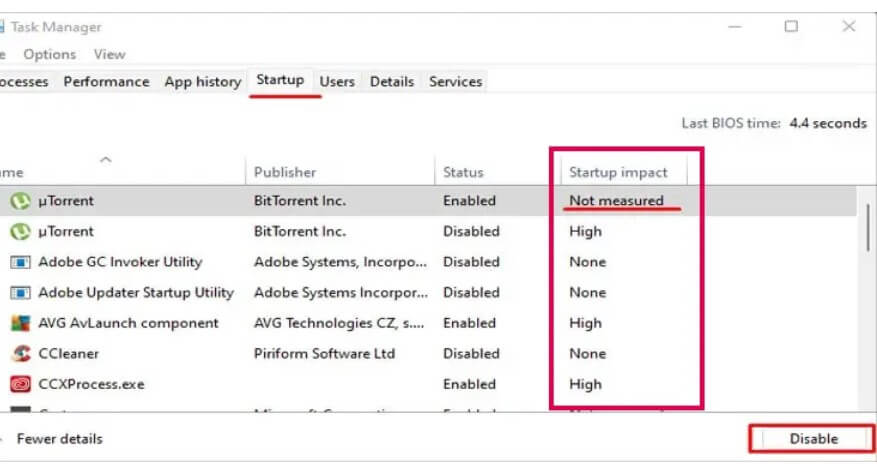
Step 1. Open the Task Manager > Startup tab.
Step 2. From there, you can see all the startup applications.
Step 3. Right-click on the programs that have Low, None or Not measured impact on startup and click on the Disable.
Solution 4. Adjust Virtual Memory
Due to the shortage of memory, your Windows PC will automatically use memory from your storage devices to expand the RAM. This is known as Virtual memory.
When a computer uses virtual memory, it uses a page file that provides storage from your hard drives. This can take up the excess data from the RAM. So, in order to increase virtual memory, you have to increase the page file size.
But, this doesn’t mean that you can adjust the virtual memory to a great extent. You can set virtual RAM minimum up to 1.5 times and maximum to three times the actual computer’s RAM. Here’s how to increase the virtual memory:
Step 1. Open the Windows Settings using the Windows + I keys.
Step 2. Go to System > About > Advanced system settings.
Step 3. Under the Advanced tab, click on the Settings beneath the Performance section.
Step 4. Next, go to the Advanced tab, and click on Change under Virtual memory.
Step 5. Uncheck the Automatically managed paging file size for all drives. After that, check the Custom size.
Step 6. Choose the Initial and Minimum size for your virtual memory and click on OK.
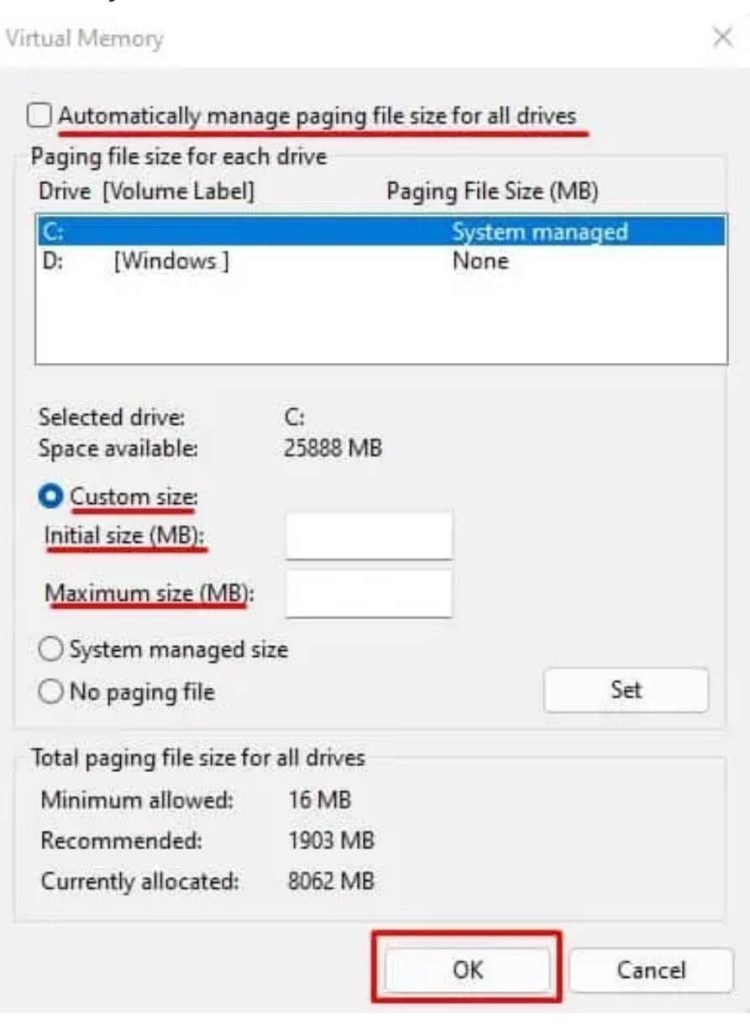
Step 7. Click on Apply > OK. Then, restart your PC to save changes.
Solution 5. Change NDU Value
Many Microsoft users encounter an error that displays 99% memory usage. Even though the device has significant free RAM, you might still get an error message saying, “Computer low on memory”.
This error is triggered due to some unknown bugs in the Network Diagnostic Usage (NDU). But thankfully, you can fix NDU errors by changing Registry values. Before tweaking with the Registry Editor, ensure to back up your system. This way, you will not lose your data if something goes wrong.
After backing up your system, follow these steps to change the NDU value:
Step 1. Open the Run dialogue box by pressing the Windows + R keys.
Step 2. Enter the regedit and hit Enter.
Step 3. Go to this location—
Computer\HKEY_LOCAL_MACHINE\SYSTEM\ControlSet001\Services\Ndu
Step 4. Double-click on Start from the right panel.
Step 5. Under Value data, replace the value with 4.
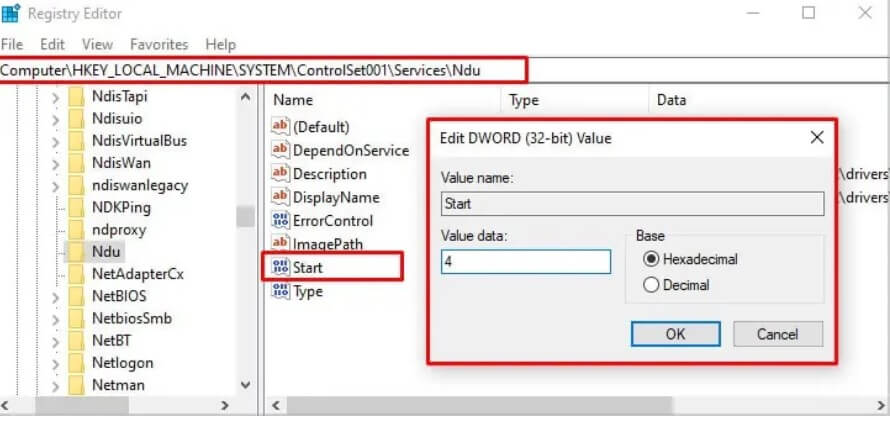
Step 6. Click on OK.
Step 7. Restart your computer to apply the changes to reduce RAM usage on your Windows PC.
Solution 6. Remove Browser Extensions
If your web browser speed is low, this might be happening due to multiple browser extensions running in the background. So, you should remove unwanted browser extensions to reduce RAM usage.
Every web browser has a different process to deactivate extensions. For this guide, we will show how to disable extensions in Chrome:
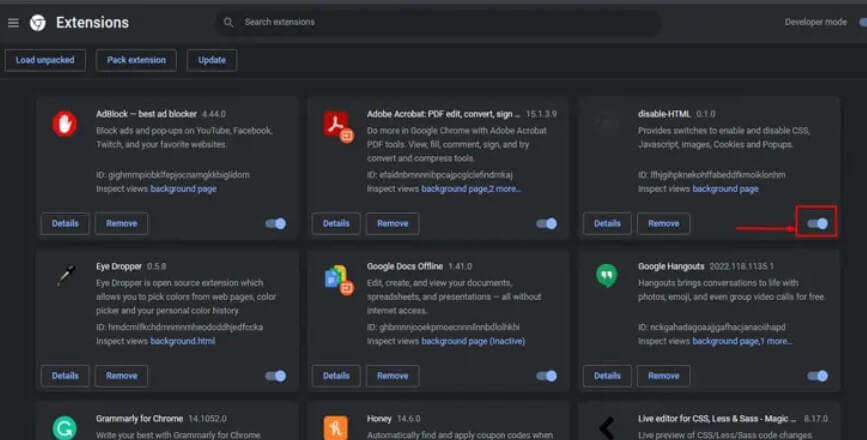
Step 1. Launch the Chrome app and click on the three vertical dots from the top.
Step 2. Click on Settings > Extensions.
Step 3. Toggle the button next to the extension that you want to turn off.
Solution 7. Run Virus Scans
If your computer is infected with malware, it can consume space in the memory and reduce the device’s overall performance. So, if you see an application taking up a large space in your memory, it is better to run an antivirus scan.
Today, you can find many great antivirus software for Windows like McAfee, Norton, etc. Besides third-party tools, you can use the Windows default utility called Windows Defender to scan your computer for viruses. Here is a step to use the Windows Defender:
Step 1. Press the Windows + I key to open Settings.
Step 2. Head over to Privacy & Security > Windows Security > Open Windows Security.
Step 3. Select Virus & Threat Protection.
Step 4. Go to the Current threats and click on Scan options.
Step 5. Check the Full scan and click on Scan now.
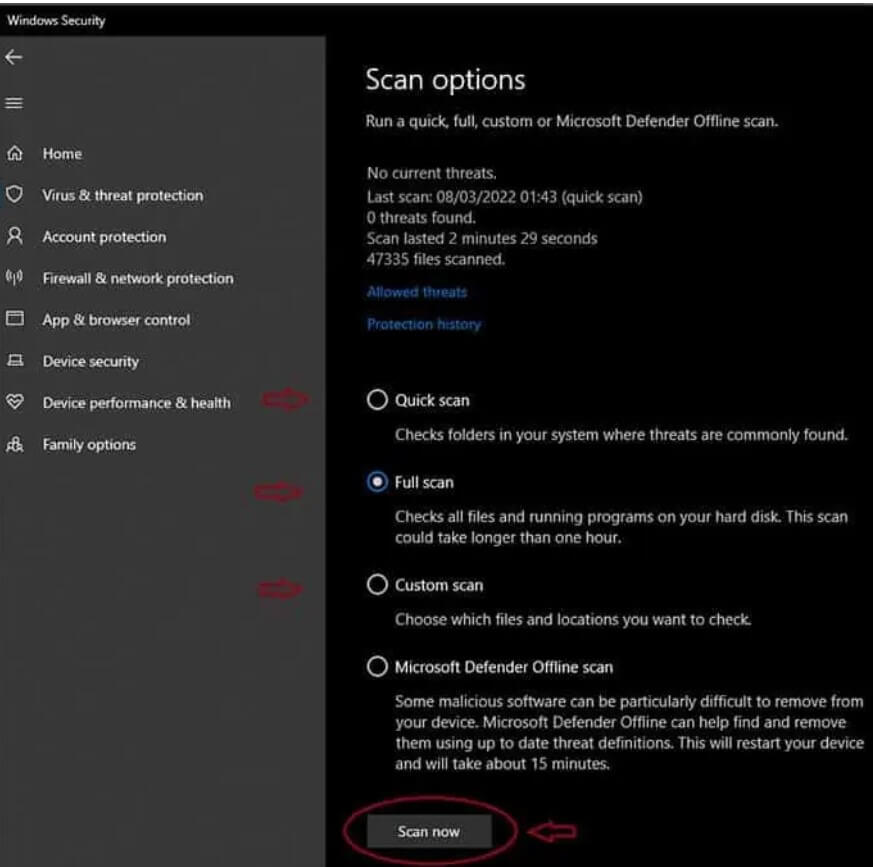
Step 6. If there are any threats, Windows Defender will remove them.
Solution 8. Get a Dedicated Graphics Card
Your PC will share physical memory with graphical memory without a dedicated GPU. That means if your system only runs on integrated graphics, it will use RAM to perform graphics-related tasks. This can lead to high RAM usage during games and make your system lag.
Thus, the system doesn’t need to share RAM memory when using a shared graphics card. The GPU can manage all tasks related to graphics.
Solution 9. Disable the Superfetch Services
Superfetch or SysMain is a service that runs in the background to analyze your frequently used programs and preloads them into RAM. This will reduce the application startup time, but it can increase RAM usage.
Thus, you can try to disable SysMain services to reduce RAM usage on your PC. To do so:
Step 1. Launch the Run dialogue box using the Windows + R keys.
Step 2. Enter “services.msc” and press Enter.
Step 3. On the Services window, look for SysMain or Superfetch and double-click on it.
Step 4. Change the Startup type to the manual and click on Stop under Service status.
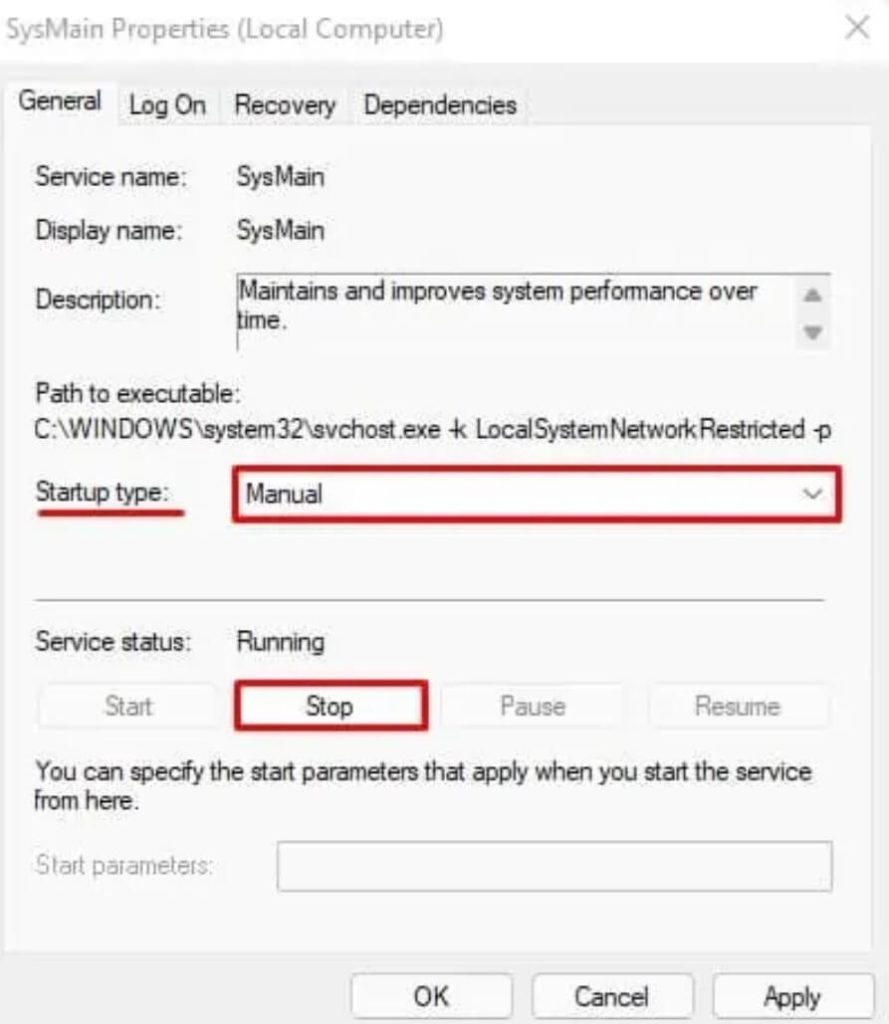
Step 5. Click on Apply > OK.
Solution 10. Disable Site Isolation
Chrome users have the Site Isolation feature enabled by default. This feature provides a defense mechanism against malicious websites that can breach browser security to access its data.
However, this setting can lead to high memory usage. We don’t recommend disabling this setting, but if your PC is super slow, you can try this solution to reduce RAM usage. Follow these steps to disable Site Isolation:
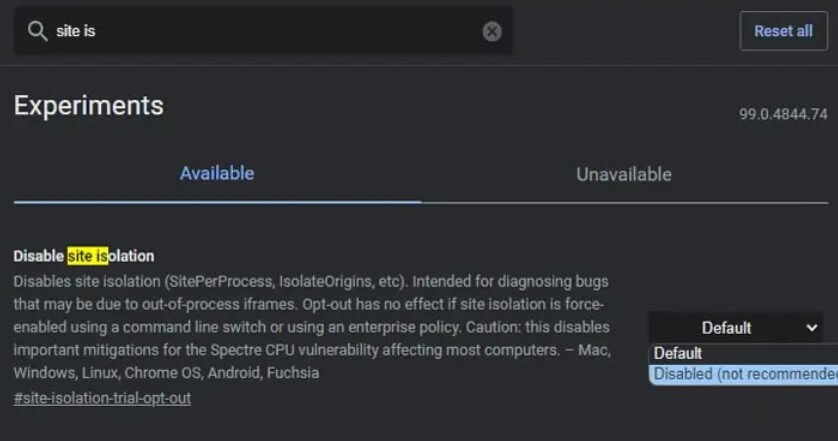
Step 1. Open Chrome and search for chrome://flags/ in the address bar.
Step 2. Up next, search for Site Isolation.
Step 3. Expand the dropdown menu Site Isolation and select Disabled.
Solution 11. Disable Animations
Windows 10 and 11 have modern and stunning animations to bring various interface elements to life. However, the animations are loaded in RAM and always stay there.
So, it is best to disable most or all animations to reduce pressure from your RAM. Especially if you are already running on low memory. This is how to disable Windows animations:
Step 1. Click on the Start menu and type “View advanced system settings “.
Step 2. Go to the Advanced tab > Performance tab > Settings.
Step 3. Choose Adjust for best performance. Alternatively, set it to Custom. This way, animations will work only when they get sufficient free space.
Solution 12. Close Web Browser Tabs
If your internet browser is running at a bullock cart speed, it could be because you have too many tabs opened simultaneously. If you are using Chrome and it consumes all-time high memory. Each tab in Chrome runs a separate process and takes up high RAM usage.
Thus, to stop web browsers from hogging your memory, close all the tabs once you are done. In fact, close web browsers while playing or performing other heavy tasks on your computer.
Solution 13. Upgrade Your RAM
When nothing works to reduce RAM usage on your Windows PC, you have only one option left — upgrade your RAM. This way, you don’t have to turn off background programs and remove applications. And, you can enjoy all Windows graphics on your device.
Plus, you can never have too much RAM. If your computer only has one stick RAM, get one more to run sticks in Dual-channel mode. Dual-channel can increase your PC’s performance by 20-30%.
In addition, it is recommended to get at least 16 GB of RAM to ensure your system runs smoothly.
Parting Remarks
High pressure on the RAM is never good. It makes your PC slow, sluggish, and buggy. Thus, always follow the preventive measures to reduce RAM usage from your Windows PC.
We have shared the best 13 solutions to free up your RAM. We hope these methods will help to improve your PC’s performance. Meanwhile, don’t forget to check other Windows guides on this website.
FAQs
FAQ 1: Is high RAM usage always a problem on Windows
Not always. Windows uses RAM to speed things up. Free RAM sitting idle is wasted. High usage becomes a problem only when the system slows down. Signs include lag, freezing, and slow app switching. If your PC stays responsive, usage is normal. Problems start when RAM hits limits often.
FAQ 2: Will adding more RAM fix high RAM usage
Adding RAM helps in many cases. It gives Windows more room to work. Apps stop fighting for memory. Multitasking becomes smoother. But it does not fix bad habits. Heavy startup apps still load. Memory leaks still exist. Software cleanup still matters.
FAQ 3: Can Windows updates increase RAM usage
Yes, sometimes. New features use more memory. Background services may increase. Security tools also grow heavier. Updates also improve memory handling in many cases. Usage may rise, but performance can still improve. Always judge by system speed, not numbers alone.
FAQ 4: Why does RAM usage stay high even when no apps are open
Background processes keep running. Windows services stay active. Startup apps load silently. Browser helpers may stay alive. Cached data fills unused RAM. This improves speed later. High idle usage is normal to a point. It becomes an issue only if performance drops.
FAQ 5: Does closing apps really reduce RAM usage
Yes, but only active apps. Closed apps free up memory immediately. Some apps leave background processes behind. These still consume RAM. Task Manager helps identify them. Proper exits matter. Restarting clears everything at once. That resets RAM usage fully.
FAQ 6: Is high RAM usage linked to slow gaming performance
Often yes. Games need free RAM. If memory is full, Windows uses the disk instead. This causes stutter. Frame drops become common. Background apps worsen this. Freeing RAM before gaming helps a lot. More RAM also improves stability
Author Bio:
Dinesh Lakhwani 

Dinesh Lakhwani, the entrepreneurial brain behind “TechCommuters,” achieved big things in the tech world. He started the company to make smart and user-friendly tech solutions. Thanks to his sharp thinking, focus on quality and the motto of never giving up, TechCommuters became a top player in the industry. His commitment to excellence has propelled the company to a leading position in the industry.
Popular Post



Recent Post
Troubleshooting Microphone Privacy Settings: Complete Guide
Sound is a basic part of how we use computers today. People attend meetings, record audio, speak to others, and use voice tools almost every day. A working microphone makes all these tasks easy. When the microphone fails, even simple work becomes difficult. Many users first think the device is broken. In reality, the issue […]
Windows Sound Settings – Sound Control Panel: Complete Guide
Sound plays an important role in how we use a computer every day. It supports both work and leisure. You need it for meetings, videos, music, and alerts. When audio fails, even simple tasks become difficult. Many users feel stuck when sound issues appear. This usually happens because they are not familiar with Windows Sound […]

Run a Troubleshooter For PC Issues Windows: Complete Guide
A computer plays an important role in everyday life. People use it for work, study, communication, and entertainment. When a problem appears, it can interrupt everything. Even a small issue can waste time and create frustration. Many users feel unsure about how to fix such problems. They often think they need expert help. In reality, […]
![Adjusting Audio Output Settings Complete Guide [2026]](https://www.techcommuters.com/wp-content/uploads/2026/03/Adjusting-Audio-Output-Settings-Complete-Guide.webp)
Adjusting Audio Output Settings: Complete Guide [2026]
Sound is part of almost everything we do on a computer. It lets you watch videos, join calls, play music, and hear alerts. When the audio stops working the right way, it can interrupt both work and daily use. That is why adjusting audio output settings matters for every user. Many people get unsure when […]

Artificial Intelligence Explained: Concepts, Terminology, Benefits, and Future Trends
Artificial Intelligence, or AI, is basically computers doing things that usually need a human brain. We’re talking about stuff like learning from experience, figuring out problems, understanding language, and making decisions. It’s not magic, just a lot of data, pattern-spotting, and math behind the scenes. Now, AI doesn’t actually think or feel like we do. […]
Resolving Microphone Detection Problems: Latest Guide [2026]
Microphones are important tools in daily life. People use them for office meetings, online classes, interviews, gaming, customer support, and content creation. When a system fails to detect a microphone, communication stops at once. This situation can cause stress and confusion. Many users believe the microphone is damaged. In reality, most problems are simple and […]
How To Switch To A Dark Background Theme In Windows [2026]
Most people spend many hours each day in front of a computer screen. Office work, online classes, editing, browsing, and streaming all require long screen time. A bright white background may look clean at first. However, over time, it can feel sharp and tiring. The strong contrast between white backgrounds and black text may cause […]
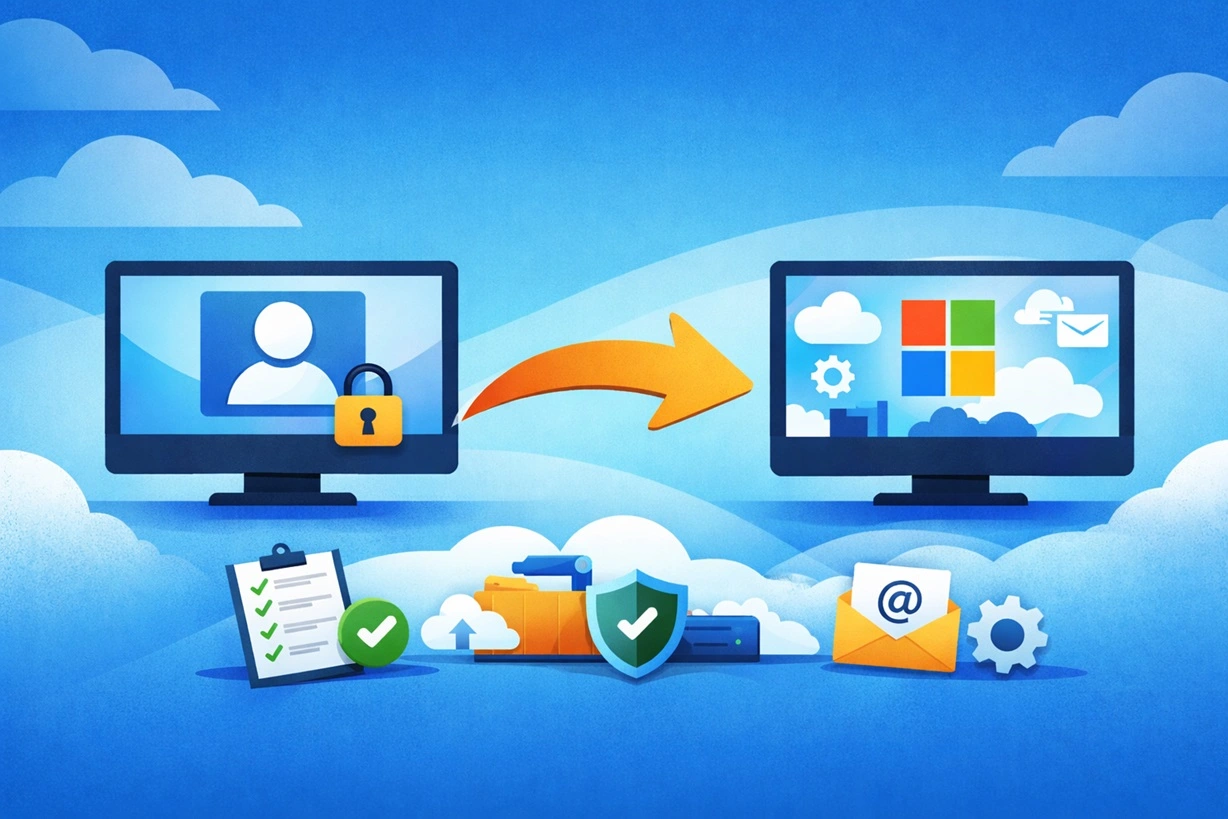
How to Switch From Local To Microsoft Account On Windows
Many users begin with a local account when they set up a new Windows computer. A local account works only on that single device. It stores settings, files, and preferences locally. It does not connect to online Microsoft services. For basic offline use, it works well. However, as digital needs grow, many users want better […]
How to Switch Windows 10 to a Local Account: Complete Guide
Windows 10 allows users to sign in with either a Microsoft account or a local account. When you set up a new computer, the system often suggests using a Microsoft account. This account connects your device to Microsoft services such as Outlook, OneDrive, and the Microsoft Store. It also syncs settings, themes, and passwords across […]
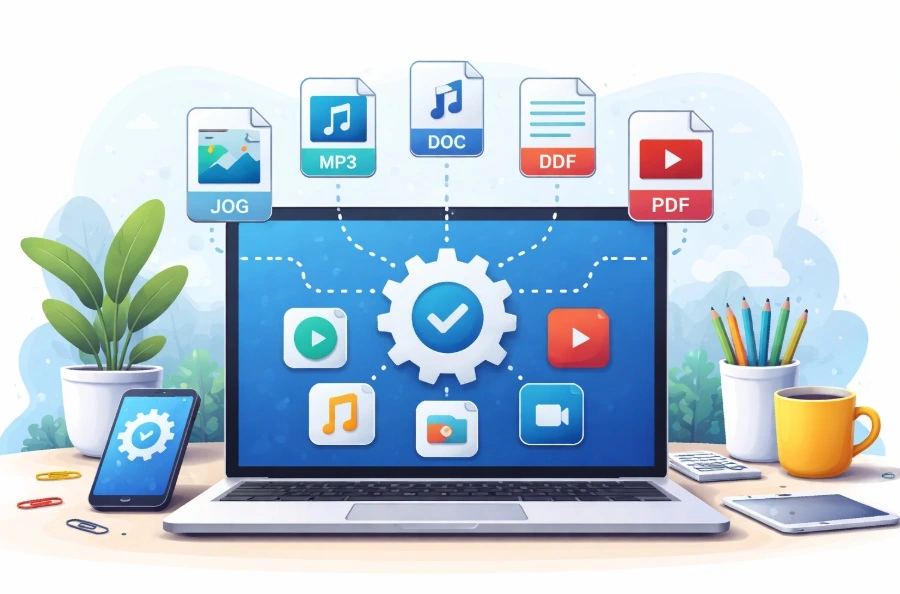
How To Change Default Apps For File Types In Windows
Windows is designed to make using your computer easy. One way it does this is by assigning default apps to different file types. This means when you open a file, Windows automatically opens it with a specific program. For example, photos may open with Photos, music with Groove Music, and PDFs with Edge. These default […]