





Introduction: Antivirus software helps protect Windows PCs from digital threats. It detects viruses, blocks ransomware, and alerts users about unsafe websites. However, some security tools consume too much RAM and CPU power. This can make everyday tasks feel slow. Older laptops and low-end PCs often face this problem. The computer may take longer to start. […]
What is brand risk protection and why does it matter?
Today’s security professionals have become familiar with the idea that every organization has an attack surface that describes its global exposure to threats against internal and cloud applications, devices, users, and data.
The attack surface grows as greater connectivity, cloud applications and myriad new types of device are adopted as an organization expands its digital footprint. It follows that when a security team calculates an organization’s attack surface, what they are really doing is estimating its vulnerability to cyberattack.
However, the idea of the attack surface isn’t always terribly helpful because it assumes that an organization has the tools to understand its true size. As countless successful cyberattacks demonstrate, organisations often discover after the fact that their attack surface was larger than they’d realized.
Brand Risk Protection (BRP)
One issue is that parts of the attack surface are easy to miss because they exist in the public sphere beyond the traditional responsibility of the IT department. It is these sorts of vulnerabilities Brand risk protection (BRP) services are designed to detect and address.
Broadly speaking, BRP defends an organization’s brand and the way this can be manipulated, exploited, and hijacked to deceive customers. It’s a huge and expanding area that includes discovering assets, monitoring for threats, remediating attacks, and managing the organizational processes involved in doing this. The main areas include:
Domain protection – a way of monitoring an organization’s web domains, now routinely targeted by typo-squatters (lookalike web names called homoglyphs) and domain/subdomain impersonation. This has been a problem for many years and is the bedrock of phishing attacks as well as copycat domains selling fake merchandise.
Brand and social media protection – monitoring the web and social media channels for brand impersonation using lookalike or hijacked accounts which abuse trademarks, logos, employees, and brand imagery.
Phishing detection – monitoring threat intelligence, domain registrations and MX record changes for information on phishing campaigns targeting an organization’s employees or customers.
Data leaks – data and credentials stolen from customers, or lists of fake and hijacked accounts, now flood the dark web, deep web, and Telegram channels, where they are traded back and forth. In many cases, organisations are not aware this data has even been taken, which makes DRP detection useful intelligence.
Account, VIP, and social media protection – monitors for stolen and fake employee accounts on channels such as Facebook, Twitter, LinkedIn, and Instagram.
Fake mobile apps – once rare, the use of lookalike mobile apps has grown with their importance to customers. Often served from third-party app stores, these can be difficult to spot.
Disinformation, misinformation, and fake news – an area of growing concern is false information planted to damage a brand’s reputation. A 2019 study by the University of Baltimore estimated that disinformation now costs the global economy $78 billion each year, with even one negative article on a search pages causing a 22% loss of business. Campaigns can also be used to alter a company’s stock price. Disinformation used to be politically or nationally focused but is increasingly being used against businesses for reasons of economic advantage.
What unites all BRP categories is that they are almost impossible to detect using conventional security tools. When they are detected, it is often by employees in departments beyond IT, for example a marketing department that receives complaints about brand impersonation. If an abuse is not detected or is detected by someone without the means to do anything about it, this type of abuse can slowly proliferate.
How does BRP work?
BRP is usually offered as a suite of integrated tools which detect risks using a mixture of automated machine intelligence, threat feeds, and manual processes. The nature of monitoring depends on the threat being assessed. Domain abuse is carried out by analyzing registered domains for ones that look similar to protected domains. Protecting brands is basically the same process conducted on social media or the web, or by constantly searching for specific brand images, product names, email addresses, or leaked credentials.
BRP remediation
What distinguishes one BRP system from another is the effectiveness of the remediation features on offer. This can be a complex undertaking because once detected each must be tackled individually and that involves managing a detailed task workflow over extended periods of time.
Ideally, the BRP service should offer a single view of the risks being tracked, with the tools to take down or report counterfeit sites and content, liaising with law enforcement where appropriate. It’s also important that the service can accommodate non-technical employees in departments such as marketing who are increasingly being given the job of tracking brand abuse and disinformation.
Conclusion: don’t ignore brand risks
Perhaps the biggest innovation of BRP is really that it brings together a suite of capabilities that have existed in an ad-hoc way for years, but which weren’t integrated couldn’t scale as abuse increased. Managing digital risks in this informal way is expensive and is bound to miss problems. Integrating BRP mitigation in a single platform is the simplest way to make abuse visible to an entire organization.
Author Bio:
Dinesh Lakhwani 

Dinesh Lakhwani, the entrepreneurial brain behind “TechCommuters,” achieved big things in the tech world. He started the company to make smart and user-friendly tech solutions. Thanks to his sharp thinking, focus on quality and the motto of never giving up, TechCommuters became a top player in the industry. His commitment to excellence has propelled the company to a leading position in the industry.
Popular Post
Recent Post
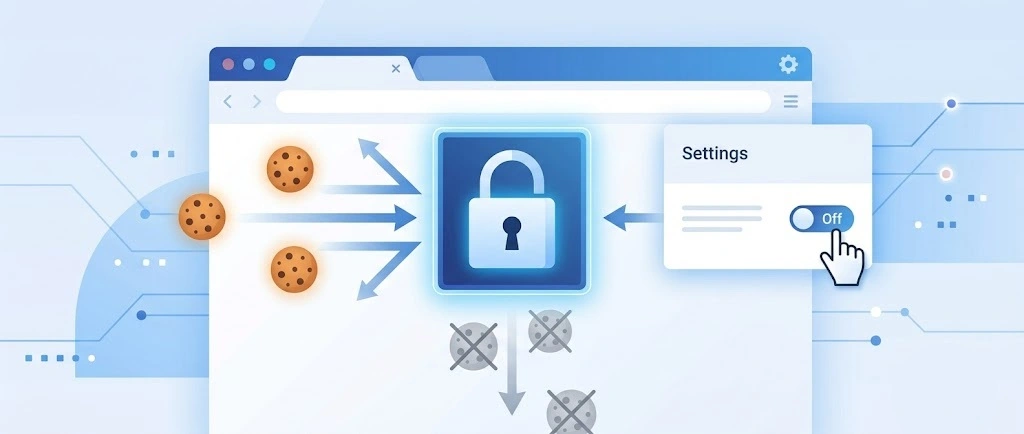
How To Disable Cookies in Browser [Complete Guide]
So, search for a pair of shoes once online. Close the tab. By evening, those same shoes are sitting on your news site, your video app, and even your recipe blog. Nobody placed them there by chance. A cookie did. Well, yes! Cookies are small files that websites place on your device while you browse. […]
How To Disable Background Apps In Windows: 4 Quick Methods
A slow PC rarely gives a warning. One day, it simply takes longer to start. Apps open late. The fan runs loud, even when the screen is almost empty. Most people blame old hardware. Often, that is not the real reason. The real reason is hiding in plain sight. Windows keeps many apps active in […]
How to Activate Windows with a Product Key for Windows 11 & Windows 10
It always shows up at the worst time. You are halfway through a report, or about to join a video call. Then you spot it in the bottom right corner of the screen. Activate Windows. Go to Settings to activate Windows. Initially, an unactivated copy of Windows may seem like a minor inconvenience. Over time, […]
Is Easy Duplicate Finder Worth It? Honest Review
The photos folder looked normal at first glance. Then the storage warning popped up. One trip photo appeared four times. A tax PDF sat in three different folders. Two old setup files were still in Downloads, and each one was over 500 MB. Nobody plans this mess. Copies pile up slowly. A download runs twice. […]
Wise Duplicate Finder Review: Real Results from Wise Duplicate Finder
Read my honest Wise Duplicate Finder review. See features, pricing, pros and cons, and real PC test results. Find out if this free duplicate cleaner can free up your Windows storage.
How to Recover Deleted Files from Pen drive, USB Drive, SD Card
Introduction: On tech forums, you’ll often see posts like this: “I connected my pen drive to my laptop this morning, but the folder was empty. All my college project files had vanished. I don’t have a backup. Can someone help me?” Stories like this are very common. Pen drives, USB drives and SD cards are […]

How To Recover Files Deleted from the Recycle Bin [Windows 11]
Losing a file can happen in seconds. You clear your desktop, hit Delete, and empty the Recycle Bin. Then, just when you need that file again, it seems to have vanished. This guide will walk you through ways to restore files removed from the Recycle Bin. We will begin with simple fixes, then look at […]

Disk Drill Data Recovery Tool Explained: Full Review and Guide
It happens in a split second. You delete a folder by mistake. Your drive stops showing up. A photo album from your last trip just vanishes. And your stomach drops. Lost files feel personal. They are not just data. They are memories, work hours, and sometimes years of effort packed into a few gigabytes. When […]
Recover Deleted Files In Windows 11 With Software & Without
Introduction What is the first thing that goes through your mind the second an important file vanishes from a Windows 11 PC? For most people, it is a mix of panic and disbelief, followed by a frantic click through every folder that file could possibly be hiding in. It happens in a split second: one […]